Mayor Kim Jungnam Vows to Restore Livelihoods and Create a City Free from Water Worries
Mayor Kim Jungnam Outlines Policy Direction for 9th Administration
Push to Secure 63,000 Tons of Alternative Water Daily
Livelihood Stabilization Support Fund to Be Resubmitted
Alley-Type Shopping Districts to Increase to 30 by 2030
Driving Yeongdong Region Growth through Public Institution Attraction
Kim Jungnam, Mayor of Gangneung, stated on September 1, "We will prioritize civic livelihoods, communicate with citizens more frequently, and prepare proactively for the climate crisis."

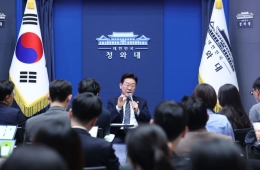
Mayor Kim Jungnam is explaining the citizen communication policies implemented since the launch of the 9th local government, the drought response system, regional economic revitalization measures, and strategies for attracting public institutions from the metropolitan area during a press conference on the 1st. Provided by Gangneung City
View original imageOn this day, Mayor Kim held a press conference to announce the citizen communication policies pursued since the launch of the 9th local government term, the drought response system, measures to revitalize the local economy, and strategies to attract public institutions from the metropolitan area.
From July 22, Gangneung City held town hall meetings in 21 towns, townships, and neighborhoods for three weeks, during which it received 296 suggestions from citizens. The city is currently reviewing solutions for these suggestions through three result briefing sessions, and plans to link proposals with high citizen impact and wide-ranging influence to the 2027 initial budget.
The ‘Deureumteo’, a one-on-one citizen communication space, has received 130 meeting requests to date, with 56 of these meetings having been conducted. Mayor Kim stated, "We will ensure that every citizen’s voice is reflected in policies and initiatives."
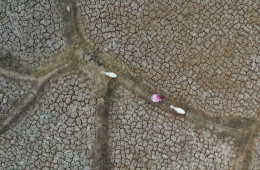
After experiencing severe drought last year, Gangneung City has also worked on reorganizing the water supply system to reduce reliance on the Obong Reservoir. By expanding the use of supplementary water sources such as the Sacheon Reservoir, urban outflow groundwater, large-diameter wells, and the second Southern Daechon intake plant, the average daily water intake from the Obong Reservoir between January and July this year decreased by approximately 30,000 tons compared to the same period last year. Conversely, the use of supplementary water sources increased by about 23,000 tons per day on average.
The city’s initiatives are centered around four key pillars: diversification of water sources, expansion of water treatment facilities, maintenance of old water pipes, and expansion of local water supply systems. The Yeongok groundwater storage dam is scheduled for completion by 2027 and the Southern Daechon groundwater storage dam by 2030. The city also plans to utilize outflow groundwater from the Gangneung–Jejin railway construction as domestic water. Through these efforts, Gangneung aims to secure a long-term alternative water source of 63,000 tons per day.
The daily water purification capacity of the Yeongok Water Purification Plant will be increased from 14,800 tons to 30,000 tons, and a water supply pipeline will be built to connect the Yeongok and Hongje Water Purification Plants, establishing a system for mutual emergency water supply.
The city has also announced measures for local economic recovery. The livelihood stabilization support ordinance, which was rejected by the city council in July, will be resubmitted at the regular session in September. If the ordinance is passed, the city plans to allocate the budget using additional government grants and promptly distribute the support funds.
Until the livelihood stabilization support funds are disbursed, the "100-Day Gangneung Economic Revival Project" will be implemented. The city will promote traditional market shopping, consumption activation campaigns, and relay partnerships between public institutions and private organizations to boost local consumption.
For small business owners and SMEs, the temporary interest subsidy rate for the third quarter of this year will be increased from the existing 2.5–3% to 3.5–4%. The monthly benefit limit for Gangneung Pay will also be raised from 300,000 won to 500,000 won within the second-half budget, offering cashback up to a maximum of 50,000 won.
The number of alley-type shopping districts, currently at 7, will be expanded to 30 by 2030. At Ponam Yongma Street, 276 million won will be invested to create a specialized night tourism area blending food, culture, and experiences.
The city will actively respond to the second wave of public institution relocation from the metropolitan area. Recently, Gangneung launched a public institution attraction committee with participation from more than 120 citizens and experts. In addition, the city will form a pan-citizen task force with the aim of establishing Gangneung as the central city for the relocation of public institutions in the Yeongdong region.
Hot Picks Today
 Changing Outfits and Snapping Photos in Hotels... "Please Don't Take Pictures": Europe Cracks Down on Influencers Over Privacy Concerns
- "Tried leveraged semiconductor stocks, watched 3.5 billion won shrink to 200 million won": Salaried investor in tears
- "Please Let Me Go Home"... Customers Trapped in Department Store Parking Lot for 5 Hours Vent Their Anger
- "I Should Enjoy It After Retirement": Prices Quadruple... Memberships Over 100 Million Won Popular, but Closures Mount
- "Come Live With Me on My Farm": Man Sells Everything and Travels 1,930 km, Trusting a Beautiful Woman
Mayor Kim said, "The relocation of public institutions is an opportunity to attract jobs, talent, and companies, creating new growth engines for Gangneung. We will connect citizens’ voices to policies and changes, seek answers on site, and demonstrate results."
© The Asia Business Daily. All rights reserved. Unauthorized AI training and use prohibited.