Jeonbuk Ushers in Era of 10 Trillion Won National Budget for the First Time
Government Budget Proposal of 10.23 Trillion Won Secured
Growth Engines Focused on Hyundai Motor, AI, and Saemangeum
Jeonbuk Special Self-Governing Province has, for the first time in its history, secured a national budget of over 10 trillion won in the government’s 2027 budget proposal. This has laid the fiscal foundation for the development of Saemangeum, projects linked to Hyundai Motor's investment, and the fostering of future industries such as AI and robotics.

On September 1, Jeonbuk Special Self-Governing Province announced that a total of 1,023,490,000,000 won was included in the 2027 government budget proposal. This represents an increase of 776.4 billion won (8.2%) compared to last year’s government proposal. The included projects comprise 314 new projects amounting to 256.9 billion won and 943 ongoing projects totaling 9,978 billion won. Compared to last year, new projects increased by 7 items and 12.4 billion won, and ongoing projects rose by 22 items and 764 billion won.
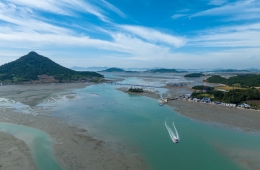
The most notable aspect of this year’s budget proposal is the expansion of Saemangeum’s industrial infrastructure in connection with Hyundai Motor's investment.
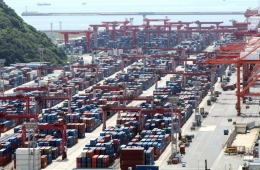
175 billion won has been newly allocated for the creation of rental land within the Saemangeum industrial complex. Additional allocations include 8 billion won for an AI-based special-purpose robot platform production and demonstration, 500 million won for a robot parts cluster joint logistics center, and allocations for related projects. Furthermore, 120 billion won has been earmarked for the construction of Saemangeum International Airport, 143.1 billion won for connecting roads within the Saemangeum area, and 5 billion won for the Saemangeum Port railway connection.
Projects for cruise terminal infrastructure at Saemangeum Port, environmental ecological sites, and settlement farms are also included in the budget proposal. This creates conditions for simultaneous expansion of industrial complex development, transportation networks, and environmental/tourism infrastructure.
In the field of future industries, projects related to AI, robotics, renewable energy, secondary batteries, hydrogen, and bio-industries have been listed in the government budget.
Specifically, these include 5 billion won for establishing a 5G-specialized Gangsan shipyard M.AX demonstration platform, 3 billion won for standardizing agricultural AI robots and building an on-demand autonomous manufacturing platform, and 14 billion won in support for solar income village ESS projects.
Foundational support has also been secured for projects such as the Jeonbuk region’s advanced recycling center for used batteries, the expansion of the Wanju hydrogen charging station, full-cycle research and demonstration support for innovative radioactive drugs, and the establishment of a radioactive isotope manufacturing support center. The creation of a food innovation cluster aims to enhance value added in the agri-food industry, while freshwater stepping-stone fish farms and training programs for convergent professional manpower in marine and fisheries will further strengthen the fisheries industry base.
In the culture and tourism sector, construction of the National Late Baekje History and Culture Center, creation of Bu-an Baeksan Fortress Site, and development of the Global Citizens’ Revolution Hall will be promoted. The comprehensive maintenance of Mangjubong in Gunsan’s Seonyudo area and the creation of a scenic site in the Manghaesa district have also been included, boosting the use of historical and cultural assets as tourism resources in the region.
The establishment of a National Oriental Medical AI Research Center, a pilot project for localized essential healthcare systems, and support for community care initiatives will expand both healthcare and social service infrastructure. In the environmental sector, 24.7 billion won has been allocated to the Dongjingang River Restoration Project, and a new Baekdu-daegan ecological restoration project will be pursued.
Resource circulation facilities such as a Jeonju-area wide-area waste treatment facility, a Gochang organic waste-integrated biogas facility, and a Bu-an livestock manure public treatment facility will also be expanded. Plans are in place to reinforce disaster response infrastructure by improving high-risk natural disaster areas in Iksan Pyeonghwa, Gochang Pyeongchon, Namwon Hado, and Jeongeup Sangdong.
Since the government budget proposal has not yet been finalized, the National Assembly review still remains. Jeonbuk Special Self-Governing Province will focus its administrative capacity on preventing budget cuts for included projects and securing additional allocations for projects that have not yet received sufficient funding.
Hot Picks Today
 "Should Get at Least 45 Million Won Salary" "Can't Give Up on Large Companies"... Young People Say There Are No Places to Apply
- Unemployment Benefits to Drop from 1.98 Million to 1.76 Million Won per Month...Employment Insurance Premium Rate to Rise from 1.8% to 2%
- No Korean Missing Persons Found Yet in Nepal Floods... Death Toll Surpasses 1,000
- "Only One Restroom Break per Semester During Class"…Controversy Over Chinese High School Regulations
- When "Cutting Down Reserved Tents" Brings Relief: Local Governments Take Action Against Escalating 'Reserved Tent' Problem
Lee Wontak, Governor of Jeonbuk Special Self-Governing Province, stated, "Surpassing 10 trillion won at the government proposal stage for the first time is the result of collaborative efforts among the province, municipal and county governments, and the political sector for Jeonbuk's future. Until the final National Assembly review, we will do our utmost to secure a national budget that transforms Jeonbuk's future and delivers tangible benefits to our residents."
© The Asia Business Daily. All rights reserved. Unauthorized AI training and use prohibited.