Lee Questions "How to Correct Unjust Police Non-Referral Decisions"... Orders Supplement to Investigative Guidelines
Ahead of the Launch of a New Criminal Justice System in October, Measures Reviewed to Prevent Case "Burying"
Ministry of Justice Proposes Requirement for Detailed Non-Referral Explanations and Stronger Prosecutor-Police Cooperation
Key Issue: Establishing Controls over Police Investigations Following the Abolition of Prosecutors' Authority to Supplement Investigations
On the 1st, President Lee Jae-myung instructed officials to establish effective mechanisms to correct unjust non-referral decisions made by the police. With the impending abolition of prosecutors' authority to directly investigate or supplement investigations in October, the control exercised by police over case closures will be further strengthened. Against this backdrop, President Lee emphasized the need for thorough oversight measures within the investigative guidelines to prevent inadequate investigations or so-called "burying" of cases.

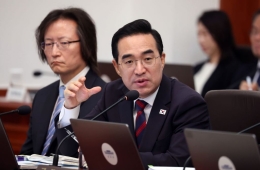
President Lee Jae-myung is speaking at the Cabinet meeting held at the Blue House on September 1, 2026. Photo by Yonhap News Agency
View original imageKang Yoo-jung, chief spokesperson for the Blue House, announced during a briefing on the Cabinet meeting that President Lee, in a closed session, reviewed the Ministry of Justice’s proposed amendments to the investigative guidelines. According to Chief Spokesperson Kang, President Lee called for additional measures, stressing that “the key issue is how to handle situations where a law enforcement agency’s decision not to refer a case is substantively unjust.”
President Lee’s remarks are closely linked to concerns about potential investigative gaps under the amended Criminal Procedure Act, which is set to take effect on October 2. The revised law removes not only the prosecutor's authority to conduct direct investigations but also their right to supplement police investigations on transferred cases. While this reinforces the principle of separating investigation and prosecution for prosecutorial reform, there are ongoing concerns that if unjust police non-referral decisions go unchecked, inadequate investigations could effectively be finalized without redress.
President Lee previously addressed this issue during a work report from the Ministry of Justice and related agencies on August 5. At that time, he questioned whether the police possessed sufficient investigative capabilities, whether they could be trusted with de facto case closure authority, and whether mechanisms existed for self-correction should any improper decisions occur, pointing out that “the public has many concerns.”
Hot Picks Today
 "Should Get at Least 45 Million Won Salary" "Can't Give Up on Large Companies"... Young People Say There Are No Places to Apply
- Unemployment Benefits to Drop from 1.98 Million to 1.76 Million Won per Month...Employment Insurance Premium Rate to Rise from 1.8% to 2%
- Packed Crowds with “It’s So Cheap!”... Japan Travel by UK Millennials & Gen Z Surges 25% in a Year
- "Only One Restroom Break per Semester During Class"…Controversy Over Chinese High School Regulations
- When "Cutting Down Reserved Tents" Brings Relief: Local Governments Take Action Against Escalating 'Reserved Tent' Problem
In response, the Ministry of Justice announced draft amendments to the "Regulations on Mutual Cooperation and General Guidelines for Investigations between Prosecutors and Judicial Police Officers" on August 28. The core of the amendment is a requirement that, when the police decide not to refer a case, they must clearly document and notify complainants and others of the basis and reasons for their decision. This amendment was prompted by criticism that, if reasons for non-referral are insufficiently explained, it is difficult for victims to file objections or for prosecutors to request reinvestigations.
© The Asia Business Daily. All rights reserved. Unauthorized AI training and use prohibited.