Korea Zinc and Young Poong Clash Again Over Supreme Court Ruling... Debate Over Legality of Management Defense Continues
Korea Zinc: "No Impact on Current Governance"
Young Poong: "Voting Rights Restriction Challenged"
Interpretation Dispute Intensifies Ahead of September 9 EGM
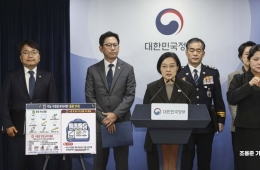
Korea Zinc and Young Poong have once again clashed over the implications of the Supreme Court's decision regarding the restriction of Young Poong's voting rights at the extraordinary shareholders’ meeting in January last year. Both parties agreed that the recent decision does not directly impact Korea Zinc’s current management structure and governance. However, their interpretations diverge over how broadly the ruling on the method of restricting voting rights at that time could be applied to similar future management defense measures.

Korea Zinc announced on August 31 that, in its decision on August 28, the Supreme Court found no legal misunderstanding in the lower court’s view that Korea Zinc’s Australian affiliate, Sun Metals Corporation (SMC), cannot be considered a company of the same kind as, or most similar to, a Korean stock company under Korea’s Commercial Act. This means the Supreme Court did not accept Korea Zinc’s further appeal regarding whether SMC should be classified as a subsidiary.
This litigation originated from the measure taken at the Korea Zinc extraordinary shareholders’ meeting in January last year, where Young Poong’s voting rights were restricted. Amid an ongoing management dispute at the time, Korea Zinc argued that, given the Australian affiliate SMC held over 10% of Young Poong's shares, under the "cross-shareholding voting rights restriction" provision of the Commercial Act (a system restricting voting rights in a company if it or its subsidiary holds more than 10% of another company’s shares), Young Poong’s voting rights in Korea Zinc should be limited.
In response, Young Poong and MBK Partners contended that the restriction was not applicable since SMC is not a company equivalent to a Korean stock company under the Commercial Act, and they initiated legal proceedings. The Supreme Court upheld the lower court’s judgment that SMC cannot be considered a company of the same kind as, or most similar to, a Korean stock company.
However, Korea Zinc emphasized that this decision is confined to the legal relationships as of the extraordinary shareholders’ meeting in January last year. The current management system and governance were established at the regular shareholders’ meeting in March last year, and in a separate injunction case related to that meeting, the Supreme Court rejected Young Poong and MBK’s appeal.
In March last year, SMC transferred its Young Poong shares to the Australian affiliate Sun Metals Holdings (SMH), altering the cross-shareholding structure. The key distinction between the two structures is the corporate form of the overseas affiliate holding Young Poong shares. In January last year, SMC, an Australian proprietary limited company (Pty Ltd), held more than 10% of Young Poong shares, but the court ruled that SMC was not equivalent to a Korean stock company.
By contrast, in March last year, the structure was changed so that SMH, a company limited by shares, directly held Young Poong shares. Based on this, Korea Zinc again restricted Young Poong’s voting rights, and the provisional injunction for allowing Young Poong and MBK to exercise their voting rights was dismissed by the courts in both the first and second instance, as well as by the Supreme Court in April this year. This is why Korea Zinc argues that the Supreme Court’s decision regarding SMC is separate from the current governance structure.
Young Poong also agreed that the latest ruling does not directly affect Korea Zinc’s current governance. A Young Poong representative stated, “The Supreme Court’s decision pertains to the extraordinary shareholders’ meeting in January 2025. Since the directors appointed then resigned following suspension from their duties, the matters resolved at that meeting no longer influence the current governance.”
While both sides agree that there is no direct impact on the current governance structure, they remain divided over the broader meaning of the Supreme Court’s decision.
Korea Zinc argues that the ruling should be limited to the nature of the specific overseas entity, SMC, and that interpreting the judiciary’s stance as a blanket disapproval of all management defense strategies using overseas affiliates would be an exaggeration.
Conversely, Young Poong and MBK maintain that since the Supreme Court did not recognize SMC's status as a subsidiary—a prerequisite for Young Poong’s voting rights restriction at the time—the ruling carries broader significance for similar future restrictions. A Young Poong official commented, “We see this judgment as the court ruling on various legal issues that can arise in the process of forming cross-shareholdings.”
Hot Picks Today
 "Two Spend 500,000 Won in a Flash, Yet Wait Two Hours?" ... 'Dreamland' Shunned by Kids and Foreign Tourists
- The Era of Getting 200 Million Won After 30 Years Is Over... A Japanese Bank's "Perpetual Department Head" Who Just Clocked In Cries Out
- Spain Hit by Its Worst Tragedy... Lee Kangin, Moreno and Real Madrid Join Soccer World in Mourning
- They Said, “Make It Your Home for Life” - Then Suddenly Kicked 200 Passengers Off... What Happened to the Around-the-World Cruise?
- "130 Rice Bowls Sold Out in a Day"... 'Unfiltered Face' Adds 8 Million Won to Night Market Sales: China's Bungeunwoo
This dispute over interpretation is intensifying as Korea Zinc’s extraordinary shareholders’ meeting approaches on September 9, with both parties seeking to justify their claims amid the ongoing management rights conflict. At the upcoming meeting, a vote will be held on the appointment of audit committee members and other proposals. Young Poong and MBK are presenting the Supreme Court’s decision as an example highlighting the need for appointing independent audit committee members to provide oversight of the current management, whereas Korea Zinc counters that it is unreasonable to connect the January 2025 matter with the current management system.
© The Asia Business Daily. All rights reserved. Unauthorized AI training and use prohibited.