[2027 Budget Proposal] "Full-Scale Establishment of Maritime Metropolitan Area" ... Focused Investment in Arctic Route Initiatives and Eco-Friendly Ships
2027 Budget Proposal
Up 10.8% Year-on-Year to KRW 8.2636 Trillion
Shift to Catch Volume-Based Fisheries Management and Acceleration of Marine and Fisheries AI Transformation (AX)
The Ministry of Oceans and Fisheries will begin full-scale efforts to establish a maritime metropolitan area foundation next year. In order to encourage companies to relocate, the ministry plans to launch a new support program for the construction of eco-friendly ships targeting shipping companies that will move their headquarters to regional areas. At the same time, it will enhance preparation support for demonstration voyages on the Arctic route, strengthen collection of related data, and boost international cooperation efforts.
On September 1st, the Ministry of Oceans and Fisheries announced that it has allocated a budget of 8.2636 trillion won for the 2027 government budget proposal, a 10.8% increase (805.3 billion won) from this year’s 7.4583 trillion won. This marks the fastest rate of increase since the ministry was reestablished in 2013.

Exterior view of the Ministry of Oceans and Fisheries Busan Temporary Office Building.
View original imageNam Jaeheon, Vice Minister of Oceans and Fisheries, explained, "The main factors behind the budget increase are major projects aimed at fostering the maritime metropolitan area, shifting the fisheries management system to a focus on catch volume, and accelerating the Marine and Fisheries AI Transformation (AX). These initiatives are designed to shape a new growth paradigm for the ocean economy." He continued, "In detail, the ministry has allocated 3.9 trillion won for the fisheries and fishing village sector (up 11.5% from this year), 2.2 trillion won for shipping and ports (up 2.7%), 1.2 trillion won for other sectors such as marine industries and logistics (up 10.0%), 500 billion won for the marine environment (up 15.6%), and 900 billion won for research and development (R&D, up 7.8%). In addition, projects under the policy funds such as the Future Response Fund have been sharply increased to 200 billion won (up 145.4%)."
To ensure tangible achievements in the marine and fisheries sector by 2027, the ministry has focused the budget on the following key areas: ▲ Full-scale development of the maritime metropolitan area ▲ Structural reforms in the fisheries industry and revitalization of fishing villages ▲ Investment in emerging marine industries that grow alongside a clean marine environment.
◆ Full-scale Development of the Maritime Metropolitan Area = First, the ministry will initiate substantial efforts to establish a foundation for the maritime metropolitan area and expand investment to ensure that Korea's shipping and port industries take a leading role in the global market. To encourage company relocations to the maritime metropolitan area, a new support project worth 12.1 billion won will be established to help regional shipping companies build eco-friendly vessels. The budget will newly include 18.4 billion won for Arctic route demonstration voyage preparation and related data collection, as well as the strengthening of international cooperation. The ministry will also promote support for the construction of polar vessels such as icebreakers and ice-resistant ships and technologies for building ice-breaking container ships to prepare for eventual entry into the Arctic route. To foster an ecosystem for related industries, the ministry will establish technical verification infrastructure and cultivate future talent to lead the advanced marine industry (a new allocation of 9.8 billion won). In addition, it will step up initiatives for Physical AI port cargo handling and transport equipment demonstrations (a new 7.4 billion won), accelerate development of smart port operating technologies (increasing from 9.4 billion won to 18 billion won), and more, to speed up port-related AI Transformation (AX).

The ministry will also bolster the global competitiveness of the shipping and port industry. To lead the autonomous vessel market, it will supply Korean-flag ships with autonomous navigation systems (with a new allocation of 2.9 billion won), and the relevant budget will rise from 6.3 billion won this year to 15.7 billion won next year, enabling full-scale development of fully autonomous navigation technology. Large-scale port development projects for Donghae New Port, Saemangeum New Port, and Gunjang Port will be steadily pursued to address port infrastructure shortages and provide smooth logistics environments for import and export.
To strengthen supply chain crisis response—such as in the context of the Hormuz Strait crisis—the ministry will increase compensation (rising from 8.2 billion won to 10 billion won) for the "National Essential Fleet," a fleet of Korean-flag ships critical to secure maritime transportation of key materials during wartime or national emergencies. It will also enhance the function of the International Logistics Investment Analysis Support Center and expand overseas consulting for shipping and logistics firms (increasing from 2.5 billion won to 3.1 billion won).
◆ Structural Innovation of the Fisheries Industry and Revitalization of Fishing Villages = The ministry will also significantly increase support to boost competitiveness and reform the industry structure, and to vitalize fishing villages. To fundamentally improve the fisheries structure, the ministry enacted the “Sustainable Coastal and Offshore Fisheries Advancement Act” in June of this year. Starting next year and with the law’s enforcement, new programs will be implemented (105.5 billion won) for catch verification, operation of the Fisheries Information Management Center, and loan support for fishers fulfilling mandatory requirements to lay the groundwork for the new regime. The ministry will also conduct scientific resource assessments to support the full-scale introduction of the Total Allowable Catch (TAC) system, establishing a highly reliable TAC calculation framework. The scale of fishing vessels will also be adjusted in line with the new management system— fleet reduction for coastal vessels will be pursued intensively over the next five years, and a modernization fund for larger, more advanced coastal vessels will be established (increasing from 203.7 billion won to 394 billion won).
In the export and processing sector, support for major export items will be increased to achieve a fisheries export value of 4 billion dollars by 2028. In particular, to expand the high value-added exports of dried seaweed (gim), "K-Gim" leading zones will be designated and both marine and land-based smart aquafarms will be created as part of an industry ecosystem initiative (a new allocation of 13.5 billion won). To advance the smart transformation of the fisheries industry, the ministry will continue to expand smart fisheries innovation zones and smart aquaculture clusters (from 15.2 billion won to 32.6 billion won), and provide initial support to mechanize labor-intensive aquaculture sectors (a new 6 billion won). The budget will also include a new 9.6 billion won to implement a public coastal passenger vessel system starting next year, strengthening transportation rights for island residents.
◆ Expanding Investment in Next-Generation Marine Industries = The ministry will responsibly manage the nation’s marine environment by reducing marine debris and eradicating the illegal occupation and use of public waters, while at the same time expanding investment in emerging marine industries to fuel future growth. To ensure the success of the national normalization project "Management of Illegal Occupation and Use of Public Waters," the ministry will inject an additional 5.7 billion won to construct a GIS-based public waters management system and other initiatives, and establish a new project (2.1 billion won) for the immediate removal of illegal fishing gear to eradicate unlawful use of the seas. In particular, deteriorated enforcement equipment—such as high-speed boats and communications facilities—will be replaced to respond decisively to illegal fishing activities, for instance by Chinese vessels (increasing from 2.9 billion won to 15.8 billion won).
Investment will also be focused on new marine industries to allow systematically managed marine resources to become sources of national economic growth. For timely establishment of specialized regional hubs in high-growth sectors, 21.1 billion won will be invested in "mass production plants for blue bio industry materials" and "seaweed bio smart factories," among others.
Hot Picks Today
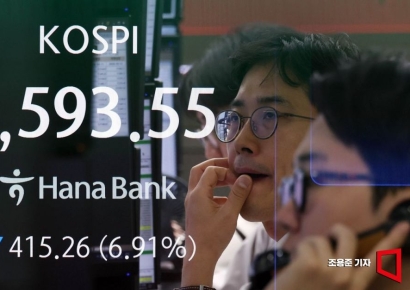 "I Invested KRW 10 Million, Only KRW 2 Million Is Left" ... 77% Plunge Sends Retail Investors Who Piled Into Samsung Electronics and SK hynix Leveraged ETFs Crying Out
- "There's a Drink Like This?"... Chinese Beverage With "Korean" in Its Name Rakes in 85 Million Won in Monthly Sales
- "Samsung Electronics at 70,000 won, SK hynix at 200,000 won"... Why the gloomy outlook despite 'record-breaking earnings'?
- '44,000 Won per Tray' Controversy Over Brazilian Egg Imports... Ministry of Agriculture: 'Aimed at Securing Supply Chains'
- "No Need to Hire a Model"... The 25-Year-Old Woman Who Entered Social Media with a Face That Cost Just 1,500 Won [AI Content: The Bright and Dark Sides] 1

Jongwoo Hwang, Minister of Oceans and Fisheries, said, “Next year’s budget focuses on fostering the maritime metropolitan area and innovation of the fisheries sector, as well as supporting projects where the public will feel tangible progress in the marine and fisheries domains. The Ministry of Oceans and Fisheries will do its utmost in preparing for the National Assembly’s budget review, so that it can fully support a grand transformation and leap forward for Korea’s economy.”
© The Asia Business Daily. All rights reserved. Unauthorized AI training and use prohibited.