Basic Pension to Be Paid in Tiers of 350,000–380,000 Won Starting Next Year... Low-Income Couples to Receive 124,000 Won More
Ministry of Health and Welfare Announces Reform Plan on September 1
Couple Reduction Rate for 0–45% Bracket Lowered from 20% to 10%
Reform to Median Income Standard Fails
Criticism Mounts Over 'Half-Measure' Policy
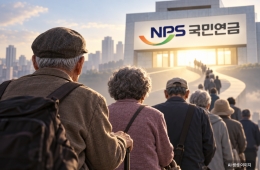
Starting next year, the basic pension for the bottom 70% of seniors aged 65 and older will be paid in three differentiated tiers based on income, ranging from 350,000 to 380,000 won per month. The benefit reduction rate for couples will be lowered from the current 20% to 10%, but only for low-income groups. As a result, couples in the bottom 0-30% income bracket will receive 684,000 won per month, an increase of 124,000 won compared to this year.
The Ministry of Health and Welfare announced this pension reform plan on September 1. The main change is a shift from a flat-rate payout for the bottom 70% to a three-tiered, income-based payment system. Seniors in the bottom 0-30% income bracket (3.48 million people) will receive 380,000 won per month, an increase of 30,000 won over this year. The bottom 30% corresponds to a monthly income of 547,208 won, which is 20% of the median monthly income for single-person households in 2027 (2,736,042 won). Those in the 30-45% bracket (1.74 million people) will receive 359,000 won per month, up 9,000 won, reflecting inflation. This group corresponds to around 1,094,417 won, or 40% of the median monthly income for single-person households. The remaining 45-70% income group (2.9 million people) will continue to receive the basic pension of 350,000 won as before.

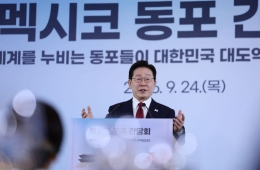
Due to the adjustment in couple benefit reduction, the effective pension payment for the 2.34 million most economically disadvantaged senior couples will increase. Couples in the bottom 0-30% will see their monthly benefit rise from 560,000 won to 684,000 won, an increase of 124,000 won. Couples in the 30-45% bracket will see their pension rise from 560,000 won to 646,000 won, an increase of 86,000 won. Earlier, President Lee Jaemyung had pointed out, "The couple reduction system even encourages sham divorces among seniors to receive pension payments."
Some of the controversy over reverse discrimination against recipients of occupational pensions, such as civil servants, private school teachers, and military personnel, will also be addressed. Previously, even a single won of occupational pension received, or being the spouse of such a recipient, resulted in total exclusion from the basic pension, regardless of the person's low income or assets. However, starting in July next year, about 110,000 low-income individuals—those in the bottom 45% income bracket—even if they or their spouses receive occupational pensions, will be newly eligible for the basic pension and could receive up to 380,000 won per month according to their income group. The government plans to complete amendments to the Basic Pension Act by the end of this year and implement the changes from April next year. Application of the changes to occupational pension recipients requires an information linkage system and will begin in July. With this overhaul to focus support on the lowest-income seniors—including differentiated payments and reduced couple deductions—the basic pension budget for next year has been significantly increased to 25.7 trillion won, roughly an 11% jump from this year's 23.1 trillion won.
Hot Picks Today
!["Even with 410 Million Won in Assets, You May Not Be Middle Class"... The Six True Conditions of the Middle Class [Weekend Money]](https://cwcontent.asiae.co.kr/asiaresize/93/2026092213413938253_1790052098.jpg) "Even with 410 Million Won in Assets, You May Not Be Middle Class"... The Six True Conditions of the Middle Class [Weekend Money]
"Even with 410 Million Won in Assets, You May Not Be Middle Class"... The Six True Conditions of the Middle Class [Weekend Money]
- Like Winning the Lottery, Only to Lose: Surging Number of Disqualified Apartment Subscription Winners
- An Average of 1.4 Billion Won in Taxes per Person, Including 'Super Chats'... 23.9 Billion Won Imposed on 17 YouTubers Last Year
- "No Time for Boredom on the Way Home: Mercedes-Benz Offers TV, Music, and Audiobooks"
- Who Is the Woman Next to Ivanka? Trump’s Granddaughter Who Sang in Chinese for Xi Jinping 9 Years Ago
Initially, the Ministry of Health and Welfare planned to align the basic pension eligibility criteria with the median income, gradually excluding higher-income groups and reallocating the resulting savings to strengthen support for low-income seniors. However, stating that "more social consensus is needed," the ministry has deferred the decision to the National Assembly, making it difficult to avoid criticism that this is a "half-hearted upside-down approach."
© The Asia Business Daily. All rights reserved. Unauthorized AI training and use prohibited.