[2027 Budget Proposal] MOLIT Allocates Record 69 Trillion Won, with 30 Trillion for Public Housing...SOC Spending Frozen
218,000 Public and Rental Housing Units to Be Built
36,000 Long-Term Rentals in Prime Locations
18.2 Trillion Won Allocated for Youth Housing Support
New Semi-Jeonse Loan Program and Bogeumjari Loan Introduced
47.9 Trillion Won for Soc
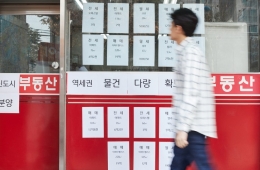
The budget proposal for the Ministry of Land, Infrastructure and Transport for next year has been set at a record high of 69 trillion won. This figure represents an increase of 9.9% (6.2 trillion won) compared to this year's original budget of 62.8 trillion won. Of this amount, nearly half—30 trillion won—will be allocated to the provision of public housing, including public sales and rental units. The government intends to maximize support for housing supply. This funding will be used to build 218,000 units of public sales and rental housing, taking into account locations near stations and mid-size floor plans. In particular, next year’s support budget for youth housing will be increased to 18.5 trillion won. The government plans to provide 106,000 youth public rental housing units, an increase of 35,000 units compared to this year. In addition, to strengthen the housing ladder from monthly rent to lump-sum lease and homeownership, new products such as “banjeonse” (mixed monthly rent and lump-sum deposit) loans and a dedicated housing finance loan product will be introduced.
![[2027 Budget Proposal] MOLIT Allocates Record 69 Trillion Won, with 30 Trillion for Public Housing...SOC Spending Frozen](http://www.asiae.co.kr/news/img_view.htm?img=2026090110465710586_1788227217.jpg)
According to the Ministry of Land, Infrastructure and Transport's 2027 budget proposal released on September 1, the social welfare-related budget amounts to 47.9 trillion won, an increase of 14.9% over this year's original budget, while the social overhead capital (SOC) budget remains unchanged at 21.1 trillion won.
The largest portion of the budget will be allocated to housing supply. The total housing budget will increase by 5.6 trillion won (14.5%) from 38.4 trillion won this year to approximately 44 trillion won next year. Among this, the public housing budget will increase by 8.8 trillion won (41.5%), rising from 21.2 trillion won this year to 30 trillion won next year. The government plans to supply 218,000 public housing units next year, which is 24,000 more units than this year. By type, public rental housing will make up the largest share with 172,000 units, followed by public sales at 34,000 units, and private sector rental support at 12,000 units.
The new project budget is also concentrated on housing. The Ministry of Land, Infrastructure and Transport will launch a total of 57 new projects next year with a combined budget of 8.1267 trillion won, of which 7.804 trillion won will be invested in eight housing-related projects. This means that 96% of the new project budget will be allocated to housing. In particular, the largest share within the housing budget is earmarked for “universal public rental housing” (a measure included in the August 13 policy), which takes into account locations near stations and medium-sized units, with 6.2 trillion won allocated. This includes 4.7719 trillion won for universal public rental loans and financing, 1.4 trillion won for youth support housing, 900 billion won for universal jeonse rental loans, and 544 billion won for universal multi-family acquisition and rental financing. More than half of these units will be allocated to young people.
The universal public rental housing program supplies rental units in preferred locations where tenants can stay for long periods. It is divided into construction, acquisition, and lump-sum deposit (jeonse) types. In 2027, 36,000 units will be supplied. Of these, approximately 20,000 units will be prioritized for young people. The largest portion will be construction-type: the number of units breaking ground next year is 26,000, primarily mid-size units with exclusive floor areas of 50-84 square meters. Construction will begin immediately using land parcels already secured by Korea Land and Housing Corporation (LH). Half of these units—13,000—will be provided to young people. Acquisition-type involves purchasing homes near stations and officetels to supply as rental units. Homes in non-priority subscription categories in the regulated metropolitan area are also included in the acquisition pool. In 2027, 5,000 acquisition-type units will be supplied.
The budget for youth monthly rent support will also rise substantially, from 130 billion won this year to 231.9 billion won next year—an increase of 78%. “Banjeonse” loans for young people, which cover both deposits and monthly rents, as well as the “youth comprehensive rental guarantee” will be introduced. The scope of guarantee fee support for repayment of jeonse deposits will be expanded. The income eligibility for regular young applicants will be eased from an annual income of 50 million won or less to as much as 200% of the median income (estimated at about 66 million won). The guarantee deposit cap for eligible homes will be raised from 300 million won to 700 million won in the greater Seoul area and 500 million won elsewhere. The cap on guarantee fee support will also increase from 400,000 won to 500,000 won.
New financial support will be created to accelerate housing construction starts. A budget of 169.6 billion won has been earmarked for the “housing facility PF loan interest support program,” which reduces financial costs for housing projects that break ground early after obtaining project financing (PF) loans. In addition, 100 billion won will be invested in the “PF anchor REITs” program, an exclusive REIT for early-stage public investment in residential development projects.
Alongside this, the budget for the “Everyone’s Card” project—which reimburses part of citizens’ public transportation spending—will be expanded to 865.2 billion won, and 245.3 billion won will be allocated to strengthen the public interest function of metropolitan express buses. To bolster new growth engines, the budgets for autonomous vehicles, urban air mobility (UAM), and drones have been set at 880.1 billion won, 41.9 billion won, and 66.8 billion won respectively.
The budget also sets aside funding for regional SOC projects aimed at balanced development: 445 billion won for the Gangneung-Jejin railway, 431.1 billion won for the new Gadeok Island Airport, 366.2 billion won for the GTX B metropolitan rail line, 215 billion won for the Wolgot-Pangyo double-track railway, 200.6 billion won for the Southern Inland Railway, and 120 billion won for the Saemangeum New Airport. The maintenance budget for aging SOC assets will increase from 5.1 trillion won this year to 5.3 trillion won next year.
For overseas construction, a new strategic overseas fund will be established to strengthen investment development projects. To shift Korean overseas construction from contract- and construction-centered models to high-value-added investment development projects (with returns estimated to be at least double), the government will invest 1 trillion won of public funds, creating a total of 3 trillion won in new strategic overseas construction funds to support the participation of Korean companies in investment development projects.
The reward budget for reporting illegal activities at construction sites will be drastically increased from 1 billion won to 4.1 billion won. Previously, the reward for reporting illegal subcontracting at construction sites was significantly expanded, and administrative penalties for caught parties were strengthened. These changes were approved at a cabinet meeting in June and are now in effect as part of the amended Enforcement Decree of the Framework Act on the Construction Industry.
Hot Picks Today
 "If You Don't Apply, My KRW 1.7 Million Will Be Gone"... Unclaimed National Pension Refunds Vanish After 'This Deadline'
- "King crab is 3,000 won per 500 grams; just eating it makes the trip worthwhile"... Chinese flock to North Korea on 'fake business trips'
- "When I get Home from Work, This Is All I Do, and It's Making Me Stupid"... Short-Form Craze Sparks 'Electronic Drug' Debate in China
- Lee Juwan, Who Forecast Samsung at 70,000 Won and SK hynix at 200,000 Won, Says They're "Still Overvalued"; Others Counter: "Fundamentals Are Solid, Correction Is Excessive"
- "What Was I Thinking..." Gen Z Regrets Habitual Delivery Orders After Seeing the Bill, Falls Into "Delivery Guilt"
![[2027 Budget Proposal] MOLIT Allocates Record 69 Trillion Won, with 30 Trillion for Public Housing...SOC Spending Frozen](http://www.asiae.co.kr/news/img_view.htm?img=2026090114455811016_1788241558.png)
Kim Heonjeong, policy chief of the Ministry of Land, Infrastructure and Transport, said, "We fully reinvested savings achieved through strong expenditure restructuring measures, such as integrating similar projects and reducing the advance payment ratio for railway vehicle purchases," adding, "As the first full budget drafted by the current administration, the ministry's budget will serve as the priming water for achieving a major economic leap forward."
© The Asia Business Daily. All rights reserved. Unauthorized AI training and use prohibited.

!["Please Take Them Off!" They Made It All the Way to the Bed... Then "80% of Fecal Bacteria" Struck [Deep Scroll]](https://cwcontent.asiae.co.kr/asiaresize/307/2026101610053063338_1792112730.png)