33 Trillion Won for '5 Core·3 Special'... Unprecedented Subsidies for Large-Scale Regional Investments [2027 Budget Proposal]

In order to shift corporate investment, which is currently concentrated in the Seoul metropolitan area, to other regions, the government will support up to 50% of facility investment costs for large-scale investment projects in non-capital regions. The country will be divided into five major economic zones and three specialized regions (“5 Core·3 Special”), with 25 key regional engine industries selected by area. The strategy is to attract large-scale anchor company investments to foster local industrial ecosystems.
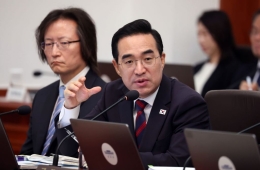
According to the “2027 Budget Proposal” announced by the Ministry of Planning and Budget on September 1, 2026, the government will more than double the budget related to national land transformation and region-led growth, expanding from 16.1 trillion won this year to 33 trillion won next year. Of this, the industrial sector budget—including the development of the ‘5 Core·3 Special’ growth engines—will see a significant increase from 200 billion won to 9.8 trillion won.
The core of the plan is the “5 Core·3 Special Growth Engines” policy, which intensively fosters industries with high growth potential in each region. The government will select a total of 25 growth engine industries—three to four per region—based on factors such as local industrial conditions, corporate investment plans, growth potential, and national industrial strategy. Large-scale investment subsidies for corporations, region-led R&D, and commercialization packages will be centered around these selected industries.
To directly incentivize companies to invest in regional areas, a new “Growth Engine Special Subsidy” worth 700 billion won will be established. If an anchor company in a growth engine industry makes a large-scale investment in a non-capital region, up to 50% of its facility investment will be subsidized. Eligible investments are defined as more than 300 billion won for large corporations and over 100 billion won for mid-sized companies, specifically for large-scale or strategic regional investments.
The subsidy rate will be determined by comprehensively considering the investment scale, joint investments by related enterprises, job creation, and contribution to the regional economy. The central government will provide subsidies of two to five times the amount already granted by the local government. The ratio of central government support will also reflect factors such as local government efforts to attract investment, the local region preference index, and whether administrative integration has taken place.
Public funds will also be invested to support the industrial transformation to artificial intelligence (AX) in regional economies. The budget for building region-led AX innovation ecosystems—linking regional specialized industries with AI technology development and on-site demonstration—will be expanded from 200 billion won this year to 400 billion won next year. Target industries include precision manufacturing in South Gyeongsang Province, AI factories in North Jeolla Province, mobility and energy in Gwangju, and robotics and biotech in Daegu.
Hot Picks Today
 "I Want to Pack Up and Move to Korea Right Now": Overseas Gen Z Drawn to Jobs Offering Housing and Health Insurance
- "I Thought Money Could Tame Him"... Fukuyama Admits His Misjudgment After 30 Years
- Is Samsung Electronics' Hurdle Clearing?... Target Price Surges, Driven by New Product Mix Expansion and Yield Improvement [Click eJongmok]
- "Over 6,000 Infected, Half Dead"... DR Congo on Alert Amid 'Worst-Ever Ebola Outbreak'
- Packed Crowds with “It’s So Cheap!”... Japan Travel by UK Millennials & Gen Z Surges 25% in a Year
The government will also strengthen the financial capacity of local governments to make independent investments. Five trillion won will be allocated as integration incentive funds to support the successful establishment of the newly integrated metropolitan city of South Jeolla and Gwangju, and an additional 3.5 trillion won will be newly budgeted for the Regional Future Growth Support Fund. This fund can be used for developing local growth hubs and improving residential conditions.
© The Asia Business Daily. All rights reserved. Unauthorized AI training and use prohibited.