VigenCell Launches Korea's First Advanced Regenerative Medicine Treatment
Treatment Begins September 1 at Yeouido St. Mary's Hospital
Targets 15 Patients with Rare Lymphoma
First Treatment Plan Approved Based on Commercial Clinical Trial Results
The first advanced regenerative medicine treatment in Korea utilizing 'VT-EBV-N,' a cell therapy developed by VigenCell, a company specializing in new drug development, is set to begin.
VigenCell announced that patient treatment would start from September 1 at Yeouido St. Mary's Hospital in accordance with the advanced regenerative medicine treatment plan submitted by Yeouido St. Mary's Hospital. This treatment plan marks the country's first 'advanced regenerative medicine treatment No. 1,' which was approved by the Ministry of Health and Welfare in April.

The treatment will be carried out at Yeouido St. Mary's Hospital for the next two years. It targets 15 patients with complete remission of EBV-positive extra-nodal NK/T-cell lymphoma who are at high risk of recurrence. VigenCell is responsible for the production and supply of VT-EBV-N used in the treatment.
The treatment plan is supported by the results of commercial clinical trials conducted with approval from the Ministry of Food and Drug Safety. Previously, the assessment of treatment plans was in principle based on safety and efficacy data acquired through clinical research in advanced regenerative medicine. However, through a specific regulatory sandbox exception, the results of commercial clinical trials can now also be used as evidence for determining the safety and efficacy of the treatment plan. As a result, this marks the first case in which clinical evidence obtained from drug clinical trials under the authority of the Ministry of Food and Drug Safety has been linked to advanced regenerative medicine treatment under the Ministry of Health and Welfare.
VT-EBV-N is an autologous antigen-specific T-cell therapy that targets the core antigens of EBV. In phase 2 clinical trials, it met its primary endpoint by significantly improving the two-year disease-free survival (DFS) compared to the control group. According to the four-year follow-up results presented at the American Society of Clinical Oncology (ASCO 2026) in May, the overall survival rate (OS) was maintained at 100%, and the disease-free survival rate (DFS) was 95.0%.
Through this treatment, VigenCell plans to further secure safety and efficacy data from actual clinical settings, manage the entire process from final patient selection, cell manufacturing, quality management, and supply to medical institutions, and verify its supply capability in real-world treatment environments.
Hot Picks Today
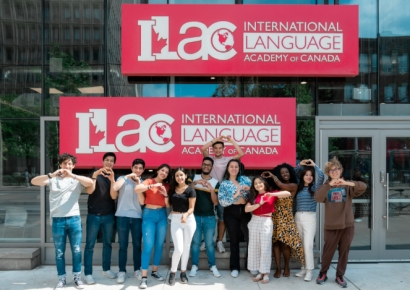 "Quit Job to Start Life in Canada, Now Forced to Return Home"… Language School Closure Leaves Korean Students Stranded
- [Exclusive] "Oh, Oh! Why Is the Seatback Like This?" Hyundai Ioniq 9 Recalled in Korea: 15,000 Units Due to Power Seat Entrapment Risk
- "When Was the Last Time I Went?" With Fewer Visitors, 80% of Japan’s Neighborhood Bathhouses Disappear in 50 Years
- "Typical Italy? This Tour Package Sold 300% More"...Destinations Chosen by Koreans
- Hanwoo Can't Even Dream of This... "Melts in Your Mouth" as Wagyu Hits It Big in U.S. Supermarkets and Fast-Food Chains
VigenCell CEO Pyeongseok Ki stated, "VT-EBV-N, which has already shown relapse prevention effects in long-term follow-up data, is now about to be applied in real clinical settings," and added, "We will do our best to ensure stable manufacturing and supply in close cooperation with Yeouido St. Mary's Hospital and government agencies."
© The Asia Business Daily. All rights reserved. Unauthorized AI training and use prohibited.