Unemployment Benefits to Drop from 1.98 Million to 1.76 Million Won per Month...Employment Insurance Premium Rate to Rise from 1.8% to 2%
Job-Seeking Benefits to Be Paid 6 Days a Week Instead of 7, Total Amount Unchanged
The payment method for unemployment benefits (job-seeking allowance) under employment insurance will be changed to cover six days a week, excluding unpaid holidays. While the total payment amount and the number of eligible days will remain the same, the actual benefit period will be extended in order to address the situation where recipients of unemployment benefits end up receiving more per month than minimum wage earners.
The Ministry of Employment and Labor announced on September 1 that it reported the results of the "Employment Insurance System Reform Task Force" and deliberated on the "Plan for Employment Insurance System Reform" at the Employment Insurance Committee held on the same day.

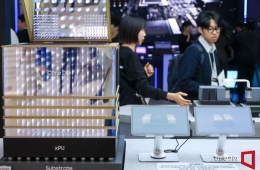
Job seekers participating in the "2026 Joint Financial Sector Job Fair" held at Dongdaemun Design Plaza in Jung-gu, Seoul, on the 19th, are preparing for on-site interviews. 2026.8.19 Photo by Kang Jinhyung
View original imageJob-Seeking Allowance: 7 Days a Week → 6 Days, Total Amount and Eligible Days Maintained
Currently, the job-seeking allowance is paid for 120 to 270 days depending on the recipient’s age and the duration of employment insurance coverage at the time of separation, calculated as 60% of the average wage over the three months prior to leaving the job, based on a seven-day week. As of this year, the daily upper limit is 68,100 won, while the lower limit is set at 80% of the minimum wage.
This has resulted in a situation where the monthly unemployment benefit payments exceed the monthly earnings of minimum wage employees working five days a week. When unemployment benefits were first introduced in 1995, the standard six-day workweek meant that wages and benefits were aligned. However, since the five-day workweek was introduced in 2004, job-seeking allowances have continued to be calculated over seven days per week, resulting in a reversal of this alignment.
Under the revised plan, the number of payment days per week will be reduced from seven to six, but the total payment amount and the 120 to 270 days of eligibility will remain unchanged. Consequently, the actual benefit period will be extended by about three weeks at minimum and up to about one and a half months at maximum. The upper limit for unemployment benefits will also shift from a fixed amount to one linked to the lower limit. To prevent the lower limit from exceeding the upper limit due to rising minimum wages, the upper limit will be set at 103% of the lower limit. Applying next year’s minimum wage of 10,700 won, recipients eligible for 150 days of benefits will receive a minimum monthly payment of 1.76 million won and a maximum of 1.81 million won.
The criteria for the early re-employment allowance will also be tightened. If monthly income after re-employment is 3 million won or more, the allowance will not be paid. This is a significant reduction from the previous threshold of 5.74 million won and is intended to prevent the allowance from being paid to those who would likely find employment early even without the incentive.

On the 19th, job seekers participating in the "2026 Financial Sector Joint Recruitment Fair" held at Dongdaemun Design Plaza in Jung-gu, Seoul, are bustling. August 19, 2026 Photo by Kang Jinhyung
View original imageSeparate Maternity Account for Parental Leave Benefits... Premium Rate to 2.0%
In 2028, the government will establish a new "Work-Family Reconciliation Account" to separately manage maternity protection benefits including parental leave benefits. There have been concerns that a significant portion of maternity protection expenditures have been paid out of the unemployment benefit account, thus increasing the financial burden of the unemployment benefit fund. With parental leave benefits being expanded as part of countermeasures for low birth rates, related expenditures have also been growing rapidly.
Last year, 184,000 people received parental leave benefits, an increase of 39.1% over the previous year. The number of male recipients rose 60.7% to 67,000. As a result, maternity protection benefit expenditures more than doubled from 2.1 trillion won in 2022 to 4.3 trillion won last year. The unemployment benefit account recorded 15.7 trillion won in revenue and 17.4 trillion won in expenditures last year, resulting in a deficit of 1.8 trillion won. The reserve fund amounted to just 1.8 trillion won, and after factoring in 7.7 trillion won in public funds borrowed during the COVID-19 response, the net reserve is equivalent to minus 6 trillion won.

To secure funds, the employment insurance premium rate will increase from the current 1.8% (0.9% by employees, 0.9% by employers) to 2.0% (1.0% each). The government also plans to raise next year’s general account transfer to 900 billion won, a 50% increase from this year, and to continue increasing the amount incrementally until 2029.
Once the new account is established in 2028, the government will review the scale of maternity benefit expenditures and discuss what proportion of the total 2.0% insurance premium should be allocated to the Work-Family Reconciliation Account. By the end of this year, the government also plans to establish a detailed cost-sharing principle by signing a memorandum of understanding (MOU) involving the Ministry of Employment and Labor, the Ministry of Economy and Finance, and labor and management representatives.
Additionally, the government plans, in the long term, to expand employment insurance coverage to "provide protection to all working people," using a "negative listing" approach whereby only certain cases are excluded, rather than listing those eligible. This year, a research project on the status of workers with business service income will also be completed.
Hot Picks Today
!["Let's Hit It Big in Korea"... Foreigners Flock to 'This Place' [Weekend Money]](https://cwcontent.asiae.co.kr/asiaresize/93/2026101613053663640_1792123535.jpg) "Let's Hit It Big in Korea"... Foreigners Flock to 'This Place' [Weekend Money]
"Let's Hit It Big in Korea"... Foreigners Flock to 'This Place' [Weekend Money]
- "Honestly, Korean Internet Users Really Are Disgusting"... Man Who Threatened to Kill Koreans Offers Absurd Excuse
- “What Now for Samsung and SK hynix?” ... Could News from China Rattle the KOSPI? Shareholders Anxious
- 'Little BoA,' They Said... Apology Over Unpaid Wages Fails to Quell Fury: "Do They Have Money to Debut Their Daughter?"
Minister of Labor Kim Younghoon stated, "With the recent rebound in the birth rate, it is crucial to ensure the sustainability of the budget to continue the positive results of low birth rate policies. By establishing the Work-Family Reconciliation Account, we will clarify the state’s responsibility and lay a solid financial foundation through shared contributions from labor, management, and government."
© The Asia Business Daily. All rights reserved. Unauthorized AI training and use prohibited.


!["Please, Just Take Them Off" - They Made It All the Way to Bed... Then Fecal Bacteria Struck [Deep Scroll]](https://cwcontent.asiae.co.kr/asiaresize/307/2026101610053063338_1792112730.png)