Trump Says "Rates Too High"... 10-Year US Yield Surpasses 4.75% (Comprehensive)
10-year yield breaks above 4.75%, highest since January last year
Hawkish remarks from Warsh and surging oil prices strengthen rate hike outlook
Trump: "US rates should be the lowest in the world"
The yield on the 10-year US Treasury surpassed 4.75%, influenced by the hawkish remarks of Federal Reserve (Fed) Chair Kevin Warsh and a sharp surge in international oil prices. In this context, US President Donald Trump effectively pressured Chair Warsh to cut rates, arguing that the US benchmark interest rate is excessively high. While the market is reflecting the potential for further rate hikes, President Trump has openly demanded a monetary policy direction that is the complete opposite.

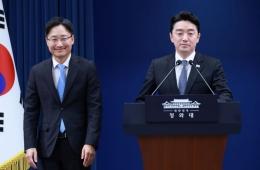
On the 31st (local time) in the Oval Office of the White House, President Trump was asked by reporters, "Chair Warsh indicated the possibility of a rate hike; do you oppose this?" He replied, "No. I have a lot of respect for him, and he will do what he has to do."
Nevertheless, he immediately reiterated his existing stance that current rates are excessively high. President Trump argued, "I believe we should be bearing much lower interest rates than any country in the world," again emphasizing the need for a rate cut.
President Trump also rejected the view that economic growth itself leads to inflation. He said, "Success and growth do not cause inflation," adding, "A strong economy does not mean we have to raise rates, and in many cases, we actually need to lower them."
While Chair Warsh has recently left the door open for additional rate hikes to rein in inflation, President Trump has once again called publicly for a rate cut, drawing renewed attention to the tension between the White House and the Fed over monetary policy.
On the 28th, at the economic policy symposium held in Jackson Hole, Wyoming, Chair Warsh stated, "We have work to do" if he is not convinced that inflation is heading toward the Fed's 2% target. This was interpreted as a signal that the Fed could resort to additional rate hikes if price deceleration is deemed insufficient.
In fact, following Chair Warsh's remarks, expectations for a rate hike in September have spread rapidly in the market. In the interest rate futures market, the probability that the Fed will raise the benchmark rate by 0.25 percentage points next month was reflected at around 64%. This is a significant jump from about 35% prior to Chair Warsh's Jackson Hole speech. Barclays revised its outlook after Warsh's remarks, now projecting that the Fed will increase rates by 0.25 percentage points each in September and December.
Trump calls for a rate cut, but 10-year US yield breaks above 4.75%

Contrary to President Trump's call for a rate cut, market interest rates actually surged. On this day in the US Treasury market, the benchmark 10-year Treasury yield climbed to an intraday high of 4.764%, surpassing the 4.75% mark. This is the highest level since January 15 last year. The five-year yield also soared to its highest level since early last year.
The most direct cause of the recent rise in Treasury yields is the potential for further tightening by the Fed. Bloomberg reported that as Chair Warsh heightened his vigilance on inflation at Jackson Hole, investors are factoring in the possibility of a rate hike into Treasury prices.
Furthermore, renewed military clashes between the US and Iran have driven a sharp increase in international oil prices, adding pressure to the bond market. On this day, West Texas Intermediate (WTI) crude surged more than 2% to above $85 per barrel, while Brent crude surpassed $90. This came as the US attacked Iran's Larak Island, followed by Iran launching missile strikes targeting US military facilities, escalating tensions around the Strait of Hormuz.
If rising oil prices reignite inflationary pressures in the US, the likelihood of additional Fed rate hikes could increase. In fact, the US stock market fell across the board on this day, burdened by soaring oil prices and rising Treasury yields. There is growing concern in the market that if military tensions in the Middle East are prolonged, rising energy prices could lead to widespread inflation.
The personal consumption expenditures (PCE) price index, the Fed's preferred inflation gauge, rose 3.7% year-on-year in July, remaining well above the Fed's 2% target. Amid these developments, even as President Trump publicly calls for a rate cut, the bond market appears to be reflecting the potential for further Fed tightening.
Hot Picks Today
 'Big Investor' NPS Has Already Cut Its Losses... Sold Department Store Stocks in Q3 Despite Strong Earnings Outlook
- "Female Teachers Must Wear Skirts in Class"... Outrage Erupts Over Principal's Demand: What's Happening in North Korea?
- "I've Never Seen So Few Customers"... Wave of "Donjjul" Support for Restaurant District That Stood Up to Knife-Wielding Suspect
- "I Put in 10 Million Won, but Only 2 Million Won Is Left" ... 77% Plunge Leaves Retail Investors in Samsung Electronics and SK hynix Leveraged ETFs Crying Out
- "The leggings are all see-through. It's so embarrassing to look at," complaints prompt Lululemon to fire development staff.
Meanwhile, the Fed is scheduled to hold the Federal Open Market Committee (FOMC) meeting on September 15-16 to decide on the benchmark interest rate.
© The Asia Business Daily. All rights reserved. Unauthorized AI training and use prohibited.