Cho Hyun Requests Nepalese Military Support for Intensified Search for Nine Missing Koreans in Nepal
Expresses Gratitude for the Rescue of 10 Stranded Koreans
Calls for Intensive Search Around Suspected Last Known Locations of Missing
Korean Rapid Response Team Begins Overland Search Amid Helicopter Difficulties
Considers Deployment of Drones
Foreign Minister Hyun Cho has requested active support from the Nepalese military in the search for nine Korean nationals who went missing after contact was lost during the recent floods in Nepal. The joint rapid response team dispatched by the Korean government is expanding its search methods—including overland searches and the deployment of drones—due to difficulties in operating helicopters locally.

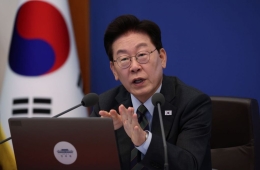
Foreign Minister Chohyun is presiding over a meeting of the Overseas Nationals Protection Headquarters related to the missing Korean nationals in the Nepal flood at the Ministry of Foreign Affairs on the 26th. Photo by Yonhap News
View original imageAccording to the Ministry of Foreign Affairs, on the afternoon of the 31st, Minister Cho had a phone conversation with Nepalese Foreign Minister Shisir Kanal to discuss the status of search and rescue operations for the local victims. This was the second phone call following their initial conversation shortly after the floods broke out on the 27th.
Minister Cho first expressed gratitude to the Nepalese government for safely rescuing the 10 Korean nationals who had been stranded in the disaster area. He then requested special cooperation from the Nepalese authorities for the rapid search and rescue of the nine Korean nationals who remain missing.
He particularly requested the Nepalese military’s assistance to concentrate search efforts on the locations where the missing individuals were last believed to have been. Cho also called for close coordination between the Korean government’s rapid response team on the ground and Nepalese authorities.
The nine individuals who remain uncontacted include three employees of Korea South-East Power Co., Ltd. and six employees of Doosan Enerbility, all of whom were working on a hydroelectric power plant construction project in the Rasuwa region of Nepal. Meanwhile, 10 other Korean employees of Doosan Enerbility, who had also been stranded, were rescued by Nepalese military helicopters and other means.
On the 29th, the Korean government twice deployed leased helicopters to search visually for the missing, scanning suspected areas around the office buildings at the accident site and recording video footage, but did not find the missing individuals. The Nepalese military conducted a separate search based on GPS coordinates provided by the Korean side.
On the 30th, the government and Doosan Enerbility each sought to deploy two more leased helicopters, but the Nepalese authorities did not grant flight permission, citing safety concerns and airspace congestion, resulting in the cancellation of the search flights. The Nepalese government is restricting civilian helicopter operations due to the risks of additional floods and landslides.
As a result, from the 31st, the rapid response team began conducting ground searches as well. They plan to approach the Rasuwa area as closely as possible, departing from the Batar area in Bidur, about 70 kilometers from the accident site. If helicopter operations become possible, the initial focus will be on the weir dam and Dunche areas, where some of the missing individuals reportedly worked; the team is also considering using drones depending on the conditions on site.
Although there have been some foreign news reports that many workers have been trapped in hydroelectric power plant tunnels, the Ministry of Foreign Affairs considers it unlikely that the missing Koreans are in such tunnels. This is because the tunnels are located a significant distance from their usual work sites, making it unlikely that they would have taken refuge there during the floods. In Nepal, the military and rescue teams are continuing efforts to rescue workers trapped in tunnels at various hydroelectric power plants.
During the call, Minister Kanal explained the damage situation in Nepal and the progress of search operations at the sites, including the tunnels, and expressed gratitude for the Korean government’s condolences and solidarity. Minister Cho responded that the Korean government is also reviewing possible support measures in areas where Nepal’s needs are greatest.
Hot Picks Today
 "Once Worth 4 Million Won a Day, Now Going for Chicken Money"... Chinese Robots' Humiliating Fall to 'Bargain-Bin' Prices in Just One Year
- "Who Says It's a Meal for Ordinary People? It Deserves 'Special Dish' Status Now"... The Era of 12,000-Won Bibimbap
- [This Week's Stocks to Watch] Live or Die by AI... All Eyes on Kakao's 'AI Assistant'
- It's Hard to Buy a Home, Yet "We Won't Take It Even If You Leave It to Us"... Why People Avoid Inheriting Their Parents' Homes
- "It Wasn't Jeju or Busan"... 'Santorini of Korea' Draws Crowds of Travelers in Their 20s and 30s Lately
Previously, on the 28th, the government sent letters of condolence—one from President Lee Jaemyung to Nepalese Prime Minister Shah and another from Minister Cho to Minister Kanal. The two countries’ foreign ministers also agreed to maintain close communication during efforts to rescue victims—including Koreans—and in the recovery of areas damaged by the floods.
© The Asia Business Daily. All rights reserved. Unauthorized AI training and use prohibited.