"Lost the Medical School and Main Government Office, but Told to Accept Only the Military Airbase?"... Mokpo and Muan See Growing Claims of Southwest Region Being Overlooked
Explosion of Relative Deprivation in the Southwest Following Selection of Suncheon National University as National Medical School Candidate
Residents' Vote Becomes Crucial Test of Trust
in Balanced Development of the Unified City, Beyond the Relocation Issue
As Mokpo National University was eliminated from the selection process for the establishment of a new national medical school in Jeonnam-Gwangju, the backlash in the Mokpo and Muan regions as well as the broader southwest area is spreading to the issue of relocating Gwangju’s military airbase to Muan.
While the national medical school, which residents have awaited for 36 years, will go to Suncheon National University in the eastern region, and the planning, political affairs, and semiconductor manufacturing facilities of the unified metropolitan city will be allocated to Gwangju, there is growing resistance that only the noise and property rights damage of hosting the military airbase will be left to Muan.

In particular, a residents' vote in Muan County—effectively the final hurdle for the relocation of the Gwangju military airbase—is expected to take place around October. There are forecasts that deteriorating sentiment in the southwest, aggravated by Mokpo National University’s failure to attract a medical school, could significantly influence the voting outcome.
On August 30, Jeonnam-Gwangju Unified Special City decided to recommend Suncheon National University to the Ministry of Education as the candidate for the new national medical school. In the evaluation with eight national medical experts, Suncheon National University scored 89.15 points and Mokpo National University 87.85 points—a narrow difference of just 1.3 points. Although the government’s final approval is still pending, it is effectively seen as the end of Mokpo National University’s bid for a medical school.
On August 31, Muan County issued a statement saying, "We express not only disappointment but also deep regret," urging the government and the unified special city to quickly establish a hub hospital with tertiary care capability and a comprehensive regional healthcare system. Muan County Governor Kim San also emphasized that even if a medical school and university hospital are established in Suncheon, this does not resolve the medical service gap in the southwest region.
However, local residents’ reactions remain cynical. They argue that simply expressing regret and asking for alternative medical facilities after the bid has failed cannot soothe the sense of loss felt by southwest residents.
In a message sent to this paper by a local citizen, it was criticized that "since the Gwangju-Jeonnam merger, the southwest region, including Mokpo and Muan, has been thoroughly neglected." The message continued, "While Mokpo National University’s bid for a medical school failed in favor of Suncheon National University, all the developmental gains go to Gwangju and the eastern region, while Mokpo and Muan are left to bear the sacrifices and burdens."
Dissatisfaction over the location of the new government complex for the unified special city is resurfacing in connection to the grievances over the medical school loss.
The unified special city currently operates three offices in Gwangju, Muan, and the eastern area. According to the first organizational reform plan, the Gwangju office is responsible for planning, political affairs, and policy; the Muan office handles budget, administration, balanced regional development, agricultural and fisheries administration, and metropolitan affairs; and the eastern office is responsible for industry and investment. Based solely on the official structure, the Muan office is not excluded—it has been assigned major responsibilities like budgets and administration.
Nevertheless, the system of making Muan the central office demanded by southwest residents was not realized, and with the planning and political affairs functions that govern the entire unified city being allocated to Gwangju, distrust persists; people say, “In reality, the true central office has ended up in Gwangju.”
As the eastern office expands as a hub for industry and investment, and now even Suncheon National University has secured the national medical school, the sense is growing in the southwest that all core growth functions from unification have been concentrated in Gwangju and the eastern region.
Semiconductor and artificial intelligence investments now being split between Gwangju and Haenam are also cited as increasing feelings of relative deprivation.
Samsung is planning to designate Gwangju as a candidate site for a semiconductor cluster, and at Solaseido in Haenam, Samsung SDS announced it will establish a 210MW-class AI data center to begin operations in 2028. While large-scale investments could help industrial infrastructure across the southwest, some residents perceive that high-impact facilities like semiconductor manufacturing—which drive jobs and related industries—are allocated to Gwangju, while only a data center is placed in Haenam.
There are concerns about whether a large-scale data center will actually lead to enough permanent personnel, local jobs, and population influx to match its investment. What southwest residents demand is not just investment announcements, but tangible benefits such as hiring local talent, having partner companies move in, relocating headquarters and research facilities, and increasing local tax revenue.
The national industrial complex in Muan is also met with both expectations and skepticism.
On August 25, the Ministry of Land, Infrastructure and Transport designated 3.47㎢, about 1.05 million pyeong, in Hyeon-kyung-myeon, Muan County as a candidate site for a national industrial complex. This was a follow-up to support measures promised by the six-party consultative body on relocating the Gwangju military airbase. Jeonnam-Gwangju and Muan County plan to attract strategic industries and secure real demand for the site.
However, this decision is only for designating a candidate site, not completing the complex. There remain a number of subsequent steps: formulating and approving the industrial complex plan, selecting an operator, land compensation, creating basic infrastructure, and attracting tenant companies.
This is why some residents note, "The national industrial complex has been designated, but there’s no telling when actual development or company move-ins will happen." Even if the complex is built, unless companies and workers settle in the area, its effect on boosting the population and the local economy in Mokpo and Muan may be limited.
Uncertainty is also rising surrounding the second round of relocating public institutions to local regions.
The government has not yet confirmed which institutions will be relocated or to which areas. The announcement is expected to be postponed until October or November. There are observations that, as the Ministry of Land, Infrastructure and Transport has emphasized concentrating public institutions in existing innovation cities, a large number of Jeonnam-Gwangju’s relocated institutions may be centralized in the Bitgaram Innovation City in Naju.
In the southwest, there are growing calls to decentralize at least those institutions linked to local industries—such as the National Federation of Fisheries Cooperatives, Korea Fisheries Infrastructure Public Agency, Korea Airports Corporation—to Mokpo, Muan, and other locations. If even the second relocation is concentrated in Naju, some suggest that administrative unification could simply replace dominance by the capital area with new imbalances within the unified city.
The local political community is also being held strongly responsible.
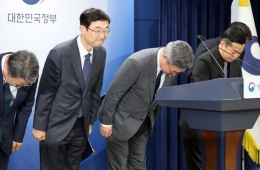
The political leadership in Mokpo issued a joint statement immediately after Mokpo National University’s elimination, bowing their heads and apologizing to the people of Mokpo and the southwest for “the shattering of 36 years of desperate hopes,” while calling on the government and unified special city to come up with medical countermeasures for the southwest.
However, some residents criticize that apologies and expressions of regret alone cannot substitute for accepting responsibility.
In citizens’ messages, figures such as lawmakers Park Ji-won, Seo Samseok, and Kim Woni were directly mentioned, with pointed remarks: “While politicians and citizens of the eastern region mobilized entirely for a strong public campaign, what did the politicians of the southwest defend?”
Criticism continued: “In complacency that you’ll be elected again in the next election, did you put your own political interests above the region’s future?” This not only reflects the distrust of southwest residents caused by the medical school matter, but also by successive negative outcomes on government office allocation, advanced industries, and relocating public institutions.
Attention is now turning to how these sentiments will manifest in the upcoming residents' vote on the airbase relocation, expected in October.
On August 28, the Ministry of National Defense confirmed the Mangu-myeon area in Muan County as the candidate site for relocating the Gwangju military airbase. Moving forward, the final relocation site will be decided by the Ministry of National Defense after drawing up a support plan for the relocation area, holding the residents’ vote, and reviewing the application submitted by the Muan County governor. The outcome of the residents’ vote will effectively determine success or failure, as the governor’s application depends on it.
The government and unified special city are proposing a 1 trillion won support package for the relocation area, creation of a national industrial complex, and relocation of Gwangju’s civilian airport to Muan International Airport. Their plan is to foster Muan as a hub for aviation, logistics, and high-tech industries via the unified airport and national industrial complex.
On the other hand, residents of Muan have long worried about jet noise, restrictions on property rights, and the impact on their living environment. If the promised support package remains merely declarative and not a binding legal obligation, many expect it will be difficult to persuade residents.
In particular, the failure to attract a medical school to Mokpo National University has expanded the existing divide over the airport relocation into a broader issue of “trust in unification.”
One citizen asserted, “Are you trying to dump only the noise and damage of the Gwangju military airbase on Muan, while denying the southwest a medical school, main government office, or even a semiconductor fab? If the fruits of development go to Gwangju and the east, and only Mokpo and Muan are left with the sacrifices and burdens, that’s not a unification we can accept.”
The resident added, “Until reliable plans and legal measures are put in place to guarantee the future of the southwest, we must oppose the relocation of the military airbase. This is not obstinacy or regional selfishness, but a legitimate expression of residents seeking to protect their right to exist after being sidelined.”
Accordingly, it is pointed out that before the referendum, the government and unified special city need to present not just a total support amount but detailed plans with guaranteed enforceability.
This includes clarifying, in official documents and legal frameworks, the share of the 1 trillion won package to be borne by the government and unified city, year-by-year investment plans, schedule for starting and completing the national industrial complex, anchor tenants’ plans, mandatory hiring of local talent, parameters for compensating noise-related damages, plans for residents’ relocation and property rights protection, and the timeline for activating Muan International Airport.
Southwest public healthcare solutions must also be defined as a national responsibility, separate from airbase support programs. If the location and bed size of a university hospital, government funding, and plans to secure essential medical personnel are not specified, then the “regional comprehensive healthcare system” promised after Mokpo National University’s elimination could become just another empty declaration.
The residents’ vote to be held this October is unlikely to be a simple question of whether to move the airbase.
The pent-up sense of loss over the medical school, government offices, semiconductors, national industrial complex, and public institution relocations, as well as trust in the unified special city, are likely to be expressed all at once at this political crucible.
Hot Picks Today
 "Even New York Taxi Drivers Are Talking About the KOSPI; South Korean Market to Top 9,000 Again Within a Year"... 'Wall Street's Stock-Picking Ace' Names His Picks
- “Made 2 Billion Won in One Year in Prison,” PPP Lawmaker Retorts: “If You’re Jealous, Go There Yourself”
- “Washing Dishes and Folding Clothes 200 Times a Day”... China’s “Robot Trainers” Earn Up to 1.2 Million Won a Month
- One Night Out Costs 30,000 Won... People in Their 20s and 30s: "I Can't Even Grab a Casual Drink Out Anymore"
- Idol Member Posts Letter Saying "Suspending Activities Due to Pregnancy"... Turns Out She's AI?
If the perception persists that the fruits of unification are being reaped by Gwangju and the eastern region while only distant promises and sacrifices are demanded from the southwest, persuading residents will become increasingly difficult.
© The Asia Business Daily. All rights reserved. Unauthorized AI training and use prohibited.