Crisis or Opportunity... The Game Industry Faces AI
Samjong KPMG Releases Industry Report
Cost Efficiency a Universal Focus as Competition Intensifies
Collaboration Expands into Defense and Mobility with AI Technology
"Need Strategies to Respond to Chinese Game Companies"

As the game industry shifts its focus from the quantitative growth of total users to centering on loyal core users and intellectual property (IP), it is being analyzed that business expansion utilizing artificial intelligence (AI) and physical AI is emerging as a new growth opportunity.
While barriers to entry for game development are becoming lower, leading to fiercer competition in the core business, accumulated technologies in game engines, 3D content, and simulation are now being applied to AI development and validation across various industries such as robotics, autonomous driving, and smart factories, creating opportunities for new growth according to industry experts.
On August 31, Samjong KPMG published a report titled “Changes in the Game Industry Through Six Key Questions,” which covers these trends. The report raises the following questions: ▲Changes in user ecosystem ▲IP-centered growth strategies ▲Expansion into physical AI ▲Broader utilization of AI ▲Enhancement of competitiveness in China’s game industry ▲Rising costs.

First, in terms of users within the game industry, competition has intensified with alternative leisure channels such as broadcasting and online video services (OTT). As a result, the influence of core users on platforms that offer high levels of immersion, such as PC and console, is growing stronger.
Fandoms are consolidating around content targeting clear user preferences—for example, subculture and indie games. The report also analyzes that the expansion of user-generated content (UGC) and AI creation tools is transforming users into active players in the creation and monetization process.
The report recommends, “It is necessary to pursue a dual-track strategy that strengthens core users’ participation in IP, live services, and communities with a focus on loyalty and engagement time, while also leveraging UGC and similar tools to encourage the return of light users.”
Physical AI is also highlighted as a new revenue source. The game engines, 3D content, and physics simulation technologies accumulated by game companies are now being reevaluated as core assets in building learning and validation environments for physical AI in fields such as robotics, autonomous driving, and smart factories. Krafton, for instance, is expanding its investments in physical AI research and areas like humanoid robots and autonomous vehicles. Meanwhile, NC AI is applying virtual world creation technologies to world models and physical AI solutions in the defense and shipbuilding sectors.
The report states, “As collaboration with manufacturing, defense, and mobility companies expands, game companies will evolve into AI platform providers offering virtual environments and simulation data.”

However, the report points out the downsides associated with the application of AI technology. While it enhances efficiency in content production and management, there are growing concerns over “game slop”—the mass production of low-quality content.
The report also stresses the importance of monitoring and responding to growth trends in the Chinese game market. Chinese game companies, leveraging the capital, development expertise, and AI technology accumulated in their domestic market, are expanding into overseas markets from mobile to AAA-grade console and PC games. The report recommends, “To capture growth opportunities in the Chinese market, game companies need to closely monitor regulatory and industrial policy changes in China, while simultaneously pursuing diverse collaboration channels including publishing partnerships, joint development, and the use of Chinese capital.”
Hot Picks Today
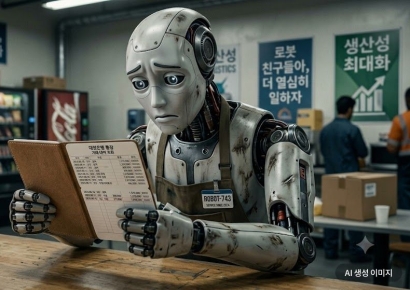 "Once Worth 4 Million Won a Day, Now Going for Chicken Money"... Chinese Robots' Humiliating Fall to 'Bargain-Bin' Prices in Just One Year
- "Used Gunpowder to Make Fireworks"... More Than Half of China's AI Tokens Go to Short-Form Dramas?
- It's Hard to Buy a Home, Yet "We Won't Take It Even If You Leave It to Us"... Why People Avoid Inheriting Their Parents' Homes
- "It Wasn't Jeju or Busan"... 'Santorini of Korea' Draws Crowds of Travelers in Their 20s and 30s Lately
Hun-Chang Oh, Vice President at Samjong KPMG, said, “Recently, the game industry has been reorganizing demand dynamics around users and IP, and as AI moves past creation innovation to open new growth axes such as physical AI, the scope of competition is rapidly expanding.” He added, “Game companies must secure a foundation for sustainable growth by connecting their core technologies and IP with new industries and business models.”
© The Asia Business Daily. All rights reserved. Unauthorized AI training and use prohibited.







![[Good Morning Stock Market] "KOSPI Expected to Recover Steep Losses... Watch Foreign Investor Flows in 'Samsung Electronics-SK hynix'"](https://cwcontent.asiae.co.kr/asiaresize/307/2026101610193563402_1792113574.jpg)