NPS Draws the Line on ‘Additional Payment’ Controversy: “Foreigners Who Paid Contributions Cannot Be Charged Higher Hospital Fees”
Restrictions on Foreigners’ Additional Contributions Should Not Be Based on Nationality
Limiting “One-Month Payment, 119-Month Additional Contributions” Is Necessary
Linking Payment Period with Additional Contribution Period Possible
Improv

Sungjoo Kim, President of the National Pension Service, is speaking at the ministry work report presided over by President Jae-myung Lee at the State Guest House of the Blue House on July 16. 2026.7.16 Yonhap News Photo by Yonhap
View original imageThe National Pension Service has commented on the recent controversy surrounding the additional contribution (retrospective payment) system for foreigners, stating that while it agrees certain restrictions are necessary, it believes that foreigners' rights to make additional contributions should not be discriminated against based on nationality.
On August 30, Sungjoo Kim, President of the National Pension Service, posted an article titled "Purpose, Issues, and Alternatives of the National Pension Additional Contribution System" on his social media, sharing his stance on the controversy over additional contributions by foreigners.
Kim first addressed the intention behind the additional contribution system, saying, "Refusing to pay mandatory contributions, then making a lump sum payment right before receiving a pension and enjoying the same benefits, does not align with a social security system based on mandatory universal participation." Nevertheless, he explained that the rather generous additional contribution policy in Korea was allowed because the country faces severe elderly poverty and the national pension system was introduced late and is not yet fully matured.
However, Kim drew a clear line against restricting foreigners' eligibility for additional contributions solely on the basis of nationality.
He stated, "Some ask, 'Why should foreigners be granted Korea's national pension?' but anyone working in a Korean workplace, regardless of nationality, is required to pay both the national pension and National Health Insurance premiums." He added, "Koreans working abroad also receive the same obligations and benefits. If someone has paid insurance premiums, you cannot refuse medical treatment or charge higher fees in Korea simply because the person is a foreigner."
He acknowledged that it is reasonable to consider placing certain limits on cases where someone contributes premiums for a very short period, such as '1 month of payment followed by retroactive contribution for 119 months,' and then makes additional contributions for a long past insured period.

Kim suggested, "It is possible to link the additional contribution period to the actual premium payment period, and to require real residence in Korea as a condition for payment." He proposed, "For example, allowing additional contributions only to those who have paid for at least one, three, or five years, or making the length of possible additional contributions equal to the period of actual premium payment." However, he also pointed out that introducing a residency requirement could mean that Koreans living overseas would lose eligibility for additional contributions or have their pension payments suspended. Kim further stated that specifics on how to improve the system should be the result of deeper discussions between the Ministry of Health and Welfare and the National Pension Service, and ultimately be enacted into law by the National Assembly.
Kim particularly emphasized the need for caution when restricting additional contributions from foreigners based on nationality or specific countries. He said, "If a foreigner has resided in Korea for a long time, has actually enrolled in the National Pension, and has paid the same premiums as Koreans, then denying them the right to retroactive contributions solely on the grounds of nationality is debatable." He continued, "The Constitutional Court also recognizes that social security agreements differ from country to country in both content and their objectives and manner of application. While the principle of reciprocity is reasonable, any method that discriminates against foreigners on the grounds of nationality must be approached with caution."
Kim also cautioned that discussion on reforming the system, if based on the number of additional contribution applications by foreigners in the first half of this year, could evolve into a debate on excluding people from specific countries. "Looking at the number of additional contribution applications by country for the first half of this year: Chinese-origin Koreans accounted for 792 cases (79.7%), China 64 cases (6.4%), the United States 47 cases (4.7%), Japan 30 cases (3.0%), and Canada 29 cases (2.9%)." He explained, "In total, 80% of foreign applicants making additional contributions were ethnic Koreans from China. Ultimately, restricting additional contributions by foreigners raises the question of whether it is socially acceptable for ethnic Koreans from China to receive the same level of social security benefits as Korean nationals."
Kim referenced cases of support and pension systems for overseas compatriots in other countries. "We have allowed ethnic Koreans with Russian nationality from Sakhalin to permanently return and have supported their settlement; after the war in Ukraine, we have also permitted ethnic Koreans with Ukrainian nationality to repatriate. In communities such as German Village in Namhae, nurses and miners who once worked in Germany reside in Korea, receiving German pensions and enjoying a comfortable retirement," he said. He also mentioned, "The National Pension Service has made efforts to secure pension entitlements for Korean Americans who have permanently returned, and since last year, staff from the U.S. Social Security Administration have visited Korea to provide direct counseling for these returnees."
Hot Picks Today
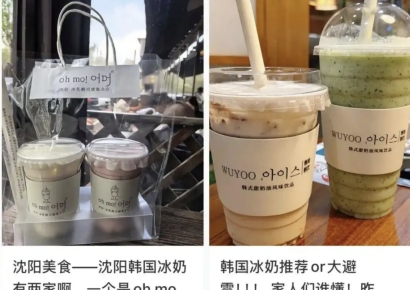 "There's a Drink Like This?"... Chinese Beverage With "Korean" in Its Name Rakes in 85 Million Won in Monthly Sales
- "Samsung Electronics at 70,000 won, SK hynix at 200,000 won"... Why the gloomy outlook despite 'record-breaking earnings'?
- Woman Found Collapsed Barefoot on Street, Leaving 3-Year-Old Child Unattended... Turns Out She's Part of a "Wealthy Royal Family"
- "I Put in 10 Million Won, but Only 2 Million Won Is Left" ... 77% Plunge Leaves Retail Investors in Samsung Electronics and SK hynix Leveraged ETFs Crying Out
- "The leggings are all see-through. It's so embarrassing to look at," complaints prompt Lululemon to fire development staff.
Kim stressed, "If, in the name of reciprocity, we say 'no additional contributions at all unless there is a social security agreement,' that would be problematic, because the existence of a social security agreement and an individual's right to claim pension benefits from actual contributions are entirely separate issues."
© The Asia Business Daily. All rights reserved. Unauthorized AI training and use prohibited.