Ruling Bloc Appoints Lee Haemin and Yong Hyein... President Lee Reshapes Cabinet and Blue House Team for Second Term
Kim Kyung-su Returns as Special Political Advisor, Signaling Party Unity
Current Vice Ministers Appointed for Economy and Land, Emphasizing Policy Continuity and Execution
Kim Seungwon and Lee Soyoung Tapped for Justice and SMEs; Han Jung-wo
On August 30, President Lee Jaemyung implemented a major reshuffle, announcing appointments for six cabinet ministries alongside a new team of aides at the Blue House, thereby organizing his administration's lineup for the second year in office. With his approval ratings on a continued downward trend, President Lee expanded his political talent pool to include not only members of the broader ruling bloc but also those close to allies of former President Moon Jae In. In key policy areas such as the economy, real estate, and artificial intelligence (AI), the President selected officials and experts with direct experience overseeing these existing policies. This move is seen as an effort to broaden the political spectrum while ensuring continuity and stability in core policies.

Cabinet Reshuffle Announcement
(Seoul=Yonhap News) Reporter Dohoon Kim = The Blue House announced that President Jae-myung Lee nominated six minister candidates, including the Deputy Prime Minister and Minister of Economy and Finance, on August 30.
From the top row, left to right: Lee Hyungil, First Vice Minister nominated as Minister of Economy and Finance; Kim Seungwon, Democratic Party lawmaker nominated as Minister of Justice; Kang Shincheol, former deputy commander of the Combined Forces Command, nominated as Minister of National Defense.
From the bottom row, left to right: Yong Hyein, Basic Income Party lawmaker nominated as Minister of Gender Equality and Family; Hong Jiseon, Second Vice Minister nominated as Minister of Land, Infrastructure and Transport; Lee Soyoung, Democratic Party lawmaker nominated as Minister of SMEs and Startups. August 30, 2026.
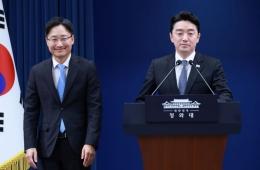
Chief Presidential Secretary Kang Hoon-sik held a briefing at the Blue House on this day, announcing the nomination of Yong Hyein, a lawmaker of the Basic Income Party, as Minister of Gender Equality and Family, and the nomination of Lee Haemin, a lawmaker from the National Innovation Party, as Senior Secretary for AI Future Planning at the Blue House. In another notable move, Kyungsoo Kim, a representative figure from the pro-Moon Jae In (pro-Moon) camp and former Chair of the Committee for Balanced National Development, was brought back as Senior Advisor for Political Affairs to the President. This decision is interpreted as an attempt to foster unity within the broader progressive bloc by recruiting key figures from opposition parties. Chief Secretary Kang stated, "If there were capable individuals among potential candidates from the opposition, we tried to bring them in as much as possible. The sole standard was ability."
Policy appointments prioritized continuity over change. Lee Hyungil, the First Vice Minister of the Ministry of Economy and Finance, was nominated as Deputy Prime Minister and Minister of Economy and Finance, and Hong Jiseon, the Second Vice Minister of the Ministry of Land, Infrastructure and Transport, was nominated as its Minister. Within the Blue House, a newly created position—Mega Project Advisor—was filled by Wonju Lee, Director of the Energy Transition Policy Office at the Ministry of Climate and Environment. By assigning practical leaders with a deep understanding of the Lee administration's policies to key posts, the government aims to accelerate policy implementation. Chief Secretary Kang repeated, "If there were capable individuals among opposition party members who could work together, we tried to bring them in. The sole criterion was capability."
An 'integration message' embodied through appointments across the progressive bloc

The Blue House announced that on the 30th, President Jae-myung Lee appointed former AI chief Ha Jung-woo (from left) as the Vice Chairman of the National Artificial Intelligence Strategy Committee. Additionally, former Gyeongnam Governor Kyungsoo Kim was appointed as the President's Senior Advisor for Political Affairs, Lee Hae-min, a member of the National Innovation Party, was named Senior Secretary for AI Future Planning in the Presidential Secretariat, and Wonju Lee, Director of the Energy Transition Policy Office at the Ministry of Climate and Environment, was appointed as the Presidential Secretariat's Mega Project Advisor. August 30, 2026, Yonhap News Agency
View original imageThe clearest political message in this reshuffle comes from the selection of Yong Hyein and Lee Haemin. Although neither is from the Democratic Party, both are politicians within the broader progressive and reformist camp who share significant policy alignment with the current administration. These appointments are part of an effort to expand the umbrella of the progressive bloc centered around the Democratic Party. Yong is a lawmaker known for her clear positions on basic income, gender, and the rights of the socially marginalized in the National Assembly; Lee, a lawmaker from the National Innovation Party, brings political symbolism along with AI expertise as a former Google engineer.
The appointment of former Chairman Kim Kyungsoo as Political Affairs Advisor is understood as a message directed at the Democratic Party itself. Calling Kim, a key figure among pro-Roh Moo Hyun and pro-Moon Jae In factions, back to the President’s side is seen as an attempt to bring even those previously competing within the party—particularly at the time of the party convention—into the administration’s fold.
This aligns with President Lee's repeated calls for party unity. At a dinner with the new Democratic Party leadership on August 25, President Lee described himself as “the most important member of the Democratic Party,” adding that “the President is the flower the Democratic Party has cultivated and nurtured.” This personnel policy reflects his strategy of forging broader alliances with progressive forces outside the party, while embracing the pro-Moon faction internally—a so-called “coalition outward, integration inward” approach made tangible through this reshuffle.
Incumbent vice ministers tapped for economic portfolios—emphasizing policy consistency
There is marked continuity in fiscal and real estate policy, exemplified by the appointments of current first and second vice ministers as candidates for Deputy Prime Minister and Minister of Economy and Finance, and Minister of Land, Infrastructure and Transport, respectively.
For nominee Lee Hyungil, some interpret his selection as a renewal move in response to recent calls for accountability within the economic team over real estate and stock market issues. However, the Blue House drew a line, stressing this was not a punitive replacement of the former minister. Chief Secretary Kang cited, for example, Lee's leadership in adopting a maximum price cap on oil during a period of surging oil prices from the Middle East, highlighting his execution capacity as the reason for his selection.
Nominee Hong Jiseon is also a field-oriented bureaucrat with extensive experience in housing, urban development, and transportation both in Gyeonggi Province and the Ministry of Land, Infrastructure and Transport. Assigning the current vice minister to the role of minister is interpreted as a sign that the government intends to consistently pursue already-announced supply measures in real estate policy, rather than altering its policy trajectory.
For AI policy, the Blue House named lawmaker Lee Haemin as Senior Secretary for AI Future Planning, while appointing Ha Jungwoo, the inaugural AI chief, as Vice Chairman of the National AI Strategy Committee. By also assigning Director Wonju Lee as Mega Project Advisor, the government aims to further strengthen coordination and execution across ministries.
Reform and security: tailored appointments
President Lee nominated Democratic Party lawmaker Kim Seungwon, a former judge and member of the National Assembly’s Legislation and Judiciary Committee, as Minister of Justice—he has worked on criminal justice system reform. For Minister of SMEs and Startups, he selected Democratic Party lawmaker Lee Soyoung, known for her focus on start-up and industrial policy. Both are considered close allies of President Lee.
As candidate for Minister of National Defense, President Lee nominated Kang Shincheol, a four-star general who previously served as Director of Operations at the Joint Chiefs of Staff and Deputy Commander of the ROK-US Combined Forces Command, and currently serves as Ambassador to Saudi Arabia. This appointment is understood as reflecting a balance between maintaining the stability of the South Korea-United States alliance and pushing for internal military reforms, like integration of the military academies, supported by internal expertise and authority.
Hot Picks Today
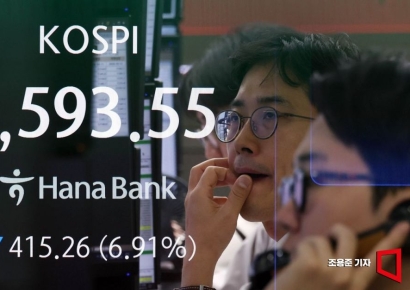 "I Invested KRW 10 Million, Only KRW 2 Million Is Left" ... 77% Plunge Sends Retail Investors Who Piled Into Samsung Electronics and SK hynix Leveraged ETFs Crying Out
- "There's a Drink Like This?"... Chinese Beverage With "Korean" in Its Name Rakes in 85 Million Won in Monthly Sales
- "No Need to Hire a Model"... The 25-Year-Old Woman Who Entered Social Media with a Face That Cost Just 1,500 Won [AI Content: The Bright and Dark Sides] 1
- "Samsung Electronics at 70,000 won, SK hynix at 200,000 won"... Why the gloomy outlook despite 'record-breaking earnings'?
- "The leggings are all see-through. It's so embarrassing to look at," complaints prompt Lululemon to fire development staff.
Chief Secretary Kang explained, "These are measures to lead a major, society-wide transformation for the Republic of Korea," and added, "Grounded in dynamism and expertise, we will deliver tangible results that the public can truly experience."
© The Asia Business Daily. All rights reserved. Unauthorized AI training and use prohibited.