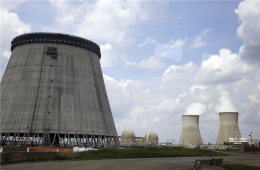
"Is Opposition to US Data Centers a Chinese Influence Operation?... X Blocks 200,000 Fake Accounts"
Academics and Politicians: "No Real Impact"
There have been claims that China is conducting social media influence campaigns in an effort to foment opposition to data centers in the United States.

X (formerly Twitter) revealed fake accounts from China promoting opposition to data centers. X
View original imageOn August 29 (local time), X (formerly Twitter) announced that it had discovered 200,000 fake accounts suspected of being used to manipulate public opinion in the U.S., with 200 of those accounts having actively engaged in influence operations related to America's artificial intelligence (AI) and energy policies.
These accounts posted AI-generated content claiming that AI data centers raise household electricity bills and strain the power grid, or asserted that data center operators are amassing wealth at the expense of the public. X stated, "We have suspended these accounts to ensure the platform remains a forum for genuine debate."
This coincides with OpenAI's "Threat Report" released in June, which revealed that China-affiliated ChatGPT accounts had continuously created posts and cartoons seeking to incite opposition to data centers.
However, according to U.S. business outlet Business Insider, Darren Linvill, co-director of Clemson University's Media Forensics Hub, countered that after tracking the hashtags and other content in the screenshots released by X, at least 59 of these bot accounts had no subscribers or interactions, meaning they could not have had any real impact on American public opinion.
Samuel Woolley, endowed chair for disinformation studies at the University of Pittsburgh, pointed out that reports about China’s anti–data center propaganda originated from OpenAI and X—companies with a direct business interest in the development of data centers. Elon Musk, who owns X, also leads the AI firm xAI and is actively expanding data centers. In this context, Elon Musk did not respond to Axios's request for comment.
Voices distancing themselves from the idea of Chinese involvement behind anti–data center sentiment have also emerged from Republicans. Texas Governor Greg Abbott, who switched from actively courting data centers to opposing them, stressed in a recent Fox News interview, "I did not change my policy because of anything China said, but because I listened to the voices of voters in my community and worked with them to address the real problems they were facing."
Hot Picks Today
 'Big Investor' NPS Has Already Cut Its Losses... Sold Department Store Stocks in Q3 Despite Strong Earnings Outlook
- "Female Teachers Must Wear Skirts in Class"... Outrage Erupts Over Principal's Demand: What's Happening in North Korea?
- "The Inner Aisles Are Risky; Stick to the Perimeter": Why a Doctor Warned
- "I Put in 10 Million Won, but Only 2 Million Won Is Left" ... 77% Plunge Leaves Retail Investors in Samsung Electronics and SK hynix Leveraged ETFs Crying Out
- "The leggings are all see-through. It's so embarrassing to look at," complaints prompt Lululemon to fire development staff.
There is also pushback from within the U.S. that local community concerns—such as electricity rates and strain on the power grid stemming from the rapid increase in data centers—are difficult to attribute solely to "foreign influence operations."
© The Asia Business Daily. All rights reserved. Unauthorized AI training and use prohibited.