Chey Tae-won: "Regulations Should Be Rationalized Based on Growth Potential... New Experimental Zones Needed"
Emphasizing the Creation of 'Mega-Special Zones' for Regulatory Innovation
"Urgent Need to Shift to Tailored Support Systems for Industries"
Chey Tae-won, Chairman of the Korea Chamber of Commerce and Industry, stated, "We must move away from determining support and regulation based on company size and instead rationalize regulations with a focus on the growth potential of industries." He also emphasized the need for a new experimental zone, in the form of a "mega-special zone," to empirically demonstrate both the effects and side effects of regulatory innovation.
Chairman Chey made these remarks at the "Economic Cooperation and Rationalization of Group Regulations Meeting" hosted by Prime Minister Han Seong-sook, held at the Korea Chamber of Commerce and Industry in Seoul on the 28th. He stated, "There are currently three significant gaps in the industrial field: gaps in time, location, and innovation." He criticized, "The time gap is exemplified by regulation on idle land that has prevented facility investment for 40 years; the location gap is seen when rice cake manufacturing is allowed in an industrial complex, but bread manufacturing is not; and the innovation gap is illustrated by cases where new innovative drugs are developed but, due to regulations, companies remain inactive."

Prime Minister Han Seong-sook and Chairperson Chey Tae-won of the Korea Chamber of Commerce and Industry are attending the 'Economic Cooperation and Rationalization of Group Regulations Meeting' held on the 28th at the Korea Chamber of Commerce and Industry in Jung-gu, Seoul. Photo by Kang Jin-hyung
View original imageAs a solution to these issues, he proposed establishing regulatory rationalization experimental zones. Chairman Chey argued, "Rather than simply abolishing regulations, we need an approach that designates two or three mega-special zones to empirically verify the effectiveness of regulatory easing with data." He also suggested using artificial intelligence (AI)–based simulations to prioritize which regulations should be addressed first.
Chairman Chey called for regulatory reform with a focus on growth. He explained, "For the past 30 years, using company size as the basis for regulation and support has removed incentives for businesses to expand on their own. To get Korea's economy back on the path of growth, we must shift to a tailored support system for each industry."
Hot Picks Today
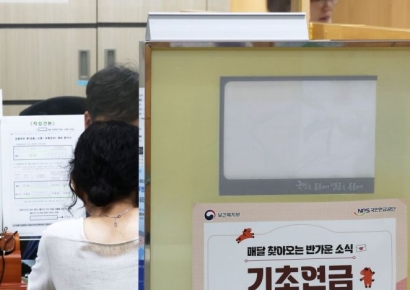 "Excited for 400,000 Won" Turns to Anger: "It Feels Like an Insult" as Basic Pension Leaves Seniors with No Income Gain
- "Sold Already? That Must Sting"... Gold Surges 15% in a Month, U.S. Treasuries Behind the Rally [Weekend Money]
- "We Can't Live With So Many Tourists"... Japan to Impose Nightly Accommodation Tax as Visitor Numbers Soar
- "Suspicious 'Man Dressed as a Woman' Reported at Girls' High School... CCTV Reveals Unexpected Twist"
- "Quietly Among Ourselves"... 14,000 Unmanned Mahjong Parlors Open in 3 Years as Millennials and Gen Z Flock in China
Ryu Jin, Chairman of the Federation of Korean Industries, stated, "We need to transition to a negative regulation approach, where everything is allowed except for what is explicitly prohibited." Sohn Kyung-shik, Chairman of the Korea Employers Federation, requested supplementation of labor-related regulations, stressing, "It must be clearly established in law that business management decisions are not a subject of labor disputes."
© The Asia Business Daily. All rights reserved. Unauthorized AI training and use prohibited.