Number of Births in Japan Rises for First Time in 11 Years... Increase Attributed to Post-COVID Growth in Marriages
Up 0.8% Year-on-Year
"Possibility of a Sharp Decline Slowing"
The number of babies born in Japan in the first half of this year increased for the first time in 11 years. This uptick is attributed to a rise in marriages, which had plummeted during the COVID-19 pandemic but have recently rebounded, in turn affecting the birth rate.
According to the Japan Ministry of Health, Labour and Welfare on August 28, the number of births from January to June this year, including foreigners, was recorded at 342,068. This is an increase of 2,788, or 0.8%, compared to the same period last year. It is the first time since 2015 that the number of babies born in the first half of the year in Japan has increased compared to the previous year.

The increase in births is attributed to more people getting married. The number of marriages, which had dropped sharply during the spread of COVID-19, began to rise again two years ago, and this trend continued last year.
In the first half of 2021, the decline in the number of births in Japan reached nearly 6%, after which it remained in the 3–5% range. Last year, during the same period, the decrease narrowed to 3.1%, and this year it has finally shifted to an increase.
Local media have analyzed that the steep decline in the number of births may have entered a period of stagnation.
However, it is still premature to conclude that the overall trend of population decline has changed. Last year, the number of Japanese babies born was 671,236, setting a new historic low for the tenth consecutive year.
Hot Picks Today
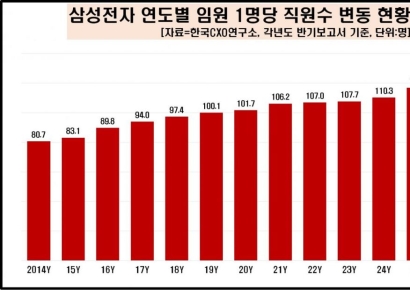 "I thought getting into a big company was the goal"... The 'position' only 1 in 121 employees reaches
- "Even One Deal Is Hard for South Korea"... Everyone's Buying Chinese Tech: The Secret Behind $41.5 Billion in Deals [China Shock, K-Industry on the Brink | Biotech] ②
- President Lee Jaemyung at 37.3%... Approval Rating Rebounds for First Time in 3 Weeks [Asia Business Daily-Realmeter Poll]
- "'No! Dad, Run!'... Father Moved by 5-Year-Old Son Who Shielded Him from Ghost at Korean Folk Village"
- "Jealous of Koreans" - Now a Must-Do on Every Trip... The Place Where Foreigners Spent KRW 229.8 Billion
That said, the pace of decline has slowed. Last year, the rate of decrease in Japanese births was 2.2%, a significant drop from the 5% range that had persisted since 2022.
© The Asia Business Daily. All rights reserved. Unauthorized AI training and use prohibited.

!["Please, Just Take Them Off" - They Made It All the Way to Bed... Then Fecal Bacteria Struck [Deep Scroll]](https://cwcontent.asiae.co.kr/asiaresize/307/2026101610053063338_1792112730.png)


![President Lee Jaemyung at 37.3%... Approval Rating Rebounds for First Time in 3 Weeks [Asia Business Daily-Realmeter Poll]](https://cwcontent.asiae.co.kr/asiaresize/307/2026101311183558764_1791857915.jpg)
![[Breaking] Kim Jiyong, inaugural chief of the Serious Crimes Investigation Agency: "The politicization of investigations is behind abuses of the prosecution's investigative powers and other harmful practices... We will root them out"](https://cwcontent.asiae.co.kr/asiaresize/307/2026101909021165095_1792368132.jpg)