Blue House Returns Nomination of Son Bonggi for Supreme Court Justice...Requests Chief Justice for Renomination
"Nomination Submitted Unilaterally Without Substantial Consultation... Lacking Procedural Completeness"
"Individual Contact with Candidates Undermined Fairness and Trust in the Appointment Process"
Confirmation Request to Be Submitted for Kim Seong-su, Nominee to Succeed Justice Lee Heung-gu
When Asked About Considering Kim Min-gi, Blue House Says "Unconfirmed"
On August 28, the Blue House officially requested Supreme Court Chief Justice Cho Hee-dae to recommend a new candidate for Supreme Court Justice, replacing former Justice Noh Tae-ak, instead of submitting a confirmation request for nominee Son Bong-gi to the National Assembly. However, the Blue House stated that it will proceed with the appointment process for nominee Kim Seong-su, who has been recommended as the successor to Justice Lee Heung-gu.

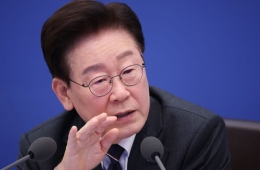
Kang Yoo-jung, Senior Spokesperson for the Blue House, said during a briefing at the Chunchugwan press center on the same day, “Today, the Blue House has decided not to submit a confirmation request to the National Assembly for Son Bong-gi, who was recommended as the successor to former Justice Noh Tae-ak,” adding, “Accordingly, we have asked the Chief Justice to resubmit a nomination for Supreme Court Justice.”
The Blue House took issue not with the qualifications of nominee Son, but with the procedural legitimacy of his nomination. Spokesperson Kang pointed to Article 104, Paragraph 2 of the Constitution, which stipulates, ‘The Supreme Court justices shall be appointed by the President with the consent of the National Assembly upon the recommendation of the Chief Justice.’ She emphasized that ‘nomination and appointment are powers distributed among distinct constitutional bodies under the principle of separation of powers.’
She further added, “In line with the principle of popular sovereignty, the nomination right should not function as a substitute for or an override of the appointment right, but rather as a means to ensure that the appointment authority is exercised properly.” The Blue House asserted that nominations by the Chief Justice should not effectively bind the President’s appointment authority.
The Blue House regarded the long-standing practice of prior consultations between Presidents and Chief Justices over Supreme Court nominations as a ‘procedural safeguard supporting judicial independence’. Spokesperson Kang stated, “Historically, both the President and Chief Justice have reached nominations through prior consultations, in line with the Constitution’s intent to respect the powers of each institution. The latest nomination of a successor to former Justice Noh lacked this procedural completeness.”
After the Supreme Court Nomination Recommendation Committee recommended candidates in January, Chief Justice Cho did not submit a nomination for over seven months. Then, on August 18, he submitted nominee Son in writing without substantial prior consultation with the Blue House.
Spokesperson Kang criticized this, saying, “The tradition of prior consultation between the appointing authority and the nominating authority has served to ensure the nation’s highest court is not shaped solely by one side’s wishes, and has functioned as a practical safeguard for the independence of the judiciary. For the judiciary to deviate from this tradition weakens the very foundation underpinning its independence—a truly regrettable circumstance.”
The Blue House also took issue with the fact that, immediately prior to Son’s nomination, the National Court Administration had individually contacted candidates recommended by the Nomination Recommendation Committee to explore restarting the nomination process. This, they argued, cast further doubt on the fairness of the personnel process.
“We believe that approaching already properly recommended candidates with the idea of excluding them from consideration undermines trust in the fairness of appointments,” Spokesperson Kang asserted. “Only when the Chief Justice exercises nomination authority in line with the Nomination Recommendation Committee’s choices, as outlined in the Court Organization Act, can the entire process from nomination to appointment conform to the constitutional principles of popular sovereignty and due process.”
The Blue House also cited diversity in Supreme Court composition as another reason for demanding a renewed nomination. The appointment of a successor to former Justice Noh would be the first Supreme Court appointment since the inauguration of the Lee Jaemyung administration. Spokesperson Kang noted, “The public must be able to accept the government’s first Supreme Court appointment, not just in terms of the outcome but from a procedural legitimacy perspective. The diversification of the Supreme Court’s composition is a long-standing demand from both the public and the legal community.”
She went on to say, “Given the Supreme Court’s essential roles in protecting the rights of minorities and the socially disadvantaged, and guaranteeing the people’s right to trial, there are also doubts as to whether this nomination satisfies the calls for greater diversity in court composition.”
The Blue House emphasized that this measure does not infringe on the Chief Justice’s right of recommendation. Spokesperson Kang stated, “The nomination authority of the Chief Justice is not a standalone, absolute power, but should be exercised in a manner consistent with the substantive appointment authority granted to the President under the Constitution.”
She also explained, “The request for a renewed nomination is not intended to restrict the Chief Justice’s authority, but is one of the constitutional checks and balances. It is an unavoidable step to ensure nominations are made on the basis of mutual respect among institutions.”
In contrast, the Blue House will proceed as scheduled with the appointment process for Kim Seong-su, who was nominated to succeed Justice Lee Heung-gu. Spokesperson Kang said, “Since we reached a consensus with prior consultations on Kim Seong-su, we will submit the confirmation request to the National Assembly today.”
The Blue House also urged Chief Justice Cho to promptly recommend a new candidate to replace nominee Son. Spokesperson Kang emphasized, “We urge the Chief Justice to respect the Nomination Recommendation Committee’s recommendations and move quickly with a new nomination so that the people’s right to trial is not impaired by a prolonged vacancy.”
Hot Picks Today
![[Exclusive] "Forecasts of Over 10 Billion, but Only 100 Million Earned"... 95% Followed This Pattern: Why Are KOSDAQ Special Exception IPOs Inflated? [KOSDAQ Inflated IPOs]①](https://cwcontent.asiae.co.kr/asiaresize/93/2026100609060151026_1791245160.jpg) [Exclusive] "Forecasts of Over 10 Billion, but Only 100 Million Earned"... 95% Followed This Pattern: Why Are KOSDAQ Special Exception IPOs Inflated? [KOSDAQ Inflated IPOs]①
[Exclusive] "Forecasts of Over 10 Billion, but Only 100 Million Earned"... 95% Followed This Pattern: Why Are KOSDAQ Special Exception IPOs Inflated? [KOSDAQ Inflated IPOs]①
- "Humanity Could Become Extinct After Losing Control of AI," Warns Former Anthropic Researcher
- "My Debt Is 73 Million Won"... Sharing Every Repayment Led to an Unexpected Turn
- "Drinking This in the Morning Is Like Drinking Alcohol"..."Doctors Warn: Never Consume It"
- Is 'KOGUMA' Coming Too?... "Japan in Serious Trouble" - Archipelago on High Alert Ahead of Holidays
Among the nominees recommended by the Nomination Recommendation Committee, excluding Presiding Judge Son, the remaining candidates are Kim Min-gi and Park Soon-young, appellate judges at the Seoul High Court, and Yoon Seong-sik, chief presiding judge at the same court. However, Judge Yoon’s nomination is considered practically unfeasible, as he has recently become the presiding judge for a major insurrection case. Some sources suggest that President Lee hopes for the nomination of Judge Kim. When asked whether they were considering nominating Judge Kim, a Blue House official responded, “This is unconfirmed.”
© The Asia Business Daily. All rights reserved. Unauthorized AI training and use prohibited.