Prime Minister Han, Former Major Company CEO, Meets Business Leaders: "Immediate Action on Quickly Resolvable Regulations"
Prime Minister Han Seong-sook met with the heads of business associations on the 28th and said, "We will lift as many easily removable regulations as possible, and we will immediately resolve issues (regulations) that can be addressed simply by inter-ministerial coordination or revising existing rules by listing them out."

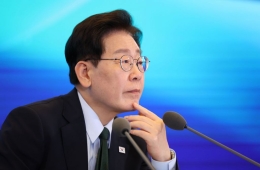
Prime Minister Han Seong-sook is delivering a welcoming address at the 'Economic Cooperation and Organization Regulation Rationalization Meeting' held at the Korea Chamber of Commerce and Industry, Jung-gu, Seoul on the 28th. 2026.8.28 Photo by Jinhyung Kang
View original imageOn the morning of August 28, Prime Minister Han chaired the "Economic Cooperation and Organization Regulation Rationalization Meeting" at the Korea Chamber of Commerce and Industry in Jung-gu, Seoul. She stated, "Through regulatory rationalization, we will do our utmost to ensure that anyone can take on new challenges and make investments in a fair environment, regardless of the size or location of their company." This marks the first time that Prime Minister Han, formerly CEO of Naver, has held a meeting with business association leaders since taking office. The meeting was attended by key industry leaders, including Chey Tae-won, Chairman of the Korea Chamber of Commerce and Industry, Sohn Kyung-shik, Chairman of the Korea Employers Federation, and Ryu Jin, Chairman of the Federation of Korean Industries, among others from seven major economic organizations.
Hot Picks Today
![Claims That "Daiso Is Being Shut Down to Save AliExpress and Temu" Spread Widely... A Fact-Check [Why&Next]](https://cwcontent.asiae.co.kr/asiaresize/93/2023121315590987574_1702450749.jpg) Claims That "Daiso Is Being Shut Down to Save AliExpress and Temu" Spread Widely... A Fact-Check [Why&Next]
Claims That "Daiso Is Being Shut Down to Save AliExpress and Temu" Spread Widely... A Fact-Check [Why&Next]
- "Three-Star Rooms at 980,000 Won a Night, Five-Star at 2 Million"... Busan Fireworks Festival Seats Cost 100,000 Won, but Hotel Views Bring Another Price-Gouging Row
- "I Thought It Was a Fish": 40-Second Miracle... Fisherman Saves Drowning Puppy With CPR
- "All He Did Was Reheat and Eat Fried Rice Made the Day Before"... Man in His 20s Nearly Needed a Liver Transplant
- "Looks Like They're Having an Affair": What If You Opened a KakaoTalk Chat, Filmed It, and Shared the Video With Coworkers?
Prime Minister Han noted, "What I have observed in the field is that companies are not seeking special treatment from the government—they just want a level playing field where they are free to take on challenges and make investments. Companies are already moving ahead, but some issues remain unresolved because laws and systems are not keeping up, and there are many regulations that may have been necessary in the past but are no longer relevant today." She stressed, "Our government is more committed to regulatory innovation than any previous administration, and we will also carry out regulatory rationalization according to clear principles and priorities."
© The Asia Business Daily. All rights reserved. Unauthorized AI training and use prohibited.