"Putin Will Not Attack NATO," Says Trump, but European Security Concerns Intensify
CIA Director Makes Secret Visit to Moscow
Sharp Decline in U.S. Military Weapon Stockpiles Due to Middle East War
"U.S. Advanced Missile Stockpile at 'Critical' Level"
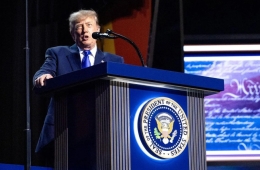
As John Ratcliffe, Director of the United States Central Intelligence Agency (CIA, pictured), made an unusual visit to Russia, concerns over security instability in Europe have resurfaced. Meanwhile, U.S. President Donald Trump dismissed the possibility of Russian President Vladimir Putin launching an attack on a North Atlantic Treaty Organization (NATO) member state.

John Ratcliffe, Director of the United States Central Intelligence Agency (CIA), is attending a hearing at the U.S. House of Representatives held at the U.S. Capitol on March 19. Photo by Reuters Yonhap News
View original imageOn the 27th (local time) at the White House, President Trump was asked whether "the CIA director visited Russia to deliver a warning not to attack NATO." He replied, "I would rather not comment. But they are not going to attack." When asked whether President Putin had agreed or promised not to attack NATO, Trump responded, "I had a good conversation with him. He is not going to attack NATO territory."
In a phone interview with the U.S. online media outlet Axios on the same day, President Trump also said regarding the possibility of a Russian invasion of a NATO member country, "I'm not worried at all," downplaying Ratcliffe's trip to Russia as a routine visit. In a phone interview the day before with conservative radio host Glenn Beck, Trump also lowered expectations by calling it a "routine business visit."
Previously, foreign media such as CBS reported that Director Ratcliffe visited Moscow on the 25th and met with Russian intelligence officials. According to these reports, the purpose of this visit was to urge Russia to refrain from attacking NATO member states and to reduce support for Iran. The Kremlin acknowledged Ratcliffe’s visit to Russia but stated, "There was no meeting with President Putin." While the specific details of the talks were not released, it is known that the U.S. side delivered a "warning message" cautioning against escalation in Ukraine.
Director Ratcliffe’s visit drew particular attention because it was the first time a CIA director has visited Moscow during the Trump administration. In November 2021, under the Joe Biden administration, then-CIA Director William Burns visited Moscow to warn against invading Ukraine. Three months later, the invasion became a reality.

Despite President Trump’s repeated clarifications, it appears that security jitters are not subsiding easily. The Washington Post (WP), citing two sources, reported that U.S. intelligence agencies believe Russia sees an opportunity to intensify its offensive in Ukraine and Europe, viewing the weakening of U.S. military power as a window for escalation. The outlet pointed out that this assessment emerged even before Ratcliffe’s visit to Russia.
WP also reported that, after six months of conflict in the Middle East, U.S. stocks of key weapons such as Patriot air defense missiles, Tomahawk cruise missiles, and ATACMS (Army Tactical Missile System) have been substantially depleted. It is estimated that about one-fourth of the entire fleet of Reaper drones, used for surveillance and strikes, has been lost.
Hot Picks Today
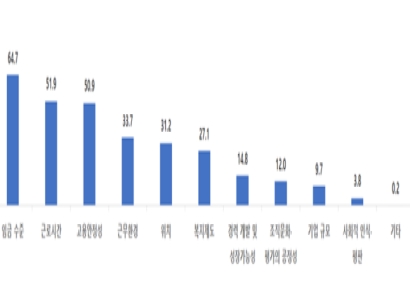 "Please Pay Me at Least 3 Million Won a Month": More Than Half of Young People Today Prioritize "Working Conditions" Over Company Size
- Selling Like Crazy Every Year... 30-Year-Old Hetbahn Takes on a New Challenge: Tastes Better Than "Mom's Home Cooking" [On-Site Report]
- I Thought Only 'Old Guys' Ate It... Young People Are Hooked on This 'Unusual Food' at Risk of Disappearing? [Delicious Stories]
- [Exclusive] Prosecution Service Overhauls Cartel "Leniency" Rules, Guarantees Reporting Firms' Legal Status from the Outset
- Beachgoer Finds 'Plastic' That Turns Out to Be Perfume Ingredient Worth More Than Twice as Much as Gold
The Associated Press (AP) likewise reported that, due to the ongoing Middle East conflict, the stockpile of advanced missile interception systems deployed to Europe by U.S. forces has reached a "beyond critical" and dangerously low level. In particular, the shortage of Patriot missiles—capable of intercepting Russian high-speed ballistic missiles—was reported to be the most severe. An anonymous official from the U.S. Department of Defense warned that if Russia were to launch a ballistic missile attack targeting military command centers or power plants, NATO could find itself in a situation similar to Ukraine, which is currently suffering from a shortage of Patriot missiles.
© The Asia Business Daily. All rights reserved. Unauthorized AI training and use prohibited.