Ban on Pre-Learning Before Elementary School Entry Causes Uproar: As Parents Are Told to Focus on Chores, Sports, and Reading, Even 'This' Is Now Privatized [China.zip]
Parental Anxiety Deepens Over Ban on Pre-Learning in China
The Rise of the "Meal Kit Children" Phenomenon
Emergence of Arts-Integrated Teaching Methods
Private Tutoring Sends Education Costs Soaring
The Chinese government recently announced a ban on pre-learning before elementary school entry, aiming to reduce the financial burden of education, which has been identified as a major cause of the country’s declining birth rate and dropping marriage rate. Although the Ministry of Education has been emphasizing such policies for several years, parental anxiety remains persistent. Recently, private education has surged, with some kindergartens adopting arts-based teaching methods, resulting in education costs skyrocketing. The Chinese educational scene is becoming ever more chaotic and fraught with side effects, so much so that a new term, "Meal Kit Children" (Yejea Adong), has emerged, referring to students who study the next semester's material in advance during school vacations.

The Chinese government announced a ban on advanced learning before entering elementary school to reduce the burden of education expenses.
View original imageChinese Ministry of Education: "Ban on Pre-Learning, One Semester Adjustment Period After Enrollment"
According to Guangming Daily on the 27th, the Chinese Ministry of Education recently released a set of "10 Key Q&As," reiterating that students must absolutely not study school curriculum content in advance prior to elementary school enrollment.
The Ministry of Education has already announced a ban on pre-learning before admission since 2021. However, as these were merely "guidelines" and did not specify details, concerns among parents heightened. This time, the guidance is explicit, banning activities such as learning Chinese character pronunciations, arithmetic, copying and memorization, as well as the use of elementary school textbooks and workbooks.
The Ministry stated that the first semester after enrollment should be considered a school adaptation period, during which written homework and tests (assessments) would be eliminated. Instead, it encouraged parents to foster habits such as reading, physical activities, and appropriate participation in household chores before school begins.

The education authorities also pointed out the negative impacts of pre-learning curriculum content. Their position is that forced early education not only harms children’s physical and mental health but also significantly impairs the development of thinking skills, concentration, and critical thinking abilities.
Private Tutoring Spreads Despite Regulations, Sending Education Costs Soaring
Despite strong government regulations, private tutoring is rampant in practice. Sina Finance reported on the 25th, "After the prohibition of pre-learning elementary curriculum in kindergartens, kindergartens offering 'arts education' have gained huge popularity."
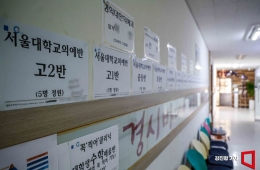
Some kindergartens are exploiting "art" as a loophole. By introducing entrance prep classes involving art, dance, or musical instruments, they are dramatically raising tuition fees through such workarounds. They advertise educational methods such as "learning Chinese characters through songs" and "mastering English through drama." Media outlets have pointed out that providing elementary curriculum content under the guise of arts is clearly a violation of regulations; even test-focused art classes and memorizing art history fall under regulatory scrutiny.
Despite such crackdowns, parental anxiety persists. According to a report by CCTV News, a survey of incoming first graders at an elementary school in Beijing’s Haidian District found that more than 65% of respondents had already received basic education in Chinese reading and writing, arithmetic, and other subjects before entering school.

China.com recently analyzed, "Parental anxiety persists despite repeated bans on pre-learning because parents fear their children may fall behind."
A parent from Jiangsu Province confessed, "I worried that the pace of lessons would be too fast after enrollment, so I registered my child for Chinese pronunciation and basic English classes during the transition from kindergarten to elementary school." Another parent said, "My child is entering fifth grade, but already finished the sixth grade curriculum over the summer break. If you don't get ahead, you don't just stand still—you fall behind."
The Spread of "Meal Kit Children" as Early Education Becomes Extreme

In an effort to curb declining birth rates and ease educational costs, the Chinese government has announced a ban on private tutoring and other measures. However, these regulations’ effectiveness is undermined as anxious parents and education companies facing survival threats due to curriculum tutoring restrictions both resort to loophole marketing.
This excessive early education has become such a social issue that the new slang "Meal Kit Children" (Yejea Adong) has appeared, likening students who finish the next semester’s studies during vacation to ready-made meal kits.
Amid debates surrounding "Meal Kit Children," some voices argue that pre-learning shouldn’t be dismissed merely as the result of competition. Instead, a distinction should be made between appropriate and excessive forms of pre-learning. While uniform and mechanical methods should be avoided, a certain amount of preparation to adjust to the new school year may be beneficial.
Chu Zhaohui, a researcher at the Chinese Academy of Education Sciences, criticized, "The fundamental causes behind the growing 'Meal Kit Children' phenomenon are mainly problems within the assessment system and a lack of educational awareness among families. Most parents, based on a narrow understanding of education, measure their children’s excellence only by high scores, neglecting the importance of physical development, mental health, and character formation."
Hot Picks Today
!["With Interest Rates at 5%, Investors Tremble Over Melting Accounts...But Some Stocks Are Smiling [Real Life Investment]"](https://cwcontent.asiae.co.kr/asiaresize/93/2026090815554220450_1788850541.jpg) "With Interest Rates at 5%, Investors Tremble Over Melting Accounts...But Some Stocks Are Smiling [Real Life Investment]"
"With Interest Rates at 5%, Investors Tremble Over Melting Accounts...But Some Stocks Are Smiling [Real Life Investment]"
- "Shocking Discovery for Tuna Sashimi Lovers: 1,600 Parasites Found Crawling Inside"
- Surging 73% in a Month, But "Still More Upside"... Kolmar Korea's 'Record-Breaking Results' Signal Bright Third Quarter [This Week's Column]
- Smaller Than a Fingernail: Generates Voltage for 45 Hours With a Drop of Water [Reading Science]
- "Miss It Today and Who Knows When It Will Return": Over 7,650 Marriage Registrations in a Single Day in Japan—What Happened?
He added, "Instead of pursuing overheated, competition-driven methods stemming from anxiety, parents should allow their children to learn at their individual pace." He also emphasized, "Authorities need to value various criteria for evaluating children—not just test scores." Chu underscored, "The essence of education lies in developing and enabling a child’s individuality, talents, and abilities, and a system of communication built on trust between school and home must be established."
© The Asia Business Daily. All rights reserved. Unauthorized AI training and use prohibited.