[After the 3% Rate Shock]②How Will Debts Be Repaid?... Vulnerable Borrowers Under Pressure, Warning Lights Flashing for Secondary Financial Institutions
Rising Delinquency Rates at Savings Banks and Specialized Lenders
Concerns Grow Over Defaults Among Vulnerable Borrowers
Funding Costs Climb as Bond and Deposit Rates Surge
Double Whammy for Profitability and Financial Soundness
Proactive Management Needed for Loan-Loss Provisions and Liquidity
Stress Testing Must Be Strengthened
With the Bank of Korea raising the base rate for the second consecutive time, pushing interest rates into the 3% range, warning lights have begun to flash regarding the soundness of secondary financial institutions. Concerns are mounting that the already high delinquency rates among savings banks, credit card companies, and capital financing firms—which already serve a higher proportion of vulnerable borrowers—could worsen further, as elevated market interest rates reduce borrowers’ repayment capacity and may lead to increased defaults.
According to the financial sector on August 28, the three-year government bond yield, which is sensitive to monetary policy, fell to 3.75% on August 27, down from 3.817% from the previous trading day. The day before, after the Bank of Korea raised the base rate from 2.75% to 3.00%, the yield soared as high as 3.9% during the session. However, when the dot plot signaling rate expectations indicated there would likely be only one additional hike within the next six months, market expectations grew that the upper limit for rates would be capped.
Still, despite the bond yield pullback the previous day, the burden of high interest rates has not gone away. The three-year government bond yield has climbed from 2.925% at the beginning of the year to 3.7% now, up approximately 0.8 percentage points. Uncertainties persist due to the expansion of the U.S. fiscal deficit, inflation concerns arising from the prolonged Middle East crisis, and the possibility of another U.S. rate hike. If market interest rates rise further or the current high rate environment persists, the risk of defaults may spread among vulnerable borrowers—including those with low credit scores or multiple loans—who have held out up to now.
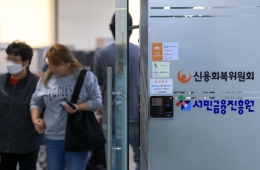
The second-tier financial sector, with its high proportion of vulnerable borrowers, is especially sensitive to the shock of rising interest rates. According to the Financial Supervisory Service, the delinquency rate for savings banks stood at 6.26% as of the end of June, up 0.22 percentage points from the end of last year. For credit card companies, the delinquency rate increased from 1.52% to 1.54% during the same period, while for other credit-specialized finance companies such as capital and leasing firms, the rate rose from 2.11% to 2.29%, increases of 0.02 and 0.18 percentage points respectively.
Among vulnerable borrowers, the situation is even more severe for small business owners. According to the Bank of Korea, the delinquency rate on self-employed loans was 2.04% at the end of the first quarter of this year, reaching its highest level in roughly 11 years since 2.08% at the end of the second quarter of 2015. Particularly, the delinquency rate for self-employed loans at secondary financial institutions jumped sharply to 5.38%, up 0.81 percentage points from the 4.57% recorded at the end of last year. By lender category, savings banks reached 12.79%, the highest level in 11 years, while credit card and capital financing companies posted an all-time high of 3.98% since the start of data tracking. The impact of rising rates is now materializing in groups with weaker repayment capacity, especially those concentrated in the secondary financial sector.
![[After the 3% Rate Shock]②How Will Debts Be Repaid?... Vulnerable Borrowers Under Pressure, Warning Lights Flashing for Secondary Financial Institutions](http://www.asiae.co.kr/news/img_view.htm?img=2026082810443896490_1787881477.png)
If high interest rates continue, the soundness indicators for secondary financial institutions are likely to deteriorate further, albeit with a time lag. According to an analysis by Korea Ratings·KR: if the three-year government bond yield, which rose by about 25% from 2.95% at the end of last year to 3.697% at the end of June this year, is simply applied, the non-performing loan ratio for non-card credit-specialized finance companies could rise from 2.66% at the end of last year to around 3.1% by the end of 2027, assuming a time lag of roughly one and a half years.
Rising funding costs are also a concern. Since credit card and capital finance companies do not have deposit-taking capabilities, they are highly dependent on market-based funding, so interest rate hikes on their bonds lead directly to increased funding costs. Similarly, savings banks, which raise funds through deposits, face greater cost burdens when deposit rates increase. As a result, these institutions are now facing the twin challenges of both deteriorating loan quality among vulnerable borrowers and rising funding costs.
Yongjin Kim, Professor of Business Administration at Sogang University, noted, "Secondary financial institutions have difficulty raising lending rates further even when both funding costs and delinquency rates are increasing simultaneously. If high interest rates persist, we could see both profitability pressures and further deterioration in soundness."
Hot Picks Today
 "'Some Get KRW 74 Million, While a One-Day Difference Means a KRW 34 Million Gap' Sparks Outrage... President Weighs In"
- "Three Rooms, Great Views, Near the Station"... Japan's Shady Rental Scheme Infiltrates Luxury Apartments at 1 Million Won a Night
- Kim Minseok: "We need to sort out Shincheonji's entry into the Democratic Party"... Pro-Jeong Cheong-rae faction: "Media manipulation cannot be tolerated" (Roundup)
- "Feeds on blood and is hard to eradicate"... the 'terrifying bug' that grounded a plane
- 220 cm-Tall 26-Year-Old Woman Dies Less Than a Year After Giving Birth... Deadly Complications Hidden Behind 'Gigantism'
Some experts argue that before the full impact of rising interest rates takes hold, secondary financial institutions need to proactively manage their loss-absorbing capacity and liquidity. Jiyong Seo, Professor in the Business Administration Department at Sangmyung University, said, "The secondary financial sector must manage loan-loss provisions and liquidity in advance. To prepare for possible capital and liquidity weaknesses triggered by rising interest rates, it is necessary to strengthen stress tests and establish scenario-based response plans."
© The Asia Business Daily. All rights reserved. Unauthorized AI training and use prohibited.