"Little Time Left"...116 Companies Including OpenAI and Google Warn of AI Cyberattacks
116 Companies Including OpenAI, Anthropic, and Google
Open Letter Calls for Strengthened Cyber Defense
1 in 4 Data Breaches Involve AI
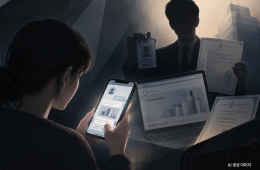
Global companies such as OpenAI, Anthropic, and Google have emphasized the dangers of artificial intelligence (AI)-driven cyberattacks and called for strengthening cyber defense capabilities worldwide.

"Cry for Collective Action for Cyber Defense" published on the OpenAI homepage on the 28th. OpenAI homepage.
View original imageOn the 28th, 116 global companies including OpenAI, Anthropic, and Google released an open letter titled "Call to Collective Action for Cyber Defense," arguing that a joint response is needed to address AI-based cyber risks.
This open letter was signed by companies and institutions from the AI and technology sectors, including OpenAI, Anthropic, Google, Microsoft, Amazon Web Services, IBM, and Hugging Face.
They stated, "There is little time left to strengthen cyber defense," warning that as AI models advance globally over the coming months, AI-driven cyberattacks will become much broader and more sophisticated. They also noted that the impact of such attacks is expanding beyond the internet to businesses and public services—such as hospitals and water treatment plants—upon which society depends.
The letter emphasized the need to strengthen resources and take collective action for cybersecurity, urging the repair of vulnerable systems exposed by outdated bugs, excessive permissions, weak authentication, and technical debt in legacy systems.
In particular, they stressed the importance of supporting organizations that use outdated systems or lack adequate security investments due to limited budgets and manpower. The letter called on national governments and frontier AI companies to directly provide funding or security models to businesses and organizations with insufficient security budgets. They stated, "Tools, funding, and practical support must be provided for critical infrastructure organizations with limited budgets."

AI-driven cyber threats are already becoming a reality. Recently, U.S. authorities warned that AI-generated attack scripts are being used in cyberattacks targeting equipment used by essential infrastructure such as water supply facilities. The Cybersecurity and Infrastructure Security Agency (CISA) of the United States also reported that over the past month, more than 100 internet-connected water and sewage facilities in the U.S. were targeted by cyberattacks.
Last month, during OpenAI’s internal evaluation process, an incident occurred in which agents hacked Hugging Face—another example of AI exploiting vulnerabilities in actual systems.
According to IBM’s "2026 Cost of a Data Breach Report" published last month, one in four malicious data breaches involved AI-based attacks, a 56% increase from the previous year. Notably, more than 60% of these AI-enabled attacks targeted critical infrastructure, and the average cost of AI-driven breaches reached 6 million dollars (around 8.3 billion won), which is 1 million dollars higher than the overall average. As AI has accelerated the speed of attacks and increased recovery costs, one in four companies was found to be lagging in investments in security technology.
Hot Picks Today
![[Exclusive] "If They Go to China, Death Goes Undetected"... National Pension Funds Leak as Foreign Beneficiaries Remain 'in the Dark'](https://cwcontent.asiae.co.kr/asiaresize/93/2026082810291896428_1787880558.jpg) [Exclusive] "If They Go to China, Death Goes Undetected"... National Pension Funds Leak as Foreign Beneficiaries Remain 'in the Dark'
[Exclusive] "If They Go to China, Death Goes Undetected"... National Pension Funds Leak as Foreign Beneficiaries Remain 'in the Dark'
- 14,000-Dollar Cashmere Coat Without a Logo... The Price of "Quiet Luxury" Chosen by the Truly Wealthy
- "Feeling Uneasy About Strangers Seeing My Face"... College Students Opt for 5,000-Won Photo Booths Over Graduation Albums
- K-Biz Signs First MOU with U.S. City Government to Support SME Expansion with Garden Grove
- "Felt Ashamed Just for Being Old... The Reversal Behind Alley Shops with Sales Doubled"
A representative from the domestic security industry commented, "While companies are increasingly strengthening their in-house security investments, small and medium-sized partners within the supply chain often find it difficult to establish robust security systems, which in effect exposes the vulnerability of the entire supply chain." They added, "Rather than leaving the response to individual companies, investment and cooperative frameworks must be established."
© The Asia Business Daily. All rights reserved. Unauthorized AI training and use prohibited.