Support for Vulnerable Borrowers in Crisis: Long-Term Delinquent Loans to Be Written Off and Restructured, Interest Relief for Faithful Repayers
Support for Recovery Through Resolution of 20-Year Unrecoverable Loans
Dismissal of "Forbearance Equals Forgiveness" Concerns: "Providing Opportunity to Self-Employed"
Annual Interest Rate Cuts to 1% Range for Faithful Repaying Companies
The government will conduct large-scale write-offs of long-term delinquent loans to support vulnerable borrowers, such as small business owners, who have reached their limits due to debt accumulated since the COVID-19 pandemic. At the same time, to prevent controversy over a "wait-and-be-forgiven" mentality, incentives such as interest reductions will be expanded for borrowers who have diligently repaid their debts. The Bank of Korea will restructure its loan program worth 30 trillion won to inject low-interest funds into regional small and medium-sized enterprises, while the government plans to launch new policy mortgages and small- and long-term loans for young people and low-income citizens.

Active Debt Adjustment in Response to Post-COVID-19 Debt Accumulation... Resolving Non-Performing Loans
The Ministry of Economy and Finance and the Financial Services Commission, along with other relevant ministries, announced these measures at the Emergency Economic Ministers' Meeting on the 28th as part of the "Support Plan for Vulnerable Borrowers in a Period of Rising Interest Rates." These measures were planned out of concern that the sharply increased interest payments among vulnerable borrowers—due to the base interest rate rising into the 3% range—could become a ticking time bomb for the broader economy. In particular, since more than 175 trillion won in post-COVID-19 assistance focused on financial support rather than fiscal spending, the debts of the self-employed and SMEs have soared. Over 40% of loans extended during that period are still being repaid, and the delinquency rate among vulnerable borrowers has far surpassed the long-term average seen before the pandemic. The government, therefore, determined that traditional methods such as maturity extensions had reached their limits, and decided to implement proactive debt adjustment measures to fundamentally relieve the accumulated debt burden.

The core strategy is a bold clean-up of long-term delinquent loans that are effectively uncollectible. In the second half of this year, the government will conduct a comprehensive survey of long-term delinquent loans of 50 million won or less, overdue for more than seven years and held by asset management and lending companies, and will purchase and write off as many of them as possible through the "New Leap Fund." The anticipated targets include about 1.1 trillion won held by asset management companies and up to 4.5 trillion won by lending firms. In addition, financial public institutions will write off all loans overdue for 20 years or more in one go. Notably, the Export-Import Bank of Korea will, for the first time this year, write off 16.2 billion won worth of special long-term unpaid loans to SMEs and simultaneously extinguish the debts of joint guarantors, such as CEOs. The budget for these proactive debt adjustment measures will be announced in the next year's budget proposal, and detailed targets will be outlined in the fourth quarter.
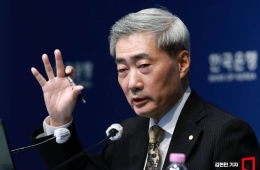
The government drew a line at concerns that large-scale debt forgiveness could encourage moral hazard or discriminate against borrowers with good credit. Kang Giryong, Deputy Minister of Economy and Finance, explained, "The aim is to provide a special 'second chance' to self-employed people who endured sacrifices to keep their livelihoods throughout the pandemic and help them overcome the burdens of prolonged debt." He added, "For loans overdue more than 20 years, the probability of repayment is virtually zero, so it is meaningless to keep them on the books or try to collect them further." He also emphasized that the government would go beyond mere debt forgiveness and will actively support normal economic activity after debt adjustment by collaborating with the Ministry of Employment and Labor and other agencies. Regarding concerns that the cost of write-offs might be passed on to the general public, he dismissed them, stating, "Korea's financial sector is in a robust position, fully capable of absorbing and sharing these policies as part of inclusive finance."

Expanding Incentives for Diligent Payers... Bank of Korea to Increase Aid for Regional SMEs
To enhance fairness, the government will introduce and expand preferential programs for those who have diligently repaid their debts. The Export-Import Bank of Korea will, starting in September, launch a new interest reduction program for companies that continue to repay debt even during restructuring, offering interest rates as low as 1%—below funding costs. Korea Credit Guarantee Fund will increase its preferred rate cut for the Step-Up Guarantee program for small business owners, raising it from 0.3 percentage points to 0.4 percentage points.
The Bank of Korea will also revamp its 30 trillion won Bank Intermediated Lending Support Program and establish "Credit-Linked Support" for SMEs. To address concerns that increasing lending limits would have a limited effect as interest rates rise, the support rate will remain fixed at the current 1.25%. Aid for regional SMEs will be more than doubled, expanding from the present 5.9 trillion won through the first half of next year.
Enhanced inclusive financial products will be made available for low-income individuals and youth who are unable to access mainstream loans. For example, the supply of the flagship policy credit product, "Sunshine Loan," will be expanded to 5.9 trillion won in 2027 and 6.2 trillion won in 2028. For youth, the loan limit for "Smile Finance" loans will be increased from 5 million won to 10 million won. Coverage will also be newly extended to include young people with a personal credit score in the bottom 50% and annual income below 35 million won. In addition, the Korea Inclusive Finance Agency will launch new small-amount, long-term loans for people with mid- to low credit next year, and a new policy mortgage is being considered to allow homeless youth to buy homes on a monthly rental basis. Furthermore, a new credit evaluation model tailored to small business owners, leveraging non-financial data such as sales, will be piloted to further ease financial burdens for low-income citizens.
Hot Picks Today
 "Two Spend 500,000 Won in a Flash, Yet Wait Two Hours?" ... 'Dreamland' Shunned by Kids and Foreign Tourists
- The Era of Getting 200 Million Won After 30 Years Is Over... A Japanese Bank's "Perpetual Department Head" Who Just Clocked In Cries Out
- Spain Hit by Its Worst Tragedy... Lee Kangin, Moreno and Real Madrid Join Soccer World in Mourning
- They Said, “Make It Your Home for Life” - Then Suddenly Kicked 200 Passengers Off... What Happened to the Around-the-World Cruise?
- "130 Rice Bowls Sold Out in a Day"... 'Unfiltered Face' Adds 8 Million Won to Night Market Sales: China's Bungeunwoo
Deputy Minister Kang stated, "Once the budget bill passes, we will work with the financial sector to develop and implement the specifics of the debt adjustment program."
© The Asia Business Daily. All rights reserved. Unauthorized AI training and use prohibited.