Up to 50 Times Penalty for Ticket Scalping... Revised Enforcement Ordinances of Performing Arts Act and National Sports Promotion Act Applied
Minister Choi Hwiyoung: “Full Commitment to Eradicating Ticket Scalping”
The enforcement decrees of the Performing Arts Act and the National Sports Promotion Act, which allow for the imposition of fines of up to 50 times the ticket resale amount on scalpers, come into effect on August 28.
The Ministry of Culture, Sports and Tourism announced that, starting today, the revised enforcement decrees of the 'Performing Arts Act' and the 'National Sports Promotion Act'—which outline required actions for ticket sellers and online intermediaries to eliminate ticket scalping, standards for the imposition of fines, and procedures for paying informant rewards—are now in force. The amended decrees passed the 36th Cabinet Meeting on August 18.

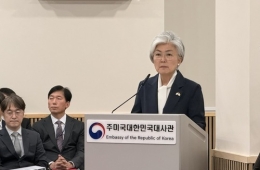
Choi Hu-yeong, Minister of Culture, Sports and Tourism. Ministry of Culture, Sports and Tourism
View original imageThe amendments to the 'Performing Arts Act' and the 'National Sports Promotion Act' in February banned all forms of fraudulent ticket purchases and sales, regardless of the use of macro programs, and made it mandatory for businesses to take action to prevent such violations. They also established the basis for sanctions against scalping—including the designation and support of reporting agencies, payment of informant rewards, fines of up to 50 times the resale amount, and confiscation or collection of illicit profits. The enforcement decrees stipulate specific obligations for businesses delegated by law, requirements for the designation of reporting agencies, and detailed standards for informant rewards and the imposition of fines.
Under the revised law, ticket sellers and online intermediaries are required to implement technical and administrative measures to prevent fraudulent purchases and sales. The enforcement decrees specify these measures as: ▲identity verification ▲operation of a reporting feature ▲notifying users of restrictions on the exposure of posts in cases of fraudulent transactions and the possibility of fines ▲restricting the exposure of posts in response to requests from reporting agencies, among others.
Procedures for reporting agencies to request information related to scalping have also been established. Reporting agencies may request information about the authors of fraudulent purchase or sale posts and records of access to information and communication networks from ticket sellers and platform operators. Ticket sellers and online intermediaries must comply unless there is a justifiable reason; those who falsify or fail to submit relevant data may be fined up to 5 million won.
The standards for imposing fines for ticket scalping have also been detailed. The revised law allows authorities to impose fines of up to 50 times the resale amount on those who engage in fraudulent sales. The enforcement decrees lay out a sliding scale, requiring fines from double up to 50 times the ticket resale value, depending on the number of tickets and the sales amount involved.
However, in cases where ordinary people transfer tickets within reasonable limits, authorities will comprehensively consider the legal requirements to determine whether such cases constitute fraudulent sales. There are also standards for reducing fines, taking into account the magnitude of illicit gains and the degree of cooperation during investigations.
The criteria for payment of informant rewards have also been specified. If someone reports a fraudulent purchase, the reward can be up to 50 million won; for reporting a fraudulent sale, up to 50% of the fine imposed on the offender may be paid as an informant reward. The Ministry stated that, with the full implementation of the fines and reward system, the prevention and detection of ticket scalping is expected to be strengthened.
Choi Huyeong, Minister of Culture, Sports and Tourism, will preside over a joint inspection meeting with relevant agencies on August 28—the day the law takes effect—to ensure the effective implementation of the revised legislation. Nineteen organizations, including the Ministry of Culture, Sports and Tourism, the Fair Trade Commission, the National Police Agency, major ticket platforms and secondhand trading platforms, related associations, and reporting agencies, will participate in the meeting. They plan to share their plans to prevent scalping under the new law and review cooperation systems between institutions.
Minister Choi stated, "With the completion of the revised enforcement decree, we are fully prepared to resolve the scalping problem that hampers the sustainable growth of 'K-Culture.' The Ministry will work closely with the police and other related agencies to eradicate ticket scalping and guarantee fair ticketing opportunities for concert and sports fans, thereby establishing a fair reservation system."
Hot Picks Today
!["After Hotels Swapped Beds for Operating Tables..." Big Spenders Who Poured KRW 1.7 Trillion Reshaped Gangnam's Hotel Landscape [Real Estate A to Z]](https://cwcontent.asiae.co.kr/asiaresize/93/2025031212034164736_1741748621.jpg) "After Hotels Swapped Beds for Operating Tables..." Big Spenders Who Poured KRW 1.7 Trillion Reshaped Gangnam's Hotel Landscape [Real Estate A to Z]
"After Hotels Swapped Beds for Operating Tables..." Big Spenders Who Poured KRW 1.7 Trillion Reshaped Gangnam's Hotel Landscape [Real Estate A to Z]
- Chey Tae-won's One Remark Sends Stocks Soaring to 'Limit-Up'... This Stock Jumps Despite SK hynix's 3% Drop
- "I Thought Only Koreans Were Crazy About It"... This Dish Ranks No. 1 in the World
- Trump: "Could Meet North Korean Leader Kim Jong Un During Asia Visit"
- "They Said Today Was the Cheapest..." "Let's Get Wedding Jewelry!" Why Did the Luxury Brand Crowds Flocked To Cut Prices by 1.08 Million Won?
Minister Choi also announced that the Ministry would promote revisions to the 'Promotion of the Motion Pictures and Video Products Act' to address movie ticket scalping. He said, "We will promptly push for amendments to the Promotion of the Motion Pictures and Video Products Act, reflecting field feedback that calls for closing regulatory loopholes, particularly in response to movie scalping issues arising in special theaters."
© The Asia Business Daily. All rights reserved. Unauthorized AI training and use prohibited.