Chairman of the Board of Audit and Inspection: "Yoon Administration Caused Crisis of Trust in Neutrality and Independence... Illegal Acts Confirmed in Statistics and West Sea Audits, Strict Measures to Follow"
Kim Hochul Delivers Address on 78th Anniversary of the Board of Audit and Inspection
"Past Wrongs: Factionalism and Abuse of Audit Authority Must Be Confronted"
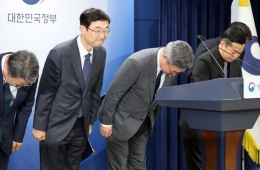
Official Apology Issued to the Public and Civil Servants
Audit Paradigm Shifts from Blame to Public Benefit; Gradual Application to All Audits
Establishment of Climate Environment Audit Bureau, Expansion of Audit Units for Investigative Agencies, and Strategic Crackdown on Regional Corruption
On August 28, Chairman of the Board of Audit and Inspection Kim Hochul issued a public apology regarding allegations of abuse of audit authority under the Yoon Suk-yeol administration, stating, "The Board of Audit and Inspection has brought upon itself a crisis of trust in its neutrality and independence." He specifically announced that illegal activities had been confirmed in the course of audits conducted during the Moon Jae-in administration, such as the national statistics audit and the audit of the killing of a public official in the West Sea, including the use of coercion, inducement, and distorted evidence for investigative requests. He stated that those involved would be held accountable.

Kim Hochul, Chairman of the Board of Audit and Inspection, is speaking at the "78th Anniversary of the Board of Audit and Inspection Day" event held at the Board of Audit and Inspection in Jongno-gu, Seoul on August 28, 2026. Photo by Yonhap News.
View original imageHe also announced a shift away from the traditional audit system centered on pointing out faults and assigning blame, declaring that "enhancing public benefit for end consumers," meaning the people, would become the standard for all audits going forward. He further stated that a "Climate Environment Audit Bureau" would be established to support a mid- to long-term response to the climate crisis, and that audit organizations overseeing investigative agencies and constitutional bodies would be expanded in line with criminal justice system reform.
At the ceremony for the 78th anniversary of the Board of Audit and Inspection held in the main auditorium that day, Kim said, "If we fail to directly confront and boldly abandon the past mistakes and abnormal practices that allowed the formation of factions and the abuse of audit authority, regaining public trust will remain out of reach." He went on to explain that steps taken over the past year—such as the abolition of the special investigation bureau, reduction of excessive policy audits, and the strengthening of internal controls—were also part of efforts to restore public trust.
Kim notably reiterated the findings released the previous day by the task force (TF) for follow-up measures on the National Assembly investigation, which included results from audits on national statistics and the West Sea incident. "It has been confirmed as fact that during the audits on statistics and the West Sea, raised during the National Assembly investigation, there were acts of coercion, inducement, and investigative requests based on distorted evidence," he said. "As the head of the Board of Audit and Inspection, I offer my apologies to the people and public officials." He added, "Those responsible will face strict measures and be held appropriately accountable."
On the same day, the Board of Audit and Inspection unveiled its "new operating policy" for the next four years. The core of this policy is shifting the audit paradigm from "finding faults and assigning blame" to "enhancing public benefit." From the stage of setting audit topics, the agency plans to introduce public participation channels such as the online "Public Engagement Audit Proposal System," the Public Engagement Audit Participation Group, and the Public Audit Agenda Conference.
At audit sites, the focus will be on resolving problems and suggesting solutions to issues on the ground, such as conflicts between agencies or administrative blind spots, rather than simply pointing out faults or seeking to assign blame. When processing audit results, greater weight will be given to considerations such as the purpose and necessity of policy initiatives, comparisons of public and private interests, efforts made to follow procedures, and transparency. This may result in greater leniency or exemption of responsibility for public officials, depending on a comprehensive review.
Kim stressed, "Even if there were violations of regulations or budget wastage, the effects of administrative actions on public benefit must be carefully considered and balanced. There should not be accountability pursued from a narrow perspective." Based on the "public benefit enhancement pilot audits" currently being conducted across nine areas, the Board of Audit and Inspection plans to expand their scope in the second half of the year, with the long-term goal of converting all audits to a public benefit-oriented approach.
Establishment of the Climate Environment Audit Bureau... Expansion of Audits on Investigative Administration
The organization will also be restructured in accordance with this new operating policy. To begin with, a "Climate Environment Audit Bureau" consisting of four divisions will be newly established to examine climate and environmental policies such as extreme heat, greenhouse gas reduction, and climate adaptation over the mid- to long-term. Rather than simply conducting post-hoc reviews of specific incidents, this bureau will be responsible for "roadmap audits" that track the preparation and implementation of major policies over extended periods.

Kim Ho-chul, Chairman of the Board of Audit and Inspection, is saluting the national flag at the '78th Anniversary of the Board of Audit and Inspection Day' event held on August 28, 2026, at the Board of Audit and Inspection in Jongno-gu, Seoul. Photo by Yonhap News
View original imageIn addition, in response to changes in the criminal justice system, such as the separation of investigative and prosecutorial powers, audit organizations supervising investigative and constitutional agencies will be expanded. The Administrative and Cultural Audit Bureau will add one new division, increasing the number of dedicated audit divisions to three. However, in order to avoid controversy around intervention in individual investigations, the priority will be to identify areas for improvement in investigative systems and procedures rather than intervening in specific cases. Kim stated, "We will ensure that the audits of investigative administration are conducted thoroughly, with the protection of basic rights for all citizens in mind."
A new department, the "Strategic Planning Officer," will be established to oversee the overall operating strategy for the Board of Audit and Inspection. This department will be responsible for establishing public participation-based audit plans, analyzing the public benefit effects of audit results, and building an AI-based audit system. The function of the audit deliberation office, which is in charge of evidence verification and quality control for audit reports, will also be strengthened. The number of audit quality coordinators will be increased from three to five, and to enhance the independence of the appeal review process, these duties will be reorganized to report directly to the Secretary General. The office dedicated to appeal reviews, where members of the public can file for relief against administrative dispositions, will be expanded from two divisions to three.
In response to the expansion of local government investment, intensified crackdowns on entrenched regional corruption will also be pursued. Kim said, "We will launch strategic oversight activities to efficiently root out entrenched regional corruption that undermines public trust in the civil service and affects the effectiveness of policies and projects for balanced regional development."
Hot Picks Today
 "Even New York Taxi Drivers Are Talking About the KOSPI; South Korean Market to Top 9,000 Again Within a Year"... 'Wall Street's Stock-Picking Ace' Names His Picks
- “Made 2 Billion Won in One Year in Prison,” PPP Lawmaker Retorts: “If You’re Jealous, Go There Yourself”
- "There's No Profit in Selling It"... Gimbap Disappearing from Menus
- “Washing Dishes and Folding Clothes 200 Times a Day”... China’s “Robot Trainers” Earn Up to 1.2 Million Won a Month
- "Shall We Grab a Drink?" KRW 30,000 a Round... Young Adults: "Prices Make My Hands Shake; I Can't Drink Out"
This reorganization was formulated based on discussions by the 67-member "Audit Operations Policy Establishment Strategic TF," which was launched in February. The new operational policy was approved by the Audit Committee on August 20, and the organizational reform plan was approved on August 25. The organizational changes will be implemented following subsequent personnel appointments. That same day, the Board of Audit and Inspection conferred commendations—including the Order of Civil Merit, the Prime Minister's Award, and the Chairperson's Award—to eight employees and six departments that contributed to budget savings and public benefit enhancement through proactive work.
© The Asia Business Daily. All rights reserved. Unauthorized AI training and use prohibited.