[Inside Chodong] "Follow the Law" Education Lost... Judicialized Classrooms
"I thought that everything could be resolved by following the law, but looking back now, I realize there were many issues that could not be solved that way."
Min Kyung Won, the Minister of Gender Equality and Family and a former lawyer, said this in an interview with a reporter. She reflected, "At one point, I think I was caught up in a belief that law could solve everything." Unlike when she was practicing law, as the head of a government ministry, she came to see that social conflicts cannot be resolved by legal measures alone. The law is not an answer sheet that can solve every problem.
Minister Won believes that conflict stems from disparities in perception, so since taking office, she has consistently organized programs such as the "Soda Pop Talk Concert," the "Youth Participation Coexistence and Empathy Committee," and "Unboxing Talk" to discuss and reflect on gender awareness differences between men and women. Her intention is to bridge these gaps through dialogue and public forums. Through this process, she seeks to emphasize that the law cannot be the only answer to social conflict, and that conflict resolution requires processes of understanding, acceptance, and adjustment.
If we think about it, school is the very first place we learn how to resolve conflicts. Education is the process of arguing with friends with different viewpoints, apologizing for mistakes, and sometimes making compromises to restore relationships. In this sense, the classroom should be a place to learn conflict resolution through conversation and mediation.
However, the opposite is happening in today’s classrooms. Disputes between students are turning into school violence reports, and complaints about teachers’ behavioral guidance are reported as child abuse. Even conflicts that should be dealt with through educational means in school are being assessed only in terms of “who was wrong, which rule was broken, or what the punishment will be.” This is where criticism that education is becoming judicialized emerges.

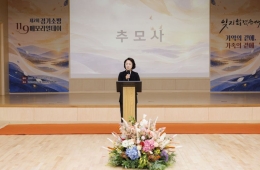
On the 25th, the "National Movement to Restore Trust in the Educational Community," participated in by 12 organizations including Education Spring and various teacher and parent groups, began a series of eight forums to address this issue. The first topic was "The Historical Path to the Judicialization of Education." It was explained that the problem of broken trust within the educational community, which is currently being raised in schools, did not emerge overnight with the 2023 Seoi Elementary School incident, but rather resulted from various factors accumulating over decades. In that process, legal solutions became the main tool for resolving conflicts.
The tendency to solve problems through law became more pronounced in the 2010s. According to analysis by Jaeyoung Lee, director of the Korea Peace Education Training Institute, the turning point came with the death of a middle school student in Daegu in 2011 due to peer bullying. This incident led to a surge in reporting previously unaddressed school violence issues, and school violence was redefined from a "problem between students to be handled educationally" to a "criminal and severe punishment issue." The following year, in 2012, a "Comprehensive Plan to Eradicate School Violence" was introduced, institutionalizing this punitive approach.
Above all, the guideline requiring school violence measures to be recorded and kept in the student's school life record book triggered legal disputes. Attempting to link school violence directly to university admissions—the most sensitive issue in Korea—shook schools and teachers alike. This also reframed school violence as a "conflict between teachers' rights and children's rights." Administrative lawsuits challenging school violence disciplinary decisions jumped from 50 in 2012 to 661 in 2018, a more than 13-fold increase.
Along with this, "child abuse reports" also increased. Once a child abuse report is filed, the school and teachers have no choice but to respond immediately. Requests for homeroom teacher changes follow, and depending on the matter, teachers may be separated from students or even suspended from their positions. In this process, handling of school violence cases is delayed. Director Lee described this as "the cheapest way to delay and neutralize school violence consequences."
This is also evident in the statistics. The number of child abuse reports involving elementary, middle, and high school staff grew from 5,168 in 2018 to 6,065 in 2021. However, of the 6,787 educators registered as perpetrators of child abuse, only 110—just 1.6%—were actually indicted. Of 1,870 teacher-targeted child abuse reports tallied by the Ministry of Education from September 2023 to February 2024, in 993 cases that were resolved, 90.4% resulted in no charges. This demonstrates how the judicialization of classrooms is destabilizing schools.
Hot Picks Today
!["Samsung Electronics Employees Commute by Shuttle Bus"... More Than 5,000 Homes to Be Supplied in Seoul and Busan [Real Estate A to Z]](https://cwcontent.asiae.co.kr/asiaresize/93/2026092515334340873_1790318023.jpg) "Samsung Electronics Employees Commute by Shuttle Bus"... More Than 5,000 Homes to Be Supplied in Seoul and Busan [Real Estate A to Z]
"Samsung Electronics Employees Commute by Shuttle Bus"... More Than 5,000 Homes to Be Supplied in Seoul and Busan [Real Estate A to Z]
- "Han River-View Royal Building and Floor Jump 1.4 Billion Won"... Banpo Raemian One Bailey Hits 12 Billion Won
- "I'm Fine": Kim Jong Un Makes Surprise Visit to China via New Yalu River Bridge... Will He Meet Xi Jinping?
- "Lee Suman! Lee Suman!" Rings Out at Barbecue Restaurant... He Rings Golden Bell and Gifts Bracelet to Diner
- "If This Airs, I'm Dead"... Why a Restaurant Refused to Let Jeon Hyunmoo's Show Film
School is where children experience conflict and learn how to resolve it before entering society. They grow in the process of acknowledging wrongdoing, understanding another’s harm, taking responsibility, and rebuilding relationships. However, as resolving conflict exclusively through legal avenues becomes the norm, opportunities to resolve and grow through understanding, acceptance, and adjustment are lost. It is time to seriously reflect on the painful criticism that “instead of teaching children ‘If you do wrong, take responsibility,’ we are teaching them ‘If you do wrong, just don’t get caught.’”
![[Inside Chodong] "Follow the Law" Education Lost... Judicialized Classrooms](http://www.asiae.co.kr/news/img_view.htm?img=2026051115305257881_1778481052.jpg)
© The Asia Business Daily. All rights reserved. Unauthorized AI training and use prohibited.