From a 9th-Century Iron Buddha to a Taejong Appointment Decree, Designated as Treasures
National Heritage Administration Designates Six New Treasures
Sangwonsa Wooden Statue and Sambong Teacher's Collection Among Selections
The National Heritage Administration announced on the 27th that it has designated the following as National Treasures: the "Pyeongchang Sangwonsa Wooden Seated Statue of Jeoseokcheon and Enshrined Relics," the "Iron Seated Buddha Statue at Jingu Temple Site in Imsil," "Kyung Yoon Lee's Mountain Water People Album," "Sambong Teacher's Collection Volume 1," "Chojeopon Yugasadiron Volume 3," and "Anseong Goshinwangji."

Pyeongchang Sangwonsa Wooden Seated Statue of Je-seok-cheon / Cultural Heritage Administration.
View original imageThe Pyeongchang Sangwonsa Wooden Seated Statue of Jeoseokcheon is a rare example of a sculpted Jeoseokcheon image, which was more commonly depicted in Buddhist paintings. Based on the inscription found among the enshrined relics discovered in 2008 and the prayer text from the Wooden Seated Statue of Manjusri (National Treasure), it is estimated that the statue was created no later than 1645. The seated posture on a chair, the full and voluminous face, and the high topknot hairstyle all demonstrate the continuation of late Goryeo stylistic features.

Iron Seated Buddha Statue at Jingu Temple Site, Imsil / Cultural Heritage Administration.
View original imageThe Iron Seated Buddha Statue at Jingu Temple Site in Imsil is believed to have been crafted in the late 9th or early 10th century. Although parts of the hands and body are missing, its well-balanced proportions and refined sculpting showcase its original beauty. The inverted triangular face, neat jaw and mouth, and the double-curved bridge of the nose are typical features of iron Buddha statues from the late 9th century. It is presumed to have been originally enshrined at Imsil Jingu Temple, a key temple of the Sil Sang mountain school, the first of the nine schools of late Silla Buddhism.

Kyungyoon Lee, Phil Landscape and Figure Album / Cultural Heritage Administration.
View original imageThe "Kyung Yoon Lee's Mountain Water People Album" at Horim Museum is an album of landscape and figure paintings attributed to Kyung Yoon Lee (1545–1611), a mid-Joseon literary artist. Landscapes and figure paintings traditionally ascribed to Kyung Yoon Lee are on folios 1 through 9; anonymous gold-brushed landscapes are on folios 10 through 13, and anonymous paintings of flowers, birds, and figures are on folios 14 through 22. The album also includes poems and colophons by noted essayist Choi Rip (1539–1612), providing a rare record that details the work’s original owner, its creation background, and critical appreciation.

The "Sambong Teacher's Collection Volume 1," held by the Seoul Museum of History, is the first volume of the collected writings of Jeong Dojeon, a founder of the Joseon Dynasty. This particular edition is a mid-printing produced in 1465. The original edition, published early in King Taejo's reign, was scattered and lost during the Strife of the Princes, but descendants later recompiled and republished the surviving texts. The presence of a colophon by Lee Saek, which appears only in this edition, is considered crucial to understanding the early publication and transmission of the "Sambong Teacher's Collection."

The "Chojeopon Yugasadiron Volume 3" held at the Horim Museum is the third volume of a Buddhist text translated by Xuanzang of the Tang dynasty. This is the only surviving copy of this particular volume known either domestically or internationally, making it extremely rare. The book is distinguished by its detailed use of reading marks (gugyeol) added in Korean to aid comprehension of the classical Chinese, making it highly valuable for the study of Korean linguistic history.
Hot Picks Today
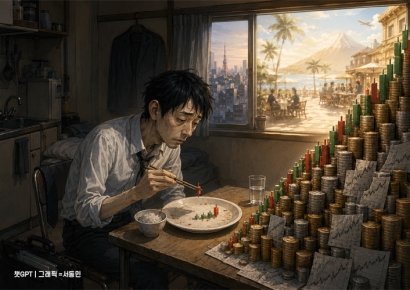 "Surviving on One Meal a Day to Invest 3.5 Million Won Monthly... 'FIRE' Craze Sparks 'NISA Poverty' in Japan"
- "Correction Over for Samsung and SK hynix" "670,000 for Samsung, 4.7 Million for SK hynix": Why Global IBs Remain Optimistic
- "As Soon as Yong Hyein Was Nominated... After a 195% Surge, This Stock Suddenly Plunged"
- "Police Fuel Suspicion"... Family of 'Missing Woman in Jeju' Appeals After Being Denied Access to Scene
- Nongshim Third-Generation Executive Sangyul Shin to Wed SKT Employee on the 13th

"Anseong Goshinwangji," preserved at the Jangsu Historical Exhibition Hall, is an appointment decree issued in 1414 by King Taejong appointing a figure named Anseong as Provincial Officer in Gangwon Province. It is written in flowing cursive script over seven lines and bears the royal seal of Joseon. Notably, the term "wangji" used here continued on appointment documents until 1435, providing insight into the evolution of official document regulations.
© The Asia Business Daily. All rights reserved. Unauthorized AI training and use prohibited.