Daegu–Gyeongbuk Metropolitan Railroad (70.06km) Connecting Seodaegu–Integrated New Airport–Uiseong Passes Preliminary Feasibility Study
Project Cost: 3.1813 Trillion Won
On August 26, Gyeongbuk Province announced that the "Daegu–Gyeongbuk Metropolitan Railroad" linking Seodaegu, the Integrated New Airport, and Uiseong has passed the preliminary feasibility study, with final approval given at the 7th Fiscal Investment Evaluation Committee chaired by the Ministry of Economy and Budget.
The Daegu–Gyeongbuk Metropolitan Railroad project was jointly proposed by Daegu and Gyeongbuk in 2019. Subsequently, it was included in the 4th National Railroad Network Construction Plan by the Ministry of Land, Infrastructure and Transport in 2021 and selected as a leading metropolitan railroad project. After a preliminary feasibility study, the main feasibility study was launched in June 2024, followed by a comprehensive evaluation (AHP) by the subcommittee in July 2026, resulting in approval of the preliminary feasibility study.

Preliminary Feasibility Study Approved for the Seodaegu-Integrated New Airport-Uiseong Daegu-Gyeongbuk Metropolitan Railroad Line
View original imageThis project covers a distance of 70.06 km, with a total cost of 3.1813 trillion won. As a key metropolitan transportation infrastructure supporting balanced national development, it serves to supplement the north-south axis lacking in Gyeongbuk’s existing railroad network—which has recently entered a “railroad renaissance” with the opening of several new lines—and to connect the Integrated New Airport. However, like other large-scale projects in the Daegu–Gyeongbuk region, it was difficult to be optimistic about passing the preliminary feasibility study due to low economic viability.
In February 2026, a joint signing ceremony by the heads of six Daegu–Gyeongbuk local governments was held, and at the comprehensive evaluation (AHP) of the Fiscal Investment Evaluation subcommittee in July, Daegu Mayor Choo Kyung-ho and Gyeongbuk Governor Lee Cheolwoo attended in person to emphasize the necessity of passing the preliminary feasibility study. Local National Assembly members, who could not attend, supported the project remotely through video messages.
This line will directly connect key cities in Daegu and Gyeongbuk without transfers, establishing itself as a metropolitan express railroad that allows Daegu and Gyeongbuk to become a one-hour living zone. In addition, the project will serve as a central axis for the new four-way Gyeongbuk rail network within the 5th National Railroad Network Construction Plan currently under review by the Ministry of Land, Infrastructure and Transport—including new lines such as the Integrated New Airport Circular Railroad and the Gimcheon–Gumi–New Airport route.
Together with the Daegyeongseon line, which is scheduled to open by the end of 2024 as a vital residential and commercial connection, this project will become the industrial and business artery linking urban industrial cluster hubs across the greater Daegu–Gyeongbuk region.
Hot Picks Today
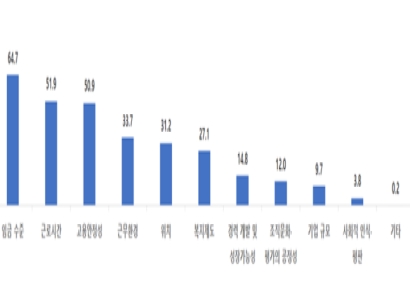 "Please Pay Me at Least 3 Million Won a Month": More Than Half of Young People Today Prioritize "Working Conditions" Over Company Size
- Selling Like Crazy Every Year... 30-Year-Old Hetbahn Takes on a New Challenge: Tastes Better Than "Mom's Home Cooking" [On-Site Report]
- "Americans Would Be Amazed If They Came": Wide-Eyed at a Sight They've Never Seen Before... Foreigners Also Fall for K-Baseball [K-Holic]
- "Hey, Lady, Teach Your Kids to Behave!" ... 300,000 Won in Cash and a Bodily Injury Claim Demanded Over Child's Door Ding
- Beachgoer Finds 'Plastic' That Turns Out to Be Perfume Ingredient Worth More Than Twice as Much as Gold
Gyeongbuk Governor Lee Cheolwoo said, “Daegu and Gyeongbuk united as one to achieve the result of passing the preliminary feasibility study. Through the expansion of the railroad network, we will work not only towards the economic integration of Daegu and Gyeongbuk and the realization of a megacity, but also do our utmost to spearhead balanced national development with the strength of the five major economic regions and three special districts in the Daegu–Gyeongbuk area.”
© The Asia Business Daily. All rights reserved. Unauthorized AI training and use prohibited.