Four Special Self-Governing Cities and Provinces Vow Cooperation: "'Five Axes, Three Special Zones' Is About Mutual Growth, Not Competition"
First Regular Administrative Council Meeting of the 9th Local Government Held at the National Assembly
Calls for Authority Transfer, Regulatory Improvement, and Expansion of Special Exemptions
Four special self-governing cities and provinces—Jeonbuk, Gangwon, Jeju, and Sejong—have launched a joint response to leverage the government's "Five Axes, Three Special Zones" national balanced development policy as an opportunity for regional growth.
On August 26th, Jeonbuk Special Self-Governing Province, Gangwon Special Self-Governing Province, Jeju Special Self-Governing Province, and Sejong Special Self-Governing City held the first "Regular Meeting of the Republic of Korea Special Self-Governing Cities and Provinces Administrative Council" since the launch of the 9th local government at the National Assembly Members' Office Building, to discuss cooperation measures for the advancement of special self-governing regions and national balanced development.

On the 26th, the Jeonbuk Special Self-Governing Province, Gangwon Special Self-Governing Province, Jeju Special Self-Governing Province, and Sejong Special Self-Governing City held the first "Regular Meeting of the Korea Special Self-Governing City and Province Administrative Council" since the launch of the 9th local government at the National Assembly Members' Office Building, Seminar Room 2. Provided by Jeonbuk Provincial Government
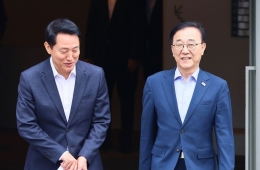
View original imageAttendees at the meeting included Lee Wantak, Governor of Jeonbuk Special Self-Governing Province; Woo Sangho, Governor of Gangwon Special Self-Governing Province; Wi Seonggon, Governor of Jeju Special Self-Governing Province; and Cho Sangho, Mayor of Sejong Special Self-Governing City. The four special self-governing cities and provinces agreed that the government's "Five Axes, Three Special Zones" initiative should not be approached as competition between special self-governing areas and regional hubs.
They determined that highlighting the unique industries, resources, and geographical characteristics of each region—while alleviating metropolitan concentration and bolstering the growth foundation for all areas—is in line with the intent of national balanced development. There was also a consensus that for special self-governing cities and provinces to be more than just "special" in name, the central government must transfer its authority to the regions and provide genuine autonomy in financial and regulatory matters.
During the meeting, the four cities and provinces shared their common issues and agreed to collaboratively identify policy challenges and institutional improvements needed for further advancement of the special self-governing system.
They also adopted the "Joint Statement of the Republic of Korea Special Self-Governing Cities and Provinces," calling on the government and the National Assembly to strengthen institutional support for these special regions.
The joint statement included: ▲ pursuing national balanced development policies that enable both the five axes and three special zones to grow together; ▲ authority transfer, financial support, regulatory improvement, and expanded special exemptions; and ▲ enactment of the Special Administrative Capital Act for the completion of Sejong's administrative capital, targeted for 2026.
The special self-governing city and province system is significant in that it allows the decentralization of powers from the central government to local governments so that policies tailored to the unique characteristics of each region can be implemented. However, there have been ongoing calls for authority transfer to be accompanied by financial resources and institutional improvements to genuinely drive regional development.
Since its establishment, Jeonbuk Special Self-Governing Province has focused on securing special exemptions that allow it to implement region-specific policies in areas such as industry, agricultural bio, and tourism. Gangwon and Jeju have each created their own special self-governing models reflecting local conditions in tourism, industry, and the environment, while Sejong is prioritizing the completion of its administrative capital as a core goal.
Jeonbuk Special Self-Governing Province plans to use the joint statement as a catalyst to strengthen policy cooperation with Gangwon, Jeju, and Sejong, and to make joint proposals to the government and National Assembly regarding shared priorities such as authority transfer, regulatory improvement, and expansion of special exemptions.
Hot Picks Today
 Children, Grandchildren, and Great-Grandchildren... Stir Over Donghak Revolution Descendants Receiving 100,000 Won Monthly Stipend 132 Years On
- "Interest Rate Hikes Have an Upside": Sectors Gaining 'an Average 12% Rise' as Semiconductors Stumble
- "We'll Get at Least 30 Million Won a Month"... Cheongdam-dong Landlords Won't Lower Rent Despite Year-Long Vacancies
- Dozens of "Snakes" Spill onto Train Floor?... Chaos Erupts in China Subway, Turns Out to Be Eels
- "Even If It Costs More Than the Drink... Chinese Millennials and Gen Z Drive Trend for 'Stickers' Pricier Than Beverages"
Lee Wantak, Governor of Jeonbuk Special Self-Governing Province, stated, "Special autonomy serves as an institutional foundation for regions to design their own futures and turn their unique strengths into engines of growth. We will work together to reinforce solidarity among special self-governing regions for balanced national development where the five axes and three special zones can grow together, and to further expand the substantial authority and institutional foundation that residents can truly experience."
© The Asia Business Daily. All rights reserved. Unauthorized AI training and use prohibited.