[Feature] From Nutritious Lunchboxes to Home Visits... Yeonggwang County's "Care That Comes Home"
Launched as a Task Force in 2023,
Yeonggwang Establishes Permanent Integrated Care Division in Three Years
Bridging the "care gap" after hospital discharge:
Public officials proactively assess residents’ needs
From nutritional lunchboxes and hospital accompaniment
to doctor home visits: A comprehensive approach underway
'Care Gaps' Begin the Moment You Leave the Hospital
In rapidly aging rural areas, there are many problems that hospitalization alone cannot solve.
Elderly people who find it difficult to prepare meals after discharge or have no means of visiting the hospital regularly are prime examples. The difficulties intensify if family members live far away or there are no relatives available to provide care.
Yeonggwang County chose a proactive approach, sending officials out to residents, rather than making them seek out welfare services themselves.

Jang Seil, head of Yeonggwang County, personally visited an elderly household receiving customized nutrition lunchboxes to encourage them and listen to their difficulties. Provided by Yeonggwang County
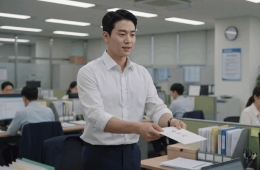
View original imageAn assigned public official visits the home to assess the resident’s health and living conditions, then selects and connects the necessary services. The approach is not about forcing people into existing welfare programs, but about first identifying 'what each individual needs.'
Elderly individuals who struggle to prepare meals are provided with nutritional lunchboxes after a basic nutrition assessment, and their overall health is monitored.
Residents waiting to be graded for long-term care, or hospital dischargees, are offered home medical visits and accompaniment to hospitals. For those experiencing depression, care and healing programs utilizing rural resources are also provided.
If mobility is an issue, the medical staff comes to them. Doctors conduct home visits for examinations and prescriptions, while nurses and social workers provide regular health checkups and counseling. This shifts a portion of services from the traditional model of "patients visiting the hospital" to "medical staff visiting patients."
No More Separation between Welfare and Healthcare
The focus of integrated care is not about creating yet another welfare program.
Previously, services were scattered across health centers, town and township offices, hospitals, and welfare institutions, often forcing residents to navigate various systems to find support that matched their needs.
Yeonggwang County has focused on unifying these services into a single care network.
When resident assistance needs are identified at the town or township level, health and living conditions are assessed to develop a support plan. Twice a month, an integrated support meeting is held to discuss which services to provide, connecting existing local resources such as health centers, medical and welfare institutions, and volunteer groups with the individual at the center of care.

Yeonggwang County received the Minister of Health and Welfare Commendation last year for promoting integrated medical care support. Photo by Yeonggwang County
View original imageThe national government is also shifting the care system away from hospital- and facility-based support toward a community-based model, in accordance with the implementation of the Act on Integrated Support for Community Care such as Healthcare and Nursing. Yeonggwang County is also preparing the necessary regulatory framework, such as revising related ordinances.
From a 3-Year Task Force to a Permanent Division
The experiment in Yeonggwang County began in 2023.
A task force was formed at the time to link medical, nursing, and welfare services. Subsequently, Yeonggwang County won the Encouragement Award and the Excellence Award at the Elderly Medical and Care Integrated Support Best Practice Convention hosted by the Ministry of Health and Welfare in 2023 and 2024. In 2025, Yeonggwang County was selected as a meritorious institution for integrated support of healthcare, nursing, and care, and received a commendation from the Minister of Health and Welfare.
The establishment of the new Integrated Care Division signifies the transition from temporary task force work to ongoing administrative operations.
While the task force of the past three years was a "test bed" for whether integrated care was feasible in Yeonggwang, now a permanent department must entrench this as a sustainable system.
Notably, in July, Jang Seil, the mayor of Yeonggwang County, approved the 'Plan to Designate Yeonggwang County as an Integrated Care Special Zone' as his first official act in the ninth popularly elected administration, making integrated care a flagship policy.
However, simply establishing a dedicated division does not automatically complete the integrated care system. Success hinges on how organically medical institutions, welfare agencies, towns, townships, and health centers work together on the ground, and how quickly they identify residents in need of help.
Ultimately, the true measurement of integrated care’s success lies not in the number of departments or projects, but in the everyday lives of the residents.
Can people stay in their own homes even when sick? Is there someone to ensure an elderly person discharged from the hospital receives regular meals? Can medical staff make home visits to those who can’t go to the hospital?
Yeonggwang County’s experiment, which started as a small task force in 2023, has evolved in just three years into the official Integrated Care Division. From now on, the real test lies not with administrative organizations but in the lives of residents. The new challenge is to ensure that the goal of "staying healthy where you live" is not just a slogan, but becomes part of everyday life in Yeonggwang.
Hot Picks Today
 Boyfriend Used It for Free, I Had to Pay... Woman in Her 20s Sues Over 'Gender Discrimination' Restroom Fees
- "Was This Delicious Gimbap Only for Koreans?" Sold Out at $28 a Roll... Gimbap Debuts at US Tennis Mecca
- "With Foreign Tourists Flocking to Korea, Calls Grow to Raise Departure Tax Like Hong Kong and Japan... Legislation Gains Speed"
- Fukushima Radioactive Soil to Be Spread Across Japan... 'Enough to Fill Thousands of Football Fields'
- "Jeju Should Not Be Taken Lightly... Do Not Walk Alone Even in Broad Daylight," Warns Jeju Resident of 7 Years, Hyegul Hong
A Yeonggwang County official stated, "Like other regions in Jeollanam-do, Yeonggwang is experiencing a steady increase in the elderly population. In contrast, the birthrate is high, meaning there’s also a simultaneous influx of younger people. Thus, the scope of welfare considerations is broad, and there are many aspects to address. We are doing our best to promote and manage welfare policies that will satisfy our residents."
© The Asia Business Daily. All rights reserved. Unauthorized AI training and use prohibited.