A Single Site Holds Enough Batteries for 2,000 Electric Vehicles... Inside Jeju’s First BESS [Digging Energy]
[Specialist Report]
Optimal Temperature and Humidity Maintained in 30 Battery Rooms
Automated Water Injection Prevents Fires When Temperature Rises
Settlement Based on Compliance with Korea Power Exchange Instructions
Investment Recovery Expec

Jeju Seogwipo-si Andeok-myeon Andeok Battery Energy Storage System (BESS) panorama. Photo by Heejong Kang
View original image"The battery capacity here alone is enough to power 2,000 electric vehicles."
On August 24, Youngnam Kang, Operations Director at Namjeju Bitdream Energy, pointed to the racks where battery packs are neatly stacked while guiding us through the Andeok Battery Energy Storage System (BESS) located in Hwasun-ri, Andeok-myeon, Seogwipo-si, Jeju.
Andeok BESS is one of three sites that were selected in Jeju in 2023 as Korea’s first Central Contract Market long-duration BESS operators. It began commercial operation in March and has now entered its sixth month. Namjeju Bitdream Energy is a special-purpose corporation established for the Andeok BESS business through joint investment by Korea Southern Power, Topsolar, and Brite Energy Partners (BEP).

Youngnam Kang, Operations Director at Namjeju Bitdream Energy, is explaining the battery room at Andeok BESS. There are 17 pouch-type battery packs in one rack. Photo by Heejong Kang
View original imageStarting as a pilot project in Jeju, the Ministry of Climate, Energy and Environment conducted two rounds of bids for long-duration BESS in the Central Contract Market from last year through this year, including both the mainland and Jeju. The first and second rounds each selected operators totaling 565 MW, or 1.13 GW in total. The Korea Power Exchange is expected to announce the third round of central contract market-type bids in early September.
With each bid amounting to orders of approximately 1 trillion won, there is growing interest in the long-duration BESS sector. The number of companies entering the BESS market is continuously increasing and competition is intensifying. In line with the government’s policy of expanding renewable energy, the domestic BESS market is expected to reach tens of trillions of won in size.
As the stagnation of the electric vehicle market continues, the nation’s three major battery makers—LG Energy Solution, Samsung SDI, and SK On—are vying for position, viewing energy storage systems (ESS) as a new breakthrough.
A Small Power Plant Powered by Batteries
ESS stores surplus electricity and releases it when needed. Specifically, when batteries are used in ESS, it is called BESS. The separate term BESS distinguishes it from pumped hydro storage, which also falls under the broad category of ESS.
BESS can be categorized in various ways based on application and capacity. The terms long-duration and short-duration refer to discharge (output) time. Typically, output durations of less than two hours are considered short-duration BESS, and durations of four to six hours are considered long-duration BESS.
Short-duration BESS is mainly used for frequency regulation in power grids. Long-duration BESS charges when energy supply is abundant and discharges when demand is high, helping offset the intermittency and variability of renewables. This is why Jeju, with its plentiful renewable energy, was chosen as the first site for central contract market-type long-duration BESS projects.
A long-duration BESS could be described as a small power plant powered by batteries. The Andeok BESS, with an installation capacity of 23 MW, typically charges during off-peak hours and supplies up to 92 MWh (23 MW × 4 hours) to the power grid in the evenings, when demand is highest. Assuming an average household load (electricity consumption) of 0.5 kW, 92 MWh is enough to supply power to 46,000 households for four hours.
![A Single Site Holds Enough Batteries for 2,000 Electric Vehicles... Inside Jeju’s First BESS [Digging Energy]](http://www.asiae.co.kr/news/img_view.htm?img=2026082610251593163_1787707515.jpg)
To further increase the share of renewables, more long-duration BESS installations are needed. To spur the sector’s growth, the government has introduced the central contract market competitive bidding system from 2023. This system allows operators to earn fixed returns at the winning bid price over a 15-year contract period, which makes it easier to forecast future returns and secure stable funding for upfront investment.
BESS operators repeat charging and discharging cycles according to instructions from the Korea Power Exchange. Each day, operators analyze equipment status and other factors to decide whether to bid. Based on the results, the Korea Power Exchange instructs operators on charge/discharge targets. Settlement is determined by the rate of compliance with these instructions: full compliance earns the entire contract price, while non-compliance results in proportional deductions. Not only actual discharge hours but also standby time is covered in the settlement.

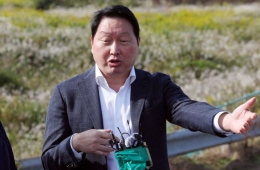
Seok-Sik Jang, CEO of Namjeju Bitdream Energy, is being interviewed by The Asia Business Daily. Photo by Heejong Kang
View original imageFor example, if a 10 MW BESS wins a bid at a capacity price of 30 won per kWh, its theoretical annual revenue is 2,628,000,000 won (10,000 kW × 30 won/kWh × 24 hours × 365 days). When profit is generated, loans are first repaid to the financial institution that provided the initial funding; any remaining profit is distributed as dividends to shareholders.
Batteries Account for Over Half of Build Cost
In central contract market-type BESS tenders, the winning bid price in 2023 was around 50 won per kWh, but fell to the high 20-won range in the second round. A lower winning price essentially means that the initial BESS installation cost has declined.
Batteries make up the largest portion of BESS construction costs, accounting for 50–60% of the total. As competition has intensified with each bidding round, the price at which batteries are supplied has dropped significantly.
Battery companies do not participate directly in bidding. Usually, power companies or renewable energy investors form a consortium, then select batteries based on cost, fire safety, technological specifications, and the probability of winning the bid.

Power conversion system (PCS) equipment installed in the An-deok BESS in Jeju. A hood is installed on top to absorb heat generated during operation. The PCS, which converts alternating current to direct current, is one of the core components of the BESS. Photo by Hee-jong Kang
View original imageBattery companies are putting in maximum effort to be selected by these consortia. In the first Jeju bid, held in 2023, LG Energy Solution had the upper hand. However, in the first round covering both the mainland and Jeju, Samsung SDI’s batteries accounted for more than 70% of selections. In the second round, SK On, with its affordable LFP (lithium iron phosphate) batteries, secured over half of the contracts. The cumulative market shares from the first and second rounds were Samsung SDI 56%, SK On 25%, and LG Energy Solution 19%.
Which battery is selected depends heavily on the government’s evaluation criteria. In the first round, the price-to-non-price weighting was 60:40, placing greater emphasis on cost. In the second round, this shifted to a 50:50 split to prevent excessive price competition and support domestic industry.
Accordingly, domestic production and local supply chain security have now become key criteria. Battery companies have been building domestic manufacturing facilities for ESS batteries to gain a favorable position in bidding.
Automatically Injecting Water into Batteries When Temperatures Rise
BESS installations are classified as either indoor or outdoor systems. Indoor systems house battery racks, power conversion systems (PCS—which convert AC and DC power), transformers, HVAC systems, and fire safety equipment inside a building. Outdoor systems are set up in standalone container units in open locations.
Indoor BESS can maintain optimal temperature and humidity via the building’s HVAC and are less affected by external dust or weather. However, if a fire occurs, there is a risk that damage will spread throughout the building, so rigorous safety measures are required and construction costs are higher.
Outdoor systems present a relatively lower risk of heat or smoke spreading in the event of a fire. Since they are manufactured and delivered on site in a modular or finished form, construction periods are shorter and costs are lower. However, the containers themselves must be equipped with built-in waterproofing, dustproofing, and climate control, and they are more vulnerable to changes in the external environment.
The Andeok BESS visited by our reporter is an indoor installation. It is situated within the Korea Southern Power Namjeju Bitdream headquarters site, which hosts both thermal and LNG combined power plants. The facility is unmanned, with operations monitored remotely 24 hours a day from an off-site office. Inside the BESS building, monitors are installed to allow on-site patrol staff to view operation status at a glance.
Andeok BESS consists of three PCS rooms and 30 battery rooms across the first and second floors. Each room is equipped with an air conditioning system that keeps temperature and humidity constant. On the day of the visit, although the outdoor temperature was over 33 degrees Celsius with high humidity, the indoor temperature and humidity were measured at around 22 degrees and 33%, respectively. Every room offered a comfort level reminiscent of staying in a hotel.

A representative of Namjeju Bitdream Energy is remotely monitoring the operational status of Andeok BESS. Photo by Heejong Kang
View original imageThere are a total of 561 racks installed in the battery room. Each rack holds 17 pouch-type battery packs, for a grand total of 9,537 battery packs.
Although Andeok BESS’s power output is 92 MWh, the installed capacity is actually 142 MWh. CEO Seok-Sik Jang explained, "We installed generous battery capacity to compensate for declining residual capacity over the 15-year project period." The 142 MWh capacity is equivalent to 2,000 electric vehicles, each with a 70 kWh battery.
Because Andeok BESS is an indoor facility, it is equipped with multiple layers of fire safety devices. Each battery room is fitted with a 700-liter water tank, connected by thin pipes to each battery pack.

Seok-Sik Jang, CEO of Namjeju Bitdream Energy, explained, "If the temperature of any battery pack rises above a certain threshold, water from the pipes is injected into the pack to prevent fires." This system is a patented technology of LG Energy Solution. Mounted on the ceiling of each battery room is a gas suppression system designed for lithium-ion battery fires. Additionally, a 40-ton water tank and other firefighting equipment are also installed inside the building.
The Andeok BESS charges using electricity supplied from the 154 kV transmission line connected to the adjacent Korea Southern Power Namjeju Bitdream headquarters. Accordingly, substation equipment such as gas-insulated switchgear (GIS) and a transformer capable of reducing high-voltage electricity to 1,000V are also installed outside the building.
"Permitting Procedures Must Be Simplified"
Currently, it appears that the Jeju BESS pilot projects are contributing more to securing reserve power than to relaxing output control. The total capacity of the three 2023 pilot sites (Andeok, Hallim, and Pyoseon) is 65 MW, which is only 5.6% of the Jeju region’s renewable energy facility capacity (1,148 MW as of 2026). This is far from adequate to fulfill the core role of mitigating output controls.
Hyungchul Kim, Operations Director at the Jeju branch of the Korea Power Exchange, stated, "BESS helps provide reserve supply to the power grid by discharging for four hours during peak evening demand. To alleviate output control, more BESS installations are needed."
There are also numerous areas where institutional improvement is required. Operators point out that simplified and expedited permitting procedures are essential to vitalize BESS projects. A representative from Korea Southern Power commented, "Given that BESS requires a relatively short project preparation and construction period, streamlining the approval process is necessary."
Hot Picks Today
![Claims That "Daiso Is Being Shut Down to Save AliExpress and Temu" Spread Widely... A Fact-Check [Why&Next]](https://cwcontent.asiae.co.kr/asiaresize/93/2023121315590987574_1702450749.jpg) Claims That "Daiso Is Being Shut Down to Save AliExpress and Temu" Spread Widely... A Fact-Check [Why&Next]
Claims That "Daiso Is Being Shut Down to Save AliExpress and Temu" Spread Widely... A Fact-Check [Why&Next]
- "Three-Star Rooms at 980,000 Won a Night, Five-Star at 2 Million"... Busan Fireworks Festival Seats Cost 100,000 Won, but Hotel Views Bring Another Price-Gouging Row
- Former Sahmyook University Professor Lee Jeongwoo Dies... Island Bird Survey Pioneer Who First Confirmed "Black-Faced Spoonbill Breeding in Korea"
- "All He Did Was Reheat and Eat Fried Rice Made the Day Before"... Man in His 20s Nearly Needed a Liver Transplant
- "Looks Like They're Having an Affair": What If You Opened a KakaoTalk Chat, Filmed It, and Shared the Video With Coworkers?
CEO Jang explained, "Because the Jeju BESS project was the nation’s first pilot project led by the government and the Korea Power Exchange, we faced many challenges and trial and error from persuading local residents to completing construction." Like large-scale power plant construction projects, BESS projects also include phases of local consent, permitting, and construction. Nonetheless, if commercial operation does not start within two years, penalties are imposed.
© The Asia Business Daily. All rights reserved. Unauthorized AI training and use prohibited.