"Korea's Stock Market Dubbed 'World's Wildest'... U.S. Shocked as KOSPI Triples Then Plunges 40%"
"Unprecedented Volatility Unseen in Major Stock Markets"
"Individuals May Be Left with Losses Once the Party Ends"
The Korean stock market has earned the dubious nickname of the "roller coaster of fear." This assessment comes from The Wall Street Journal (WSJ), a leading U.S. economic publication, in reference to the extreme volatility that the domestic stock market has experienced in recent months.
On August 24 (local time), WSJ published an article titled "The World’s Craziest Stock Market Has Become a Roller Coaster of Fear," noting, "Korea, home of Squid Game and K-pop, now boasts a stock market that’s shown a level of volatility not seen in any other major economy in recent years."

On the 25th, the closing price of KOSPI was displayed on the electronic board of Hana Bank dealing room in Jung-gu, Seoul. KOSPI showed high volatility, falling more than 4% intraday before successfully turning to rise in the afternoon. Photo by Yonhap News.
View original imageThe outlet pointed out that the KOSPI index more than tripled over the past year, only to plummet by approximately 40% during June and July. While the KOSPI has since rebounded nearly 20% from its recent low, intraday volatility remains high throughout this process. WSJ also introduced the neologism "RollerKOSPI," coined among Korean retail investors to describe these wild swings.
WSJ highlighted cases where foreign institutional investors suffered significant losses by investing recklessly in the Korean stock market. "Situational Awareness," a hedge fund specializing in AI themes, bought significant shares of SK hynix, a domestic company. However, it incurred heavy losses of 67% just in July. To repay loans from other banks used for investment, Situational Awareness was forced to liquidate most of its listed stock holdings.
However, WSJ noted that most of the losses were concentrated among Korean retail investors, or so-called "ants." WSJ explained, "Ants are a collective of individual investors who are weak alone but become powerful as a group." The outlet cited a case of a 25-year-old investor who started with savings and prior investment gains but ended up losing everything on SK hynix and single-stock leveraged ETFs.

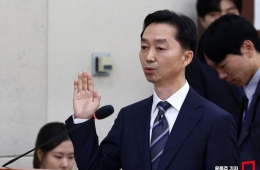
Jeong Euijeong, head of the Korea Stock Investors Association, offered strong criticism in an interview with the publication, stating, "The volatility of the (domestic stock market) is far too extreme. It’s not a haven for healthy investors, but more like a gambling den—a casino." According to the outlet, Jeong recently proposed a moment of silence for retail investors at a National Assembly forum, emphasizing, "The government must step back and a major overhaul is needed to restore a normal investment environment."
Hot Picks Today
 "Ppalli-ppalli Korea, No Wonder It Stings": Plunges from No. 1 to 22nd, Falls Behind Vietnam and Thailand
- "Even New York Taxi Drivers Are Talking About the KOSPI; South Korean Market to Top 9,000 Again Within a Year"... 'Wall Street's Stock-Picking Ace' Names His Picks
- "'Some Get KRW 74 Million, While a One-Day Difference Means a KRW 34 Million Gap' Sparks Outrage... President Weighs In"
- New Blue House Chief of Staff Lim Kwanghyun: "I Will Do Everything in My Power to Change the People's Difficult Daily Lives"
- 220 cm-Tall 26-Year-Old Woman Dies Less Than a Year After Giving Birth... Deadly Complications Hidden Behind 'Gigantism'
Meanwhile, WSJ also raised concerns about KOSPI’s volatility just last month. At the time, WSJ newsletter writer Spencer Jakab warned that the KOSPI "could turn into Squid Game," and cautioned, "When the party's over, most of the losses could end up on individual investors’ shoulders."
© The Asia Business Daily. All rights reserved. Unauthorized AI training and use prohibited.