Mayor Lee Sang-il: "Consolidating Six Samsung and Four SK hynix Fabs... Aiming to Make Yongin ‘Korea’s Silicon Valley’"
[Interview] Lee Sang-il, Mayor of Yongin
"Eight Months Wasted on Political Debate Over National Industrial Complex... Now It's a Race Against Time"
"Samsung Advanced Operation by a Year, but Complex Development Is Six Months Behind"
"Power and Water Supply Plans for Follow-up Fabs by Samsung and SK Must Be Finalized Quickly"
"National and General Industrial Complexes Should Be Designated as the 'No. 1 Semiconductor Cluster'"
"Opposed to Pooling Semiconductor Tax Revenue... Invest in Yongin's Future"
"Once all 10 large-scale semiconductor production facilities from Samsung Electronics and SK hynix are established, Yongin will become a city with the world’s largest semiconductor ecosystem. In the end, Yongin will become 'Korea’s Silicon Valley.'"

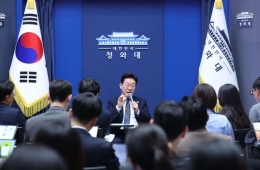
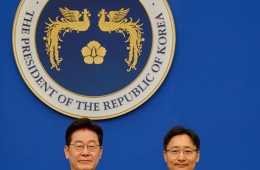
Lee Sangil, Mayor of Yongin Special City, stated in an interview with this publication on the 21st at his office, "We will cluster artificial intelligence (AI) and the bioindustry based on semiconductors to transform Yongin into a core city leading South Korea's future competitiveness."
View original imageIn an interview with this publication at his office on the 21st, Lee Sang-il, Mayor of Yongin Special City, said, "If we integrate artificial intelligence (AI) and the bioindustry with semiconductors as a foundation, Yongin will leap forward as a key city driving South Korea’s future competitiveness."
In Yongin, six Samsung Electronics fabs will be built in the I-dong and Namsa-eup Advanced System Semiconductor National Industrial Complex, and four SK hynix fabs will be set up in the Wonsam-myeon Yongin Semiconductor Cluster General Industrial Complex. Mayor Lee said, "If all 10 fabs are built as triple-stack structures, the combined investment by Samsung Electronics and SK hynix is likely to exceed 1,000 trillion won."
He emphasized, "Simply building factories will not complete a semiconductor city," and continued, "Power supply, water, roads, railways, supporting cities, materials, components, equipment companies, and talent development all need to be connected into a single ecosystem."
He also called for proactive support from the government. Mayor Lee said, "About 8 months were wasted due to controversy over relocating the national industrial complex," and further stated, "The global semiconductor market is a race against time, so if the lost time due to political controversy is to be made up for, the government must focus national capabilities on Yongin’s semiconductor industry."
Regarding Gyeonggi Province’s consideration of using a portion of city and county corporate local income tax as joint financing, he made his opposition clear, saying, "It means taking the fruits achieved through the sacrifices and burdens of Yongin’s citizens." The following is a Q&A with Mayor Lee Sang-il.
-What is the final vision for the global semiconductor hub Yongin is pursuing?
"Ten large-scale semiconductor production facilities, including six Samsung Electronics fabs and four SK hynix fabs, will be established. The total floor area of a single fab is equivalent to that of ten Lotte World Towers in Jamsil. With all ten fabs completed, it would be the equivalent of one hundred Lotte World Towers in scale.
Domestic and international companies specializing in semiconductor materials, components, equipment, and design will also be concentrated here. We expect that the number of semiconductor-related companies settling in Yongin will reach about 500. This is not a simple industrial complex made up of production facilities; a truly global semiconductor ecosystem—where research and development, design, production, equipment, and talent development are organically connected—will be created. People often talk about 'Korea’s Silicon Valley,' but ultimately, that place will be Yongin."

Construction site of SK hynix Yongin Semiconductor Cluster under development in Wonsam-myeon, Cheoin-gu, Yongin City. Provided by Yongin City
View original image-What was the process for attracting the national industrial complex and being designated as a specialized complex for national high-tech strategic industries?
"In September 2022, I proposed that Samsung invest in the national industrial complex, and on October 4 of that year, discussions were formalized through a meeting with key Samsung officials in Yongin. As a result, in March 2023 the attraction of the national industrial complex was officially announced.
In July of the same year, three zones in Yongin—Samsung Electronics National Industrial Complex, Giheung Campus Future Research Complex, and SK hynix Yongin Semiconductor Cluster—were designated as specialized complexes for national high-tech strategic industries. Although eight cities in Gyeonggi Province competed for this, only three zones in Yongin and Pyeongtaek were selected. Yongin’s city government went all in, and it paid off.
With the designation as a specialized complex, the floor area ratio increased from 350% to 490%. As a result, SK hynix will be able to build its fabs as triple-stack structures, expanded from the original plan of two stories. Samsung Electronics is also planning to design its fabs as triple-stack structures."
-What are the expected scales of investment by both companies?
"SK hynix’s originally planned investment was 122 trillion won, but now that the fabs can be expanded to triple-stack, the groundwork has been laid for an increase to as much as 600 trillion won. Samsung Electronics’ official investment is 360 trillion won.
As business gets fully underway, the total investment by Samsung Electronics and SK hynix could reach 1,000~1,200 trillion won. That is why people are talking about a 'ten-thousand-trillion won transformation' starting in Yongin. This is not just about Yangin’s growth, but a national project that will determine the competitiveness of Korea’s semiconductor industry."
-What is the current status and most urgent task of the national industrial complex project?
"The government announced candidate sites for the national industrial complex in March 2023, and site approval was finalized by December 31, 2024—just 1 year and 9 months later. Compared to other national industrial complexes, this is a notably fast pace. If the national complex falters, related projects such as the new city in I-dong, the expansion of National Route 45, and the extension of the Gyeonggang Line will also lose momentum. The prompt approval has built the foundation for Yongin’s future.
From now on, speed is everything. Samsung Electronics has moved up the target date for partial operation of its first fab by a year, from the second half of 2030 to the second half of 2029. Meanwhile, civil engineering for the site where the fabs will be located is about six months behind schedule. In order to rapidly scale up high-bandwidth memory (HBM) manufacturing, the schedule for site development must be accelerated as well. If land development work begins by the end of this year, the site must be ready within a year to allow the start of fab construction. The global semiconductor market is a race against time."

Yisang Il, mayor of Yongin Special City, signed the "Yongin Renaissance 2.0 Comprehensive Plan for the Development of the Semiconductor Industry and Cluster in Yongin City" as the first approval on July 1, the first day of the 9th civil election term. Provided by Yongin City
View original image-What specific government support do you require?
"The government must keep its promised schedule and focus national resources on the Yongin semiconductor project. Around eight months were lost due to the dispute over relocating the national industrial complex. To recover that lost time caused by political controversy, the pace of land development and infrastructure construction must be increased.
The Yongin National Industrial Complex, General Industrial Complex, and Giheung Future Research Complex should be designated as the ‘No. 1 Semiconductor Cluster’ under the Special Semiconductor Act, and national support should be concentrated on infrastructural elements such as electricity, water, and roads. In particular, the necessity for cluster designation for the SK hynix General Industrial Complex is significant. The government announced an acceleration of the completion date for this complex from 2045 to 2033—a 12-year advancement. In order to shorten the construction period for the four fabs, large-scale support at a national level is necessary. This has to be promoted on a bipartisan basis, regardless of which administration is in power."
-Are there any challenges in supplying power and water?
"The power required for the six Samsung Electronics fabs is about 10GW. The government plans to construct three 1GW LNG power plants to supply the initial 3GW and will also expand existing lines and build new supply lines to the east coast and central region.
However, with global LNG power plant construction increasing, it is becoming difficult to secure gas turbines, which are essential equipment. Delays in obtaining this equipment could disrupt the operational schedule for the national industrial complex. The government must take responsibility for coordinating between ministries, companies, and agencies to secure gas turbines and manage the schedule for transmission line construction.
Plans for supplying power and water to the first and second Samsung Electronics fabs are underway, but plans for the Samsung Electronics 3rd to 6th fabs and the SK hynix 3rd and 4th fabs must also be expedited. Any local conflicts that arise during the construction of transmission facilities should be resolved and coordinated directly by the central government and Gyeonggi Province."
-How will the industrial ecosystem centered around semiconductor manufacturing facilities be established?
"The semiconductor industry cannot be complete with only production facilities. It must also include collaborating material, component, and equipment companies, as well as design firms, and needs supporting cities and transportation networks where skilled professionals can settle down.
In August 2022, Yongin City became the first local government in the country to enact an ordinance for fostering and supporting the semiconductor industry. Investments have also been attracted from global equipment companies such as ASML and Lam Research. There will be 60-80 materials, components, and equipment firms (so-called "SOFUBANG" companies) located in the Samsung Electronics National Industrial Complex, and 55 in the SK hynix General Industrial Complex.
Talent development is also crucial. We are working to establish a semiconductor high school and expand semiconductor departments at local universities. We aim to make Yongin not just a production base but a global semiconductor city where companies and skilled people grow together."

Location map of the ‘L-Shaped Semiconductor Belt’, a key policy of Yongin Mayor Lee Sang-il. Provided by Yongin City
View original image-How far has the ‘L-shaped Semiconductor Belt’ progressed?
"We are moving forward with the two main pillars of the project: the I-dong/Namsa National Industrial Complex and the Wonsam-myeon SK hynix Yongin Semiconductor Cluster. The investment for the Samsung Electronics Giheung Campus Future Research Complex was increased from the original 20 trillion won to 37 trillion won. In addition to next-generation semiconductor research facilities, production facilities are also being expanded.
In Platform City, we have designated spaces for materials, components, and equipment companies to move in, and many firms have already expressed interest. Yongin Technovalley has been fully sold, and semiconductor-related firms are moving into 2nd Yongin Technovalley as well. As these two anchor companies connect research/production facilities and materials, components, and equipment firms, the ‘L-shaped Semiconductor Belt’ is taking concrete shape."
-What are the plans to expand transportation networks in line with the operation of the industrial complexes?
"The core is the ‘Semiconductor Expressway’ connecting the Samsung Electronics National Industrial Complex, SK hynix General Industrial Complex, and Giheung Future Research Complex to the Gyeongbu Expressway. It has passed the eligibility review for private investment and is now at the strategic environmental impact assessment stage. This road is essential for commute and logistics for semiconductor specialists. The expansion of National Route 45, which runs through the national industrial complex, must also be timed with the start of operations.
Regarding railways, we are working to include extensions of the Gyeonggang Line and the South Gyeonggi Region Metropolitan Railway in the national railway plan. There are also plans for the Central Region Metropolitan Express Railway (JTX), extension of the Bundang Line, extension of the Yongin Light Rail to Gwanggyo, the Dongbaek–Sinbong Line, and the Eonnam–Dongcheon Line. A lattice-shaped railway network will be created that connects Choin, Giheung, and Suji—the three districts of Yongin."
-What are the plans for creating a 1 trillion won railway project fund?
"Financing railway projects requires massive resources, far beyond what can be handled by the general account alone. We do not plan to secure 1 trillion won overnight; instead, we will gradually accumulate funds as fiscal conditions improve and use them to develop the future railway network.
If the national semiconductor industrial complex is successfully established, both the corporate presence and population will increase, thereby improving the economic viability of railway projects. Rather than spending the increased semiconductor tax revenue on short-term needs, it should be invested in the transportation infrastructure crucial for Yongin’s future."
-Why do you oppose Gyeonggi Province’s plan to jointly pool municipal corporate local income taxes?
"If an initiative is unfeasible, it’s better to give up early. Changing the law requires the consent of the National Assembly, and there is no reason for lawmakers outside Gyeonggi Province to cooperate. Other cities in Gyeonggi Province with many businesses, such as Suwon, Pyeongtaek, Hwaseong, and Icheon, are also likely to oppose it.
Yongin residents have endured prolonged discomfort and sacrifice to attract semiconductor companies and build industrial parks. There have been many citizens suffering due to compensation, relocation, and road expansion. Enduring such hardships should produce the fruit of increased local tax revenue. If, now that taxes are expected to flow in, Gyeonggi Province says it will take half, no resident will accept it.
Semiconductor tax revenue fluctuates greatly depending on market conditions. In 2024, there was virtually no corporate local income tax from Samsung Electronics. There is no guarantee this situation won’t recur. If Gyeonggi Province wants to take the tax during boom times, I would like to ask how it will help Yongin during downturns. Semiconductor tax revenues should be managed stably and used as resources for future investments."

Major railway line plans promoted by Yongin Special City. Provided by Yongin City
View original image-How will the semiconductor project change citizens’ lives?
"Yongin’s population is approaching 1.5 million, and new residential areas, including the I-dong new town, will be created. As companies move in, quality jobs will increase and the city’s added value will rise. Roads, railways, education, culture and arts, and sports facilities will also be expanded.
However, the lives of citizens will not automatically become prosperous just because high-tech industries come in. The benefits from the semiconductor industry must be reinvested in transportation, education, culture and arts, sports, and welfare. We will be bold with necessary welfare programs and build an even more robust safety net for vulnerable groups.
Hot Picks Today
 "Tried leveraged semiconductor stocks, watched 3.5 billion won shrink to 200 million won": Salaried investor in tears
- "Please Let Me Go Home"... Customers Trapped in Department Store Parking Lot for 5 Hours Vent Their Anger
- "I Should Enjoy It After Retirement": Prices Quadruple... Memberships Over 100 Million Won Popular, but Closures Mount
- “The Strong Drink This” Goes Viral on Social Media... What China's Millennials and Gen Z Are Hooked on After Ditching Coffee and Milk Tea
- "Come Live With Me on My Farm": Man Sells Everything and Travels 1,930 km, Trusting a Beautiful Woman
The core of the 9th administration’s ‘Yongin Renaissance Season 2’ is to ensure continuity with projects started under the 8th administration and accelerate execution. Industrial complexes, new cities, and metropolitan transportation networks must move from the planning stage to implementation. ‘Yongin Renaissance’ will only be complete when industrial growth goes hand-in-hand with improvements in citizens’ quality of life."
© The Asia Business Daily. All rights reserved. Unauthorized AI training and use prohibited.