"With Foreign Tourists Flocking to Korea, Calls Grow to Raise Departure Tax Like Hong Kong and Japan... Legislation Gains Speed"
Lee Jaejung Proposes Amendment to Tourism Promotion and Development Fund Act
Departure Tax Ceiling for All Airport Travelers to Be Raised from 10,000 Won to 30,000 Won
Core Funding for Tourism Infrastructure Projects Declining; Adjustment Needed
Legislative efforts to expand the Tourism Promotion and Development Fund, a key financial resource for developing the domestic tourism industry, are gaining momentum. The ruling party and government have led the introduction of a bill proposing to raise the maximum limit of the departure tax, charged to both domestic and foreign travelers as part of airfares, by up to three times. As calls grow to bring the departure tax to a realistic level—currently about a quarter of the average charged by the top ten overseas destinations for Korean travelers—attention is focused on whether the bill will pass the National Assembly, given concerns that it may increase travel costs for Korean nationals.

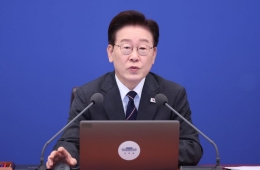
According to the National Assembly’s Bill Information System on the 26th, Lee Jae-jung, chair of the Culture, Sports and Tourism Committee and a member of the Democratic Party of Korea, sponsored a partial amendment to the Tourism Promotion and Development Fund Act on August 18 that would increase the maximum limit of the departure tax from the current 10,000 won to 30,000 won. Previously, an amendment sponsored in December last year by Democratic Party member Jo Gye-won proposed raising the tax for airport users to 20,000 won, meaning the new limit is 10,000 won higher.
The departure tax, introduced in 1997, is collected as a tax included in airfare from all passengers, both Koreans and foreigners, using the airport, and serves as funding for the Tourism Promotion and Development Fund. It is designated for use in building domestic tourism infrastructure, providing travel information for outbound tourists, promoting tourism both domestically and abroad, training workers in the industry, supporting projects to attract inbound tourists, developing tourism products, bidding for international conferences, and funding welfare programs for underprivileged groups.
The maximum limit, set at 10,000 won at the program’s inception, remained unchanged for nearly 30 years. However, in June 2024, following the 23rd Emergency Economic and Public Welfare Meeting, a presidential decree lowered the actual departure tax imposed on travelers from 10,000 won to 7,000 won. While this was intended to ease outbound travel costs for the public, industry experts have pointed out that the change led to a decline in revenues for the Tourism Promotion and Development Fund. According to the Ministry of Economy and Finance’s 2026 Comprehensive Fee Management Plan, the tax brought in 400.6 billion won when the number of tourists (both domestic and foreign) was 46.22 million in 2019, before the COVID-19 pandemic; but last year, despite the number of tourists rising to 48.5 million, the revenue fell to 264.4 billion won. This represents a 21.3% decrease compared to the year before the reduction was implemented.

According to the Ministry of Culture, Sports and Tourism, maintaining the current departure tax at 7,000 won is projected to cause the Tourism Promotion and Development Fund’s deficit to increase from 66.3 billion won in 2026 to 1.1396 trillion won by 2030. Lawmakers who sponsored the amendment explained, "The specific level at which the departure tax is set should comprehensively consider factors such as public burden, international equity, overseas examples, inflation rates, and the Fund’s financial circumstances," adding, "The purpose is to account for changed conditions such as inflation and increased demand for tourism policies, and to secure a stable source of funding for the Tourism Promotion and Development Fund to ensure sustainable growth of the tourism industry."
Neighboring countries are also trending toward increasing departure taxes. For example, in October last year, Hong Kong raised its departure tax by 67% to 200 Hong Kong dollars (approximately 37,000 won), and Japanese authorities, as of last month, tripled their departure tax from 1,000 yen to 3,000 yen (about 26,000 won). According to the Ministry of Culture, Sports and Tourism, the average departure tax among the top 10 overseas destinations for Korean travelers—including the United States, Japan, and Vietnam—amounts to about 29,000 won, more than four times Korea’s current rate.
Hot Picks Today
 "'Cheaper Direct-Run Rest Stops,' We Thought... 'Pay 700 Million Won and We'll Hand It Over and Leave,' Operators Fume; Not This Year"
- "Wasn't It Supposed to Be Gone? Alarming Surge in Cases Leads US to Declare Disaster Emergency"
- After 17 Tardies, AI Says, "We Should Fire This One, Right?" ... Outcry as U.S. Puts Brakes on 'Robot Bosses'
- "Weekly Work Cap for Time-Selective Civil Servants Should Be Raised to 40 Hours," Park Jeonghyeon Says at Parliamentary Audit
- Park Jinyoung: "I've Never Worked for President Lee or the Democratic Party... A Valuable Opportunity for Our Sons, Daughters and Nieces and Nephews" [2026 National Assembly Audit]
This has led to renewed calls within the Korean tourism industry to adjust the departure tax—which accounts for up to 30% of Tourism Promotion and Development Fund revenues—to match the record-breaking inbound tourism trend, with nearly 20 million foreign tourists visiting annually, thereby expanding financial resources. However, there remains the concern that raising the tax would impose additional costs on Koreans traveling abroad.

Kim Yong-kyu, standing adviser to the Culture, Sports and Tourism Committee, commented in his review of the amendment previously sponsored by Jo Gye-won, "When determining the appropriate level of the departure tax, it is necessary to carefully consider various factors—such as international balance, overseas practices, the rate of inflation, as well as the burden on the public and the financial resources available to the Tourism Promotion and Development Fund—based on the positions of relevant government agencies, including the Ministry of Culture, Sports and Tourism."
© The Asia Business Daily. All rights reserved. Unauthorized AI training and use prohibited.






![[2026 Nobel Prize] Frenchman Henri Kagan and Japanese Kenso Soai Share Nobel Prize in Chemistry for "Homochirality Research" (Updated)](https://cwcontent.asiae.co.kr/asiaresize/307/2026100719503053971_1791370230.jpg)