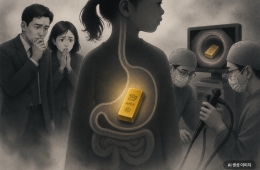
Lost 20kg in Just 15 Days by Drinking Only Water, but Suffered Horrific Aftereffects... What Happened to the 31-Year-Old Woman?
Consumed Only Water for 15 Days, Dropping from 70kg to 50kg
Diagnosed with Wernicke's Encephalopathy: Suffering from Walking and Memory Impairments
In China, a woman in her thirties lost 20 kg in just fifteen days by undergoing an extreme fast, during which she drank nothing but water. As a result, she developed a serious brain disorder that caused walking difficulties and memory impairment.

According to the South China Morning Post (SCMP) on the 25th (local time), a 31-year-old woman identified as Ms. A from Henan Province, China, visited a hospital after drinking only water for 15 consecutive days. She began to experience trouble walking and a decline in memory.
Ms. A, who stands 160 cm tall, weighed 70 kg prior to her fast. It is reported that she lost 20 kg in just half a month through this extreme dietary restriction.
Sun Guifang, a neurologist at The First Affiliated Hospital of Zhengzhou University, diagnosed Ms. A with Wernicke's encephalopathy—a serious brain disorder that can occur due to a deficiency of essential vitamins and folic acid. Symptoms of Wernicke's encephalopathy can include confusion, balance problems while walking, abnormal eye movements, and a decrease in memory.
Dr. Sun explained that Ms. A walked with a waddling gait resembling a penguin, and warned that this type of walking impairment may not fully recover. Dr. Sun concluded that her condition was caused by the extreme fast. He emphasized, "For the human body to obtain essential nutrients, it is necessary to eat regularly," and warned, "Excessive dietary control and fasting can pose serious health risks."
Ms. A told medical staff that she was practicing "Bigu," a Taoist fasting method. This practice is based on the belief that one can achieve transcendence and immortality by surviving only on 'Qi,' the life energy that flows through the universe. Meaning 'to avoid grains,' the practice of Bigu is said to have originated before 221 BCE during the Qin Dynasty.
Recently, dietary methods that focus on minimally processed foods, reduced intake of sugars and fats, and sufficient protein consumption have been recommended as healthy ways to lose weight. However, in China, many people still consider Bigu to be an effective method for weight loss and detoxification.
On one Chinese social networking service (SNS), the hashtag related to Bigu has racked up 360 million views and 2.4 million associated posts. Some users have shared their experiences of losing more than 10 kg in a month by consuming only water and vitamin supplements. There are also posts that recommend meditating in well-ventilated places to absorb 'Qi.'
However, there continue to be cases where practicing Bigu results in severe health complications or even death. In 2020, a 26-year-old man in Heilongjiang Province, northeastern China, died after fasting for 52 days while drinking only water. It was reported that he began exhibiting symptoms similar to dementia two days before his death.
Hot Picks Today
 "Picked Up on a Walk, Brings Healing to Watch"... Why 'Brick Growing' Is the Latest Gen Z Hobby
- Two Paejae High School Students Who Chanted "Let's Go to Starbucks" Ultimately Quit Baseball
- Lost Their Appetite at First Glance: "What's Wrong with the Naengmyeon Noodles? Truly Shocking"—AI Food Images Spark Controversy
- Hong Junpyo Targets Lee Administration: "One Year of Background Probes, More Petty Than Han Donghoon"
- "'Unpleasant Wind from Sweat' vs. 'What Else Can We Do in This Heat'... Subway Handheld Fan Debate Ignites First in Japan"
Last year in Zhejiang Province, a woman lost 5 kg in a week by consuming only water and so-called 'energy pills.' However, her fasting severely damaged her intestinal mucosa, leading to bacteria entering her bloodstream and life-threatening hypokalemia.
© The Asia Business Daily. All rights reserved. Unauthorized AI training and use prohibited.