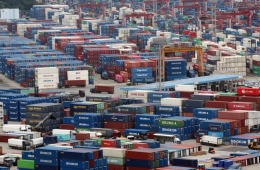
Reduced Real Estate Ratio to '49%' to Underpay 24.9 Billion Won in Capital Gains Tax… Incheon Tax Office Left Case Unattended for 15 Months
First Regular Audit of Incheon Regional Tax Office Since 2019
30 Violations Found, 50 Billion Won in Additional Taxes Demanded
4.5 Billion Won in Gift Tax Missed, 690 Million Won in Excess Inheritance Tax Charged
Penalties of 1.35 Billion W
It has been revealed in a Board of Audit and Inspection (BAI) review that the Incheon Regional Tax Office failed to properly investigate, and for over a year neglected, a suspected case in which accounts receivable and other assets were allegedly overstated to lower the real estate holding ratio below 50% and consequently underreported capital gains tax by 24.9 billion won. There were also cases found where, despite identifying unfair transactions between related parties during tax audits, gift tax totaling 4.5 billion won was not imposed, or where inheritance tax amounting to 690 million won was collected without legal grounds.

On the 25th, the BAI released the results of its ‘Regular Audit of the Incheon Regional Tax Office.’ Since its opening in 2019, the Incheon office, which has the largest tax revenue among the second-tier regional tax offices—Incheon, Daejeon, Gwangju, and Daegu—had never undergone a regular audit. As a result of the first regular audit conducted by the BAI between October and November last year, 30 issues were discovered, including 11 advisories and 19 notifications. The total amount of taxes BAI requested to be additionally collected is about 50 billion won, and about 2.1 billion won is to be refunded for incorrect collection or insufficient refunds.
The largest case involved omitted capital gains tax during the sale of shares in ready-mix concrete manufacturing and sales companies A and B. According to the Income Tax Act, if a corporation’s real estate proportion exceeds 50% of its total assets and a majority shareholder sells 50% or more of shares, a progressive tax rate of up to 45% is applied.
The seven majority shareholders of A and B directly and indirectly sold 100% of the shares of both companies to company C in 2023, and reported capital gains tax at a uniform rate of 25% in January of the following year. Although the real estate holding ratio for both companies was 56.8% and 67.1%, respectively, up to the previous year, it dropped to 49.7% and 49.1% at the time the capital gains tax was filed, falling below 50%.
The Incheon Regional Tax Office also found this suspicious and requested clarification materials in August 2024. However, even though the sellers failed to sufficiently provide the calculation basis for the real estate holding ratio, the office did not request additional documents or pursue a tax audit, leaving the matter unattended until November 2025.
Upon further review by the BAI, it was presumed that the majority shareholders had inflated the company’s total assets, including overstating accounts receivable, to artificially lower the real estate proportion below 50%. The BAI determined this resulted in capital gains tax being underreported and underpaid by 24.9 billion won.
The BAI instructed the Incheon Regional Tax Office to re-examine the asset values of the companies in question and, if the real estate ratio is found to be 50% or greater, to collect an additional 24.9 billion won in capital gains tax. If excessive inventory or accounts receivable valuation is judged as tax evasion, the office was also told to consider measures for tax fraud prosecution.
There were also cases where tax authorities failed to properly interpret the law and existing rulings, resulting in incorrectly refunded taxes. Bupyeong Tax Office, under the Incheon Regional Tax Office, accepted a revision claim filed in 2023 by company D for ‘tax credits for acquiring shares in technology-innovative companies,’ and refunded 1.07 billion won in corporate tax.
However, the relevant share transactions were not eligible for such tax credits based on existing Ministry of Economy and Finance regulations and Tax Tribunal rulings. The BAI pointed out that Bupyeong Tax Office did not adequately review prior regulations and precedents, relying solely on the opinion of the taxpayer’s tax agent. During the audit, company D corrected its filing and paid the 1.07 billion won in November last year.
Gift tax omission amounting to 4.5 billion won was also found, even after confirming improper transactions between related parties; there were numerous instances of failing to impose taxes on these transactions. The BAI noted that the Incheon Regional Tax Office, after identifying unfair transactions between related parties during tax audits, did not properly consider whether to levy gift tax, resulting in failing to impose 4.5 billion won in gift tax on 25 controlling shareholders of 17 corporations.
In one case, an affiliated company whose controlling shareholders are relatives repurchased its own shares at prices much higher than market value, providing a benefit of about 4.04 billion won. The Incheon Regional Tax Office identified this during a 2022 tax audit and imposed corporate tax but ended the audit without considering the imposition of 1.1 billion won in gift tax on the controlling shareholder.
There was also a case where a shareholder, the son of a company president, failed to declare and pay 250 million won in gift tax after borrowing 25 billion won interest-free from his father’s company, and authorities took no action for several years.
On the other hand, some cases were found in which taxes were excessively collected. While assessing inheritance tax on unlisted shares, the Incheon Regional Tax Office applied the appraised value, instead of the statutory standard or book value, raising the real estate holding ratio of a company from 77.3% to 84.4%. As a result, the per-share valuation increased from 88,692 won to 110,865 won, leading to an excessive 690 million won in inheritance tax being collected.
There was also a case where the calculation of tax credits for a recycling waste transaction business was incorrectly reviewed, resulting in 1.43 billion won in corporate tax refunds owed to a company being underpaid. The BAI instructed the Incheon Regional Tax Office to prepare measures to return both amounts to the taxpayers.
Procrastinating Investigations Passed Statute of Limitations... Unable to Impose 1.35 Billion Won in Tax Penalties
There was also a case in which a belated tax audit made it impossible to prosecute for tax violations. Six tax offices under the Incheon Regional Tax Office, including the Paju Tax Office, received materials related to fabricated tax invoices from eight companies but only began tax audits after the statute of limitations had expired. Consequently, notification of tax penalties totaling 1.24 billion won could not be issued.
West Incheon Tax Office and others also misapplied the standards for criminal tax investigations. Under current rules, if fabricated tax invoices amount to 500 million won or more, or represent 30% of total purchases or 50% of sales, the case is subject to a criminal tax investigation. However, some tax offices ended investigations solely because the amount was less than 500 million won, even when the ratio condition was satisfied. Since the tax audit had already concluded, and re-investigation was restricted, an additional 110 million won in penalty notifications could not be pursued.
The BAI demanded that the Incheon Regional Tax Office ensure there are no repetitions of failures to initiate criminal tax investigations either due to misapplication of selection criteria or beginning investigations after the statute of limitations has expired, by thoroughly guiding and supervising their procedures.
Hot Picks Today
 "Apparently, you can easily make 3.3 million won a month in Korea"... The "easy-money gig" making waves among international students
- "I've lived here for more than 60 years, but I've never experienced anything like this"... North Korea's Large-Scale Blasting South of Gaeseong Observed
- North Korean Landmine Incident... Angry Male Support for Ruling Party Falls 10.5 Points [Asia Business Daily-Realmeter Poll]
- "Hand in Your Resignation and Get a Year's Salary"... This Country Pushes Early Retirement for Civil Servants
- "Oh Eunyoung's Consultation Fee: Millions of Won? Not Expensive"... Yonsei Professor's Sharp Rebuke over "300,000-Won Lecture Fee"
© The Asia Business Daily. All rights reserved. Unauthorized AI training and use prohibited.