Lost Their Appetite at First Glance: "What's Wrong with the Naengmyeon Noodles? Truly Shocking"—AI Food Images Spark Controversy
Unrealistic Noodles and Food Shapes Raise "Gross" Reactions
U.S. Café Faces Backlash After Using AI Food Photos
Restaurant Industry Faces Trust Issues Over "AI Images"
A Korean restaurant in Canada has sparked controversy after using food images on its menu that are assumed to have been generated by generative artificial intelligence (AI). Reactions have continued to grow among consumers, who say that the overly perfect naengmyeon noodles and the unrealistically shaped dishes actually dampen their appetite, further fueling the ongoing debate over the use of "AI food photos" in the restaurant industry.


The menu shared by Mr. A featured various Korean dishes including naengmyeon (cold noodles). However, the actual cooked dishes looked quite different from the photos taken. SNS
View original imageOn August 21, photos of a menu taken at a Korean restaurant in Canada were posted on social media and networking platforms, along with comments such as, "I just saw a truly shocking AI-generated menu." The poster, Mr. A, shared that a friend who visited the restaurant together was so uncomfortable with the menu that they could not look at it properly while selecting their food.
The menu shared by Mr. A featured various Korean dishes, including naengmyeon. However, the actual prepared food looked quite different from the photos. In particular, the naengmyeon noodles were arranged with an unnaturally uniform order, as if extruded by a machine, and the texture and form of the dishes were subtly off, highlighting the uncanny qualities often associated with generative AI imagery. Netizens commented, "This looks like what an alien civilization might imagine Earth food to be," and "This is the first time naengmyeon has seemed off-putting."
Some internet users pointed out that such AI-generated images could undermine both expectations for—and trust in—the real food. Pictures on a menu are valuable, as they let consumers gauge portion sizes, appearance, and ingredients before ordering, but using AI-made images unrelated to the actual dishes can create anxiety about "not knowing what food will really arrive."
Similar reactions have appeared in online communities abroad. Regarding restaurants using AI food photos, many said, "I want to see photos of the actual food served," and "Even blurry cell phone pictures are better if they let me know what I'm truly getting." There were also plenty of comments to the effect that overly polished, AI-generated food images reduce people's appetite rather than increase it.
Even U.S. café using AI menu photos faces public backlash
There has been at least one case where the use of AI food imagery hurt a restaurant’s business. In July, the café 'Grind & Unwind', which opened on Haight Street in San Francisco, USA, displayed AI-generated images of sandwiches, coffee, and bread on its store windows, sparking strong criticism from local residents.

In July, the cafe 'Grind & Unwind,' which opened on Haight Street in San Francisco, displayed AI-generated images of sandwiches, coffee, and bread on its storefront windows, sparking strong criticism from local residents. SNS
View original imageOnline, some said that the focaccia looked like a scouring pad and questioned the logic of using AI images instead of real food pictures. Ultimately, the owner removed the AI-generated promotional materials after just a week and changed the displays so customers could see the actual food being sold. The restaurant explained that the AI images were intended as temporary promotional material for the initial opening. While small restaurants can save time and money on photography and design by using generative AI, some argue that, when factoring in consumer aversion, it may not truly be a cost-effective choice.
If photos differ too much from the food, it could be considered 'false advertising'
Another emerging debate around the spread of AI food images concerns the replacement of professional photography. After encountering AI-generated menus, some users said that taking quality food and advertising photos requires professional skills and experience. If businesses begin using AI images indiscriminately solely for cost reasons, it could lead to the loss of jobs for experienced professional photographers who specialize in food imagery.

Above all, the way consumers view AI food images is far from unanimously positive. In 2025, Korean researchers surveyed 104 consumers about their perception of AI-generated food advertising images. The findings showed that, even when the same image was used, the indication that it was "AI-generated" led to lower perceptions of realism, visual satisfaction, brand attitude, and purchase intent.
Hot Picks Today
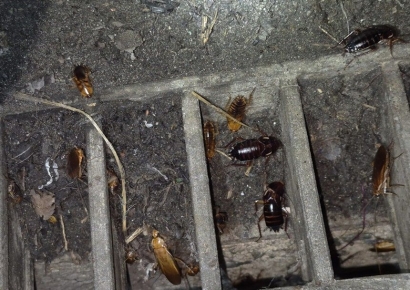 "Busan Is in Big Trouble"... One Cockroach Can Produce 350 Nymphs; Establishment Confirmed, Causing Alarm
- [Exclusive] "We Warned You Four Times"... Another Defect Found in Bathroom at LH Happy Housing Site
- "I Buy This First When I Visit Korea"... Museum Merch Wins Over Foreign Visitors [K-Holic]
- "I Thought It Was Just for Grandmothers"... The Unexpected Appeal Winning Over China's Young People [China.zip]
- "I Hate Dog Meat and Skate, Love Pizza" ... "Let's Meet" Frenzy Over Beautiful 41-Year-Old Nurse, But There's a Twist
Moreover, if the images differ too greatly from the actual food served, a different problem can arise. Simply using AI-generated images on a menu is not, by itself, a problem, but when there is a high possibility that consumers might interpret those images as what the dish will actually look like, providing images that are drastically different from reality could lead to issues of false advertising or trust.
© The Asia Business Daily. All rights reserved. Unauthorized AI training and use prohibited.