Futurechem and Briteonics Imaging to Jointly Develop Quantitative PET-CT Diagnostic Solution for Alzheimer's and Parkinson's
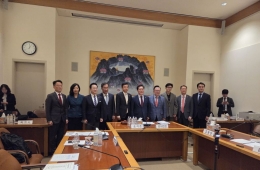
Futurechem, a radiopharmaceutical company, announced on August 25 that it has signed a strategic memorandum of understanding (MOU) with Briteonics Imaging, a company specializing in medical imaging equipment and artificial intelligence (AI) software, to develop quantitative diagnostic solutions for degenerative brain diseases using PET-CT (positron emission tomography-computed tomography) and promote their global commercialization.

Futurechem, a radiopharmaceutical company, signed a strategic business agreement (MOU) on the 24th with Brightonics Imaging, a medical imaging equipment and artificial intelligence (AI) software company, to develop and globally commercialize PET-CT (positron emission tomography-computed tomography) quantitative diagnostic solutions for degenerative brain diseases. Photo by Futurechem
View original imageThrough this agreement, the PET-CT imaging data of Futurechem's radiopharmaceuticals "Alzavue" (for Alzheimer's diagnosis) and "PDvue" (for Parkinson's diagnosis) will be integrated with advanced quantitative analysis capabilities in Briteonics Imaging's medical AI imaging analysis software, "BTX Brain."
The two companies plan to link Futurechem's products with Briteonics Imaging's imaging analysis technologies to build a solution that offers objective quantitative data for the diagnosis of degenerative brain diseases. Briteonics Imaging is a company that has independently developed the medical PET device "PHAROS" and the AI-based imaging analysis software "BTX Brain."
Currently, PET scans for diagnosing Alzheimer's and Parkinson's disease require a waiting period of approximately 30 to 90 minutes after administration of a radiopharmaceutical, as the substance must be distributed throughout the brain. This has led to growing demand for technologies that can improve efficiency. Moreover, existing PET imaging often relies heavily on the visual interpretation of medical practitioners, which can result in variances in assessments depending on image quality, patient condition, and the reader's experience.
The two companies aim to standardize the PET imaging analysis and interpretation process by equipping "BTX Brain" with specialized quantitative analysis technologies optimized for Alzavue and PDvue. The goal is to reduce the time required for image analysis, support clinical decision-making for medical staff, and enhance the exam and interpretation efficiency of healthcare institutions, thereby establishing a "total diagnostic solution for degenerative brain diseases."
Specifically, for Alzavue PET imaging, the software will automatically implement the "Centiloid" metric, which expresses the degree of beta-amyloid accumulation in the brain as a standardized value. For PDvue PET imaging, it will automatically provide quantitative analysis of dopamine transporter distribution and FP-CIT within the striatum.
Hot Picks Today
 "Expensive, Smelly and Scary"... What's Happened to the "Honeymooners' Paradise" Tourists Have Abandoned?
- Women Who Say "A Husband's Annual Salary of 100 Million Won Is a Given"... Matchmaking CEO: "They Talk About It Like It's Nothing"
- "Who Turned Up the Refrigerators?" Hackers Target 700 Supermarkets, Sparking Alarm... "A Blow to France's Food Security"
- [Practical Finance] 'Knock-Out Easing' ELD Sales Hit KRW 3.5 Trillion... KOSPI Plunge Clouds Q4 Outlook
- "I'll Give You 53.4 Billion Won to Keep Quiet"... Influencer Reveals Secret Deal; Musk Denies It
Ji Dae-yoon, CEO of Futurechem, said, "This collaboration is significant in that it will offer more objective and consistent interpretation information to clinicians by developing quantitative analysis features tailored to Alzavue and PDvue PET images. Together with Briteonics Imaging, we will build a competitive degenerative brain disease diagnostic solution combining radiopharmaceuticals and AI-driven image analysis technology, and actively expand our presence in global markets."
© The Asia Business Daily. All rights reserved. Unauthorized AI training and use prohibited.




![[Editorial] Don't Rest on Nuri's Success; Rally National Space Capabilities](https://cwcontent.asiae.co.kr/asiaresize/307/2026100807174054094_1791411459.jpg)
![[Editorial] Politics Must Not Waste the Time Bought by the Semiconductor Boom](https://cwstatic.asiae.co.kr/asiae_v3/com/noimg_thumb_en.jpg)