Return After 157 Years... Sungkyunkwan Daeseongjeon Hall Ancestral Tablets Restored to Their Original Place
35-Month, 7.7 Billion Won Restoration Completed on the 24th
1602 Ridge Beam Inscription Discovered, Drawing Academic Attention
Will This Set a New Standard for Rituals at 234 Confucian Shrines Nationwide?
The Daeseongjeon Hall of Sungkyunkwan has completed its largest-scale restoration in 157 years. The 39 ancestral tablets of Confucian sages, which had been temporarily removed, have also been enshrined again.

On the 24th, at the Daeseongjeon Hall of Sungkyunkwan in Jongno-gu, Seoul, a procession to return the ancestral tablets to their original place in the Daeseongjeon Hall took place ahead of the completion ceremony for the "Restoration Work of the Seoul Munmyo and Sungkyunkwan Daeseongjeon." Photo by Yonhap News Agency
View original imageOn the 24th, Sungkyunkwan held a procession ceremony called "Hwanan" at its campus in Jongno-gu, Seoul. Hwanan refers to the ritual of relocating ancestral tablets (spirit tablets) that had been temporarily moved from their original place, returning them to their proper location.
The Daeseongjeon Hall, designated as a national treasure, is a space enshrining the memorial tablets of Confucius, the four great sages, Confucius's disciples, as well as 18 prominent Korean scholars including Seol Chong, Choi Chiwon, Yi Hwang, and Yi I, totaling 39 sages and virtuous scholars.
During the Joseon Dynasty, as the core facility at the very heart of Sungkyunkwan—both a center for researching and propagating Neo-Confucianism and a prestigious educational institution—the Daeseongjeon Hall has been in charge of ancestral rites for sages and wise men. The Seokjeon Daeje, a memorial service for Confucius held at this location, was designated a National Intangible Cultural Heritage in 1986. Despite the loss of such traditional rites' original form in China due to events like the Cultural Revolution, Korea's Seokjeon Daeje was recognized for having been fully preserved through the Japanese colonial period and beyond.

On the 24th, at the Daeseongjeon Hall of Sungkyunkwan in Jongno-gu, Seoul, a procession to return the spirit tablets to their original place took place ahead of the completion ceremony for the "Seoul Munmyo and Sungkyunkwan Daeseongjeon restoration project." Photo by Yonhap News Agency
View original imageThe restoration began with a routine inspection by the National Research Institute of Cultural Heritage in 2021. When sagging of the eaves was detected on the northeast side of the hall, the National Heritage Administration and Jongno District undertook a 35-month dismantling and repair project from September 2023 through this month. With a budget of about 7.7 billion won, one corroded and damaged column, two eaves, and two beams were replaced with new timber. All other remaining structures were retained wherever possible through prosthetic joints and reinforcement with metal hardware.
During the dismantling work in 2024, a ridge beam inscription written by a carpenter in 1602, complete with the name and date, was discovered and drew attention from academics. Other significant findings included the 18.8-meter-long flat ridge beam—the largest in Korea—and architectural and painting details typical of early Joseon Dynasty dancheong (traditional decorative coloring).
Originally constructed in the 7th year of King Taejo's reign during the Joseon Dynasty (1398), the Daeseongjeon Hall was rebuilt in the 7th year of King Taejong (1407) after being destroyed by fire two years after its initial construction. It was lost again during the Imjin War and reconstructed in the 35th year of King Seonjo (1602). According to Sungkyunkwan, the last major repair was in the 6th year of King Gojong (1869), making this the largest restoration in 157 years.

On the 24th, at the Daesongjeon Hall of Sungkyunkwan in Jongno-gu, Seoul, a procession to return the ancestral tablets to their original place at Daesongjeon Hall was held before the completion ceremony of the 'Seoul Munmyo and Sungkyunkwan Daesongjeon Restoration Project'. Photo by Yonhap News.
View original imageWhile the building was being restored, the temporarily removed ancestral tablets underwent their own refurbishment. On the 13th, at Bicheondang Hall of Sungkyunkwan, the "Hwananje" ritual to announce the return of the tablets to the Daeseongjeon was held. Sungkyunkwan Director Choi Jong-su served as the chief ritual officer, with Deputy Director Lee Jaegap and Bang Han-soo, Executive Vice President of the Sungkyunkwan Youth Association Headquarters, serving as assistant ritual officials.
Following this ceremony, from the 13th to the 22nd, detailed maintenance for the 39 tablets took place. Old lacquer was removed, and cracks were filled. The main bodies and bases of the tablets received new coats of powder, and the names were freshly inscribed by brush on the tablets.
On the 24th, the newly refurbished tablets were carried to the Daeseongjeon Hall. The procession set out from Bicheondang Hall, traveled down Daeseong-ro, and passed through the main gates, Shinsamun and Shinro of Munmyo, before arriving at the Daeseongjeon. At the very front was Confucius’s tablet, followed by ritual officials carrying the other tablets and those carrying the tablet chests side by side. Everyone wore traditional Confucian scholar hats and robes for the occasion. The roles of ritual tablet bearers were filled by leaders of Confucian scholars nationwide, while current Sungkyunkwan University students and young Confucian scholars served as tablet chest bearers, symbolizing the joining of elders who uphold tradition and the youth who will inherit it.

On the 24th, attendees are seated at the completion ceremony held at the Daeseongjeon Hall of Sungkyunkwan in Jongno-gu, Seoul, following the completion of the "Seoul Munmyo and Sungkyunkwan Daeseongjeon Restoration Works." Photo by Yonhap News
View original imageIn preparation for this procedure, Sungkyunkwan organized a special task force and conducted numerous historical research sessions. Their aim was to restore the dignity of traditional rituals that had become lax and to provide exemplary guidance to the 234 Confucian shrines across the country.
Hot Picks Today
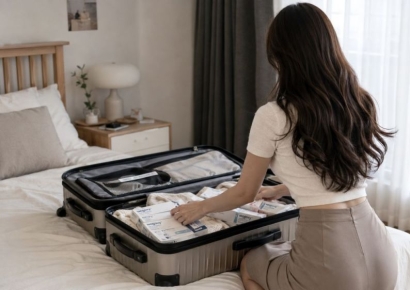 "30,000 Won in Korea, 70,000 Won in Japan"—Koreans Fill Suitcases as Illegal Direct Purchases Soar
- "Will Burst Within 3 Years, Gather Gold and Bitcoin"…World's Largest Hedge Fund Founder Warns
- In Korea, It's a Beloved Side Dish... But Miami Spends $4.1 Million to Remove 9,000 Tons from Its Beaches
- "Just a Day After Her Birthday" 8-Year-Old Girl Dies from 'Brain-Eating Amoeba' Infection After Swimming in Lake
- "Never Experienced This in My Aviation Career": Crew Shocked as Stranger Unexpectedly Enters First-Class Suite
After the procession ended, witnessed by 500 Confucian scholars and citizens nationwide, Sungkyunkwan, the National Heritage Administration, and Jongno District held a completion ceremony in the yard in front of the Daeseongjeon Hall. Director Choi Jong-su of Sungkyunkwan remarked, "I hope today’s event will serve as a meaningful occasion to properly establish tradition and pass down Confucian culture across generations." Deputy Director Choi Bok-geun of the National Heritage Administration added, "With the restoration of the Daeseongjeon, we hope that many people will be able to experience the cultural heritage of Sungkyunkwan," expressing plans to broadly review future regulatory easing as well.
© The Asia Business Daily. All rights reserved. Unauthorized AI training and use prohibited.