Four out of Ten Asset Management Companies Record Voting Rights Exercise Reasons Perfunctorily
FSS Holds Briefing on Voting Rights Exercise and Disclosure for Asset Management Companies
Four out of ten asset management companies reportedly recorded the reasons for exercising voting rights at shareholder meetings in a perfunctory manner for more than half of the agenda items. There were also cases where the same reason was entered across agenda items that differed in substance and type.
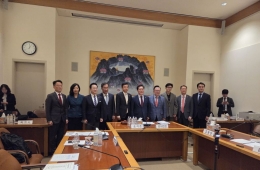
On the morning of August 25, the Financial Supervisory Service held the ‘2026 Asset Management Companies Voting Rights Exercise and Disclosure Briefing’ for asset management firm practitioners and made these findings public. This briefing was organized for the first time to share the results of the voting rights review conducted by the FSS and to promote improvements in voting rights work practices among asset management companies by sharing examples of shortcomings found during the review.
According to the FSS review, shortcomings were found in the process of exercising and disclosing voting rights, including uniform non-exercise of agenda items, uniform approval of agenda items, omission of agenda item names, omission of agenda item types, and omission of information about relationships with target entities. In addition, out of 285 asset management companies, 121 firms (42.4%) were found to have perfunctorily stated exercise reasons such as ‘minimal shareholder meeting impact’ and ‘no infringement of shareholder rights’ for more than half of the agenda items at shareholder meetings. The proportion of companies recording reasons without differentiating by agenda item was 11.6% among large firms, but significantly higher at 31.1% among small- and medium-sized firms.
Nonetheless, there is a growing trend among public asset management companies to establish internal management systems, such as dedicated voting rights divisions, decision-making bodies, and key performance indicators (KPIs). Of the 67 public asset management companies reviewed, 18 had established dedicated voting rights organizations, up from 13 last year; 40 had set up decision-making bodies, up from 36, and the number that had introduced KPIs increased from 12 to 20.
An FSS official explained, “Asset management companies with robust internal control systems were found to exercise and disclose voting rights more faithfully and engage more actively in shareholder activities compared to others.”
The briefing also introduced best practices, such as using artificial intelligence (AI) in the voting rights process. KB Asset Management, for example, shared that it is utilizing generative AI for verification and analysis of voting rights activities, including for the review of external director appointments, with plans to gradually expand the scope of AI applications. Truston Asset Management likewise announced that, to enhance proactive shareholder activities, it has established step-by-step processes and related internal rules and policies covering the selection of shareholder rights exercise targets, monitoring, private engagement, shareholder letter issuance, voting rights exercise, performance analysis, and post-management.
Hot Picks Today
 Takes Off Belt, Assaults Employee... Cosmetics Company Executive in His 50s Causes Disturbance at Imported-Car Dealership
- "I Like the High Dividends" "This Is a Better Bet Than Samsung Electronics and SK hynix": What Foreign Investors Bought While Selling 14.7 Trillion Won
- Women Who Say "A Husband's Annual Salary of 100 Million Won Is a Given"... Matchmaking CEO: "They Talk About It Like It's Nothing"
- Despite High Rates, Dining Out and Leisure Spending Holds Up... "Household Impact to Emerge Very Gradually" [Click eStock]
- "I'll Give You 53.4 Billion Won to Keep Quiet"... Influencer Reveals Secret Deal; Musk Denies It
Seo Jaewan, Deputy Governor of the FSS, remarked, “Fulfilling stewardship obligations, including the exercise of voting rights, is a basic duty of trustees, yet the market’s trust in asset management firms’ shareholder activities remains low. It is essential to ensure faithful voting rights activities, especially as the stewardship code has been revised and the importance of stewardship responsibilities is increasing.”
© The Asia Business Daily. All rights reserved. Unauthorized AI training and use prohibited.