Scarier Than Confinement: The Growing Distance Within Family [Slate]
Netflix's "Last House":
Showing Cracks Without Looking Deeper

The Netflix film "Last House" depicts a disaster that befalls Jason (Wagner Moura) and his family. On a day just before Christmas, a heavy rainstorm hits, and the doors and windows of their house suddenly become sealed shut. No matter how hard they try, they cannot open or break them. The whole village faces the same fate, and Jason’s family ends up trapped in their home for five years. They barely survive by catching animals through the chimney cracks and cultivating plants in the soil under the floor.
The film does not fully reveal what happens to the family over those five years. Director Louis Leterrier spends considerable time on the distribution of food and management of supplies rather than focusing on attacks or horror. Significant attention is given to how the family adapts to isolation and sometimes even finds enjoyment in it. Of course, conflicts do arise. In particular, cracks slowly begin to form beneath the previously bright demeanor of the children. However, these conflicts are hastily patched over by the film’s genre-shifting turn in the latter half, before they can deepen. As the cause of conflict is ultimately attributed to an external life form, what actually transpired among the family members inside the house remains unanswered.
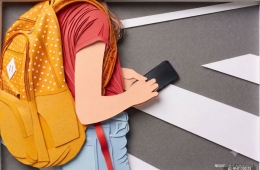
Many viewers interpret this film as an allegory for the pandemic, as the premise of a family trapped in their house inevitably calls to mind the lockdowns during COVID-19. However, reading the film only through the lens of the pandemic misses a crucial point. Social isolation had already become an undercurrent in our society before the pandemic. Single-person households are rising rapidly, and the center of human relationships has shifted online. It has become commonplace to live physically close yet remain unaware of what others are experiencing. Ultimately, what "Last House" fundamentally probes is not the memory of a particular disaster, but the possibility that even our closest relationships can collapse when chronic disconnection is pushed to its limits.

Director Leterrier reveals these fractures with a seemingly indifferent touch. Jason focuses on hunting and securing supplies, bearing sole responsibility for the family’s survival. Anne (Greta Lee) tends to crops and keeps the household running while staying by the children’s side. While the parents are each absorbed in their own roles, Graham (Gabriel Barbosa, Noah Alexander Sosnowsky) and Ruth (Emma Ho, Riley Cheung) slowly drift away from each other and from their parents. Despite experiencing the same circumstances, each family member reacts differently, and as these differences accumulate, distance builds within their relationships. These scenes convey the reality that merely being together does not guarantee the maintenance of a relationship.
This is not an unfamiliar story. According to statistics released by the Ministry of Data and Statistics in December of last year, 4.9% of Koreans belong to the "low-interaction group"—people who have fewer than 20 contacts on their mobile phones and interact less than 500 times per year. Notably, the proportion of low-interaction individuals living in multi-person households with family members is 5.2%, which is higher than that of single-person households (3.3%). This means that living together as a family does not necessarily protect one from isolation. Such scenarios are common even in everyday life that statistics cannot capture: many families simply exchange brief greetings in the morning before scattering for the day, only to each eat dinner separately and retreat to their own rooms at different times.

This is where the critical question that "Last House" ought to have addressed lies. What eroded the family over five years was not the unidentified presence outside, but the growing emotional distance that quietly unfolded inside the house. Director Leterrier does not ignore this possibility entirely; there are several scenes where the gap between parents and children gradually widens. However, the film stops short of exploring whether these internal fractures could be even more frightening than external threats.
Hot Picks Today
 "Banks Roll Out 'High-Interest Specials' Offering Up to 7-13% a Year: 'Why Not Choose Savings Over Stocks?'"
- "Annual Average Sales Exceed 7.5 Billion Won": Olive Young in This Area Far Outperforms Even Seoul
- Soojung Lee Raises Doubts about Jang Miran's Cause of Death: "A Young Woman Hanging Herself from a Palm Tree at Night? That's Laughable"
- Using Deep Water from Soyanggang Dam for Cooling... The Site Attracting Interest from Shinsegae and SK [AIDC Coexistence Strategies](17)
- "Even If It Costs More Than the Drink... Chinese Millennials and Gen Z Drive Trend for 'Stickers' Pricier Than Beverages"
The force that prevents isolation does not stem simply from closing physical distance. Even when close, it takes constant effort to observe and reach out to each other. The strength that allowed Jason's family to endure five years likely came from this mutual care. The moment that bond begins to waver is precisely what the film should have examined most deeply.
© The Asia Business Daily. All rights reserved. Unauthorized AI training and use prohibited.