"Any Vacancy?"... Swedish Prisons at Full Capacity, First Overseas Inmate Transfers
Four Male Inmates Transferred to Estonian Prison
Goal to Relocate Up to 600 Within Five Years
Sweden, facing a saturation of its domestic prisons due to overcrowding, has leased prison space abroad and, for the first time, transferred four male inmates.

According to Spanish daily El Pais and Estonian public broadcaster ERR on the 24th (Korean time), four Swedish male inmates arrived at Amari Air Base in Estonia on a chartered flight on August 18 and were escorted by an armed convoy to Tartu Prison in southern Estonia.
According to the Council of Europe, the number of Swedish inmates nearly doubled from 2015 to January 2025, reaching 11,232. This increase is attributed to the rise in organized crime, tougher penalties leading to more incarcerations, and longer prison terms.
In contrast, Estonia experienced a surge in crime in the 1990s, but crime rates have since declined and the prison population has steadily decreased. At the beginning of this year, Estonia had 1,618 inmates, the lowest number since the country gained independence from the former Soviet Union in 1991. Currently, only 54% of the national correctional facilities’ capacity—around 3,000 beds—are occupied.
As a result, Sweden and Estonia signed an agreement on the use of prison accommodation in June last year. Following ratification by both countries’ parliaments in June this year, the two countries signed a detailed memorandum of understanding regarding prison life and facility operations on the 5th of this month. The contract period is five years, with an option to extend for an additional three years. Transferees must pass individual reviews by both countries, but Estonia has the final approval authority.
Sweden has leased 400 prison cells and can send up to 600 inmates. Estonia plans to accept up to 100 inmates by the end of September, up to 200 by the end of the year, and increase capacity to a maximum of 600 next year.
Sweden will pay 30.6 million euros per year (about 4.96 billion won) to maintain facilities and staff for up to 300 inmates. The amount remains the same even if fewer than 300 inmates are transferred. From the 301st inmate onward, Sweden must pay an additional 8,500 euros (about 13.77 million won) per person per month. The average monthly cost of accommodation in Sweden is about 11,500 euros (about 18.62 million won), making the Estonian option about 3,000 euros cheaper. If the number of inmates reaches 600, the annual payment will rise to 61.2 million euros (about 9.91 billion won).
However, Sweden will bear additional costs such as air transport separately. The transfer is limited to adult males convicted in Swedish courts. Foreign nationals are also eligible. Women, minors, those convicted of terrorist crimes, inmates who have been radicalized or are involved in organized crime, or those deemed highly likely to commit further offenses inside prison, are excluded. All transferred inmates will return to Sweden before the completion of their sentences, so none will be released in Estonia.
Inmates are guaranteed video calls via tablet computers, in-person visits of one to two hours once a month, and extended family visits lasting one to three days every six months. However, there are concerns that families may find it more difficult to cover the costs of travel and time needed to visit Estonia. One transferring inmate told Swedish daily Svenska Dagbladet, "It feels like an additional punishment not only for me but also for my children."
The Estonian government explained that this contract will enable the continued operation of Tartu Prison and allow for the hiring of more than 250 new staff, but there is considerable opposition. At a demonstration in Tartu this June, Sandra Laur, a lawmaker from the opposition Isamaa (Fatherland) party, said, "Sweden gave us meatballs and Pippi Longstocking, but they should keep their own trash." In a public opinion poll, 54% of Estonians either opposed or were mostly opposed to accepting Swedish inmates.
Hot Picks Today
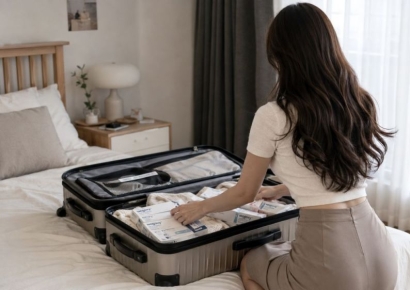 "30,000 Won in Korea, 70,000 Won in Japan"—Koreans Fill Suitcases as Illegal Direct Purchases Soar
- "Will Burst Within 3 Years, Gather Gold and Bitcoin"…World's Largest Hedge Fund Founder Warns
- In Korea, It's a Beloved Side Dish... But Miami Spends $4.1 Million to Remove 9,000 Tons from Its Beaches
- "Just a Day After Her Birthday" 8-Year-Old Girl Dies from 'Brain-Eating Amoeba' Infection After Swimming in Lake
- "Never Experienced This in My Aviation Career": Crew Shocked as Stranger Unexpectedly Enters First-Class Suite
The Estonian government has expressed caution about signing additional contracts with other countries for the time being. However, Timothy Anderson, a professor of international relations at Tallinn University, sees a high possibility of such cases spreading to other European countries. He said, "It would not be surprising if more agreements of this kind are signed in the coming years," adding, "This case establishes an important precedent and could pave the way for similar arrangements in Europe."
© The Asia Business Daily. All rights reserved. Unauthorized AI training and use prohibited.