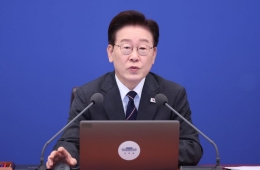
Judiciary Engulfed by 'Written Recommendation' Black Hole for Supreme Court Justice... Judges Simmer with Discontent
Presidential Office Claims "Infringement on Appointment Authority"
Escalating Offensive Including Rejection of Appointment Motion
Nomination of Supreme Court Justices Safeguards Judicial Independence
Coordination with Appointer Could Constitute Pressure
Widespread Criticism of the Presidential Office Both Inside and Outside the Judiciary

An unprecedented 'written nomination' incident regarding Supreme Court justices is escalating into a full-scale confrontation among constitutional bodies in South Korea. The presidential office and ruling party have intensified their attacks, wielding both outright rejection of the appointment motion and the threat of legal amendments, arguing that the president's right to appoint is being undermined. Meanwhile, the judiciary is seething with discontent internally.
The immediate cause of this incident is that the Chief Justice nominated a Supreme Court justice in writing, without a face-to-face consultation with the president, who holds the appointment authority. However, internal sentiment within the courts differs somewhat from the perspective of the administration and ruling party. Article 104, Clause 2 of the Constitution of the Republic of Korea stipulates, "Supreme Court justices shall be appointed by the president with the consent of the National Assembly, upon recommendation by the Chief Justice." It does not establish any hierarchy among these powers, nor does it require prior consultation.
On August 25, a senior judge at a high court stated, "There is no regulation regarding the order of recommendation, consent, and appointment rights—only the sequence is specified," adding that "the nomination of Supreme Court justices is a core device for judicial independence, so prior coordination with the appointing authority could actually function as pressure from the appointer onto the recommender." Judge Jung Ukdo of the Northern District Court (Judicial Research & Training Institute, 31st class) also wrote recently on the court’s internal network, "Precedent is not a law of nature, so it can be broken—and precedent does not automatically equal law." He further stated, "Criticism of (written) nominations is excessive and inappropriate. Returning, re-nominating, or rejecting the consent for appointments are all notions beyond the law." Essentially, the mere fact that precedent was broken does not mean that exercising the constitutionally protected right of recommendation is unlawful.
Former Chairman of the Board of Audit and Inspection, Choi Jae-hyung (13th class of the Judicial Training Institute), also wrote on social media that "the practice of nominating after prior coordination or face-to-face discussion is only about 20 years old, starting after the Roh Moo-hyun administration." He added, "The Chief Justice has no obligation to recommend at the request of the appointer, and forcing such a process simply tames justice for the rule of an imperial presidency, rather than strengthening the separation of powers or judicial independence."
Both inside and outside the court, many regret this incident especially due to the distinct symbolism of Chief Justice Cho Hui-dae's nomination of candidate Son Bonggi. Judge Son (22nd class) is the first district court judge, as opposed to a senior high court judge, to be nominated for the Supreme Court. As so-called 'local judges' and not graduates of Seoul National University, Son’s nomination was regarded within the judiciary mainstream as audacious and meaningful, meeting contemporary demands for diversification of the Supreme Court’s makeup, regional balance, and the breaking of the central-high court division. However, this incident has made Judge Son’s Supreme Court appointment all the more uncertain. A high court senior judge commented, "Verifying Supreme Court candidates should focus on whether they have maintained a perspective faithful to human rights and delivered rulings fitting for the Court, but what is regrettable is that the matter has now been reduced to a conflict over appointment and recommendation rights."
Some in the legal community further point out that the president rejecting the Chief Justice's recommendation is legally unfounded. This is particularly problematic because, in the case of President Lee Jaemyung, the Supreme Court justices appointed by him could rule on final appeals of his various criminal trials. One former-judge-turned-lawyer remarked, "There is a strong likelihood that President Lee will someday stand trial before Supreme Court justices he himself appointed," adding, "If one were to pressure for a specific recommendation without convincing grounds, it would be akin to choosing one’s own judge for one’s own case."
Hot Picks Today
!["We invested on the government's assurances"... The 'Valley of Death' drags on [Hydrogen, Broken Ladder] ②](https://cwcontent.asiae.co.kr/asiaresize/93/2026093005095244815_1790712591.jpg) "We invested on the government's assurances"... The 'Valley of Death' drags on [Hydrogen, Broken Ladder] ②
"We invested on the government's assurances"... The 'Valley of Death' drags on [Hydrogen, Broken Ladder] ②
- President Lee's Approval Rating Falls 2.2 Percentage Points to 35.2% [The Asia Business Daily-Realmeter Poll]
- "All He Did Was Reheat and Eat Fried Rice Made the Day Before"... Man in His 20s Nearly Needed a Liver Transplant
- "Looks Like They're Having an Affair": What If You Opened a KakaoTalk Chat, Filmed It, and Shared the Video With Coworkers?
- "To Charge Her Phone"... Woman Unplugs Freezer at Self-Service Store, Melting Ice Cream - What Happened?
The rift between the presidential office and the judiciary, triggered by this 'written nomination' situation, shows no signs of healing. Hong Ikpyo, senior presidential secretary for political affairs, suggested the possibility of returning the recommendation at a National Assembly Budget and Accounts Special Committee meeting the previous day, saying, "There is a consensus that the president’s appointment power is being partly undermined." The ruling party is also ramping up pressure, announcing its intention to amend the Court Organization Act regarding the Supreme Court Justice Candidate Recommendation Committee.
© The Asia Business Daily. All rights reserved. Unauthorized AI training and use prohibited.