Budget Committee Spars Over Future Response Fund... Opposition Calls It a "Slush Fund," Government Insists on Parliamentary Oversight
Opposition: "Surplus Tax Revenue Should First Be Used to Repay Government Bonds"
Ruling Party, Government: "Growth Investment Is Essential"
Calls for Improvements to Real Estate Taxation and Landlord Regulations Also Raised
On August 24, debates erupted at a plenary session of the Special Committee on Budget and Accounts in the National Assembly over the government’s proposed Future Response Fund, which amounts to around 100 trillion won. The People Power Party criticized the fund, warning that it could be misused as the government’s discretionary “slush fund,” circumventing parliamentary oversight. The government countered that the fund’s expenditures would require prior parliamentary review and approval, making arbitrary use difficult.
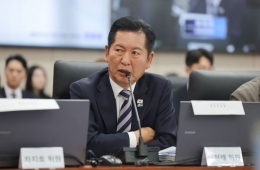
Assemblywoman Lim Ija of the People Power Party argued during the session that, “The Future Response Fund could easily devolve from a tool for future preparedness into a permanent supplementary budget and ‘slush fund’ that the government can dip into at any time, sidestepping parliamentary control. If this is truly for necessary future investment, it should be included in the main budget and subjected to parliamentary scrutiny.”

Deputy Prime Minister and Minister of Economy and Finance Koo Yoon-chul is reporting on the 2025 fiscal year settlement at the first plenary meeting of the Special Committee on Budget and Accounts held at the National Assembly on August 24, 2026. Photo by Hyunmin Kim
View original imageAssemblywoman Jo Bae-sook of the People Power Party also raised concerns about using surplus tax revenue as a source for the Future Response Fund. She said, “With the nation’s deficit-inducing public debt exceeding 1,000 trillion won, shouldn’t repaying government bonds be the first priority if surplus tax revenue arises?” She further pointed out, “Because the fund’s management plan can be amended in the course of execution, there is room to circumvent parliamentary control in a subtle way.”
In response, Minister of Planning and Budget Park Hong Keun asserted, “The Future Response Fund, like all other budgets and funds, is subject to the oversight and regulations of the National Finance Act and the National Assembly Act. Since all programs must receive parliamentary review and approval in advance, the government is not able to use the fund at its own discretion.”
The difference resulting from the abolition of the linkage between local education finance grants and domestic tax revenue is also set to be incorporated into the Future Response Fund. Minister Park reaffirmed that, in this case, he intends to reinvest any such funds specifically in the education sector.
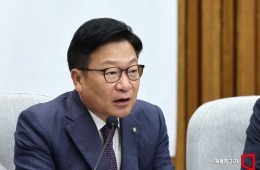
Meanwhile, Assemblyman Ahn Dogeol of the Democratic Party of Korea described the Future Response Fund as an “innovative fiscal instrument” capable of responding flexibly to tax revenue fluctuations. However, he also cautioned, “Transferring surplus tax revenue directly into the fund without supplementary budgeting could restrict the National Assembly’s budgetary review authority. The National Assembly must closely examine whether the government’s tax revenue projections are accurate and whether the scale and use of the fund are appropriate.”
Policy changes in the real estate tax regime leading to instability in the rental housing market and infringement on the property rights of landlords were also discussed. Assemblyman Ahn commented, “Even if tax fairness is the correct direction, any aspects that heighten instability in housing supply need to be eased or the pace of implementation slowed down,” and called for measures to address diminishing rental supply and rising prices.
In response, Deputy Prime Minister for Economic Affairs Koo Yoon-chul said, “We will supplement our policies by gradually expanding rental expense deductions and providing additional incentives for young people. Ultimately, we need a policy direction focused on increasing supply.”
Deputy Prime Minister Koo further added that while tax benefits for non-owner-occupied housing will be reduced, there will be a scheme to recognize such housing as owner-occupied if there are unavoidable reasons for not residing in the property. He stated, “We intend to flexibly reclassify reasonably justified cases of non-occupancy as owner-occupied residences in order to resolve the issue.”
Hot Picks Today
!["I Thought It Was a Stock Pullback and Sold..." U.S. Shopping Season Is Near, and K-Beauty's Big Four Are Riding the Wave [Weekend Money]](https://cwcontent.asiae.co.kr/asiaresize/93/2026100814511055150_1791438670.png) "I Thought It Was a Stock Pullback and Sold..." U.S. Shopping Season Is Near, and K-Beauty's Big Four Are Riding the Wave [Weekend Money]
"I Thought It Was a Stock Pullback and Sold..." U.S. Shopping Season Is Near, and K-Beauty's Big Four Are Riding the Wave [Weekend Money]
- "What Becomes of the Geniuses Who Devoted Their Lives?"... 722 Papers Released in Just 3 Hours Spark 'Shock and Awe' [Reading Science]
- "'Assassin(s)' Actors: Is This Why They Won't Apologize?" Joo Jinwoo Reveals Incentive Deal
- TB Rate 11 Times Higher Than in U.S.... Budget for Vulnerable-Group Screening for 'Disease of Developing Countries' Slashed 30%
- JYP Bought a 75.5 Billion Won Site, Only to Face an 18-Story Building Right in Front? ... SH's "Surprise Rezoning" Makes JYP Pull Out
Assemblywoman Jo Bae-sook of the People Power Party pointed out that landlords who honored government-promoted policies and maintained mandatory rental business status for eight years are now unable to dispose of their properties due to transfer restrictions on their rights as members of reconstruction associations. She insisted, “We should not impose yet another regulation on landlords who kept their promise to the state, effectively blocking their exit.” Prime Minister Han Sung-sook responded, “We will examine the problematic areas in detail and consult with the relevant ministries to devise measures.”
© The Asia Business Daily. All rights reserved. Unauthorized AI training and use prohibited.