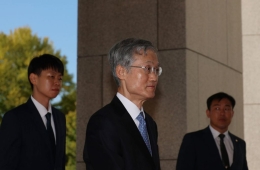
[Kakao, Two Engines] Chung Shina and Kim Doyoung Leadership to Accelerate AI Transformation
Streamlining Complex Decision-Making Structures
Focusing Technology and Resources on AI—Transforming KakaoTalk into an Agentic AI Platform
Targeting KRW 1 Trillion in Standalone AI Revenue by 2030
By executing a spin-off into Kakao AI (the newly established company) and KakaoX (the surviving entity), Kakao is activating two engines to accelerate its transformation into an artificial intelligence (AI) company. Up to now, Chung Shina, CEO of Kakao, has been focused on streamlining the company's bloated structure. Now, taking charge of Kakao AI—which oversees AI, advertising, and commerce with KakaoTalk at its core—she is set to transform KakaoTalk, which boasts approximately 50 million users, into an "agentic AI interface" and monetize this change. Meanwhile, Kakao Investment CEO Kim Doyoung will lead KakaoX, which includes Kakao Pay (digital payments), KakaoBank (internet-only bank), and Kakao T (mobility). This structure empowers him to pursue more aggressive investment in Kakao’s future growth drivers.
Kakao's largest-ever restructuring signals its determination to reinvent itself as a technology company centered on AI. The goal is to break away from the complicated subsidiary structure and complex decision-making processes, which previously hindered AI-related decisions, and instead concentrate all of Kakao’s technology and resources on its two key assets: the KakaoTalk platform and AI.
Accelerating AI Transformation with Two Engines
![[Kakao, Two Engines] Chung Shina and Kim Doyoung Leadership to Accelerate AI Transformation](http://www.asiae.co.kr/news/img_view.htm?img=2026082409474889973_1787532468.jpg)
Both Chung Shina and Kim Doyoung share a vision to move beyond the tangled subsidiary structure and decision-making processes that have obstructed Kakao's AI progress in the past, aiming to dedicate all technical strength and resources to the KakaoTalk platform and AI as core assets.
Previously, Kakao paused new investments to secure financial resources and focused on improving its structure, which slowed down progress in AI. Since CEO Jin took office as Kakao’s CEO and CA council co-chair in March 2024, she succeeded in streamlining Kakao's bloated organization. However, despite unifying the AI development team and launching the large language model (LLM) ‘Kanana’, there were limitations in maximizing AI platform profitability by linking it closely with the nation's top messenger, KakaoTalk. This was the result of keeping various businesses—such as tech-finance, content, and mobility—under Kakao, which led to key decision-making and capital allocation being centered on supporting and managing subsidiaries, rather than focusing on AI development.
Now, with this spin-off, CEO Jin can fully concentrate on evolving KakaoTalk into an agentic AI platform to attract more users. She set out clear targets for Kakao AI: to secure 20 million daily active users (DAU) and achieve over a 50% increase in average user engagement time for AI services by 2030.
![[Kakao, Two Engines] Chung Shina and Kim Doyoung Leadership to Accelerate AI Transformation](http://www.asiae.co.kr/news/img_view.htm?img=2023121814513892174_1702878698.png)
To start, Kakao plans to launch multiple AI agents that will interact with each other and perform tasks based solely on users’ commands. For this, Kakao will implement a Language User Interface (LUI) and a headless system, where users convey their intent via natural language and an agent provides optimal results. Kakao also aims to build full-stack AI capabilities—optimizing infrastructure, models, platform, and services for agentic AI. Around half of all user requests will be handled by “Kanana Nano,” a lightweight model operating on-device. This model applies compression technology to achieve comparable performance to global models at only one-tenth the size.
The company also unveiled its vision for "revenue-generating AI." Kakao AI plans to generate double-digit percentages of total revenue from new AI businesses by 2028, and exceed KRW 1 trillion in standalone AI revenue by 2030. To achieve this, the company will pursue a two-track strategy: enhancing existing advertising and commerce businesses, while also developing entirely new AI-driven revenue streams. CEO Jin expressed confidence that by accurately interpreting user intentions and providing agentic ad products that seamlessly link product suggestions to purchases, Kakao AI can secure a 5% share of the search ad market by 2030 through new ad formats.
KakaoX to Drive Kakao’s Future—Subsidiaries’ Growth to Accelerate Further

Kim Doyoung, who will lead KakaoX, is a relatively lesser-known figure within the Kakao Group. He joined Kakao in March last year as CEO of Kakao Investment, the group’s investment-focused subsidiary, and as the Head of Group Investment Strategy for the CA Council. With prior experience as Senior Consultant at Samsung SDS and Director in the Investment Banking Division at Samsung Securities, Kim made notable achievements in investment. However, his activities were constrained, as he joined Kakao during a period when the company was halting expansion and restructuring its subsidiaries.
At a spin-off briefing held on the 21st, Kim stated, “KakaoX is a specialized investment company to grow future value. We plan to integrate Kakao’s experience of taking on uncharted challenges into our business.” He added, “Previously, 85% of board agenda items focused on subsidiary management, impeding growth at the core. Through this restructuring, we will enable optimal resource allocation by business area and accelerate decision-making.”
Hot Picks Today
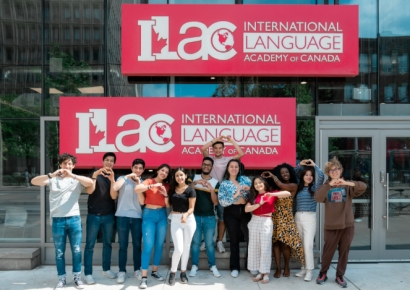 "Quit Job to Start Life in Canada, Now Forced to Return Home"… Language School Closure Leaves Korean Students Stranded
- [Exclusive] "Oh, Oh! Why Is the Seatback Like This?" Hyundai Ioniq 9 Recalled in Korea: 15,000 Units Due to Power Seat Entrapment Risk
- "When Was the Last Time I Went?" With Fewer Visitors, 80% of Japan’s Neighborhood Bathhouses Disappear in 50 Years
- "Typical Italy? This Tour Package Sold 300% More"...Destinations Chosen by Koreans
- Hanwoo Can't Even Dream of This... "Melts in Your Mouth" as Wagyu Hits It Big in U.S. Supermarkets and Fast-Food Chains
Post spin-off, KakaoX expects an average annual growth rate of around 13%. The annual average growth rate for Kakao subsidiaries under KakaoX from 2023 to 2025 stands at 8.6%. Kim voiced confidence, stating, “We will generate nearly twice the revenue in 2025 compared to KRW 5.6 trillion.”
© The Asia Business Daily. All rights reserved. Unauthorized AI training and use prohibited.