[Good Morning Stock Market] "KOSPI to Reattempt 7,000 Amid Focus on US Monetary Policy and Interest Rates"
Awaiting Powell's Jackson Hole Speech and PCE Release
Focus on Nvidia Earnings and Samsung Electronics Supply Factors
This week, the KOSPI is expected to make another attempt to break through the 7,000-point level, with investors keeping a close eye on major domestic and international macroeconomic events as well as shifts in supply and demand for Nvidia and Samsung Electronics shares.
On the 24th, Kiwoom Securities stated, "This week, key events include the release of the U.S. Personal Consumption Expenditures (PCE) data for July, the keynote speech by Federal Reserve Chair Kevin Warsh at the Jackson Hole Symposium, and, domestically, the Bank of Korea's Monetary Policy Committee (MPC) meeting to decide the base interest rate." The firm set the expected weekly KOSPI range at 6,500 to 7,500 points.

The most influential event is the Jackson Hole Symposium scheduled for later in the week. Since the employment and inflation landscape has changed compared to the July Federal Open Market Committee (FOMC) meeting, the key point will be how much the need for additional tightening has shifted.
Han Ji-young, a researcher at Kiwoom Securities, said, "This year's Jackson Hole Symposium will take place after we have seen the July PCE, second-quarter Gross Domestic Product (GDP) data, and Nvidia's earnings." She also noted, "How Chair Warsh incorporates the latest inflation and growth data into monetary policy is of particular importance."
She continued, "In fact, the probability of a rate hike pause at the September FOMC has already increased significantly. Rather than seeking clues about the September FOMC policy path, more attention will be paid to whether Chair Warsh's comments can give any signal to calm the recent sharp increases in the 10-year and 30-year Treasury yields."
In the stock market, Nvidia's earnings were highlighted as a key variable. Han pointed out, "Due to the nature of Nvidia's results, whether second-quarter earnings beat expectations will remain crucial." She added, "As Nvidia transitions its main product from Blackwell to Rubin, it is also important to assess whether demand for data centers remains strong and if the company's gross margin can remain in the mid-70% range. These profitability changes cannot be overlooked."
This time, Nvidia's earnings will also spotlight newly emerging issues around circular financing. Han noted, "After Nvidia announced plans to build a USD 500 billion artificial intelligence (AI) infrastructure financing platform, concerns have been raised that GPU demand may be artificially created by circular financing rather than reflecting true end-user demand." She emphasized that "this earnings release should also include a thorough review of GPU utilization rates and the ongoing AI sales and capital expenditures of hyperscalers."
Domestically, the market response to Samsung Electronics' shareholder return program is another key variable. On the 21st, Samsung Electronics announced a large-scale shareholder return after the close of trading.
Regarding SK hynix, Han pointed out, "In after-market trading, some of the day's gains were given up, and various interpretations have emerged, such as relatively weak shareholder returns and selling pressure due to the exhaustion of positive catalysts." She added, "Although Samsung Electronics’ volatility in supply and demand is likely to increase at the start of the session, it is important to note that, from a mid-term perspective, the structure where profit growth is converted into cash flow for shareholder value has been strengthened."
She concluded, "With major blue-chip companies having established a substantial downside buffer through large shareholder returns, this period will serve to check whether key events such as the Jackson Hole Symposium, PCE release, and Nvidia earnings can alleviate uncertainties surrounding long-term interest rates and controversies over AI investments, which currently act as ceiling constraints."
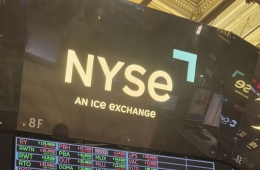
Meanwhile, on August 23 (local time), all three major U.S. stock indices closed lower as a sharp increase in international oil prices, stemming from escalating tensions in the Middle East, was compounded by the burden of massive artificial intelligence (AI) investments by major tech companies.
Hot Picks Today
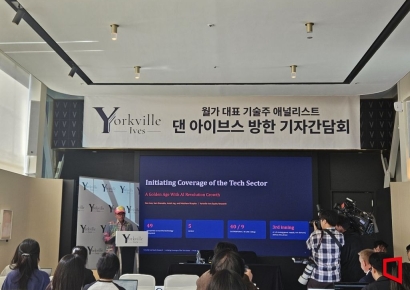 "Even New York Taxi Drivers Are Talking About the KOSPI; South Korean Market to Top 9,000 Again Within a Year"... 'Wall Street's Stock-Picking Ace' Names His Picks
- "Over 1 Trillion Won Poured Into 3x Semiconductor ETF"... But the No. 2 and No. 3 Picks Are Unexpected
- “Made 2 Billion Won in One Year in Prison,” PPP Lawmaker Retorts: “If You’re Jealous, Go There Yourself”
- “Washing Dishes and Folding Clothes 200 Times a Day”... China’s “Robot Trainers” Earn Up to 1.2 Million Won a Month
- "Shall We Grab a Drink?" KRW 30,000 a Round... Young Adults: "Prices Make My Hands Shake; I Can't Drink Out"
On the New York Stock Exchange, the Dow Jones Industrial Average finished at 51,711.65, down 506.93 points (0.97%) from the previous session. The large-cap S&P 500 fell by 90.66 points (1.21%) to close at 7,408.30, while the tech-heavy Nasdaq Composite declined by 553.21 points (2.15%) to settle at 25,137.69.
© The Asia Business Daily. All rights reserved. Unauthorized AI training and use prohibited.