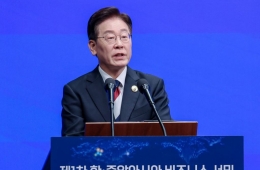
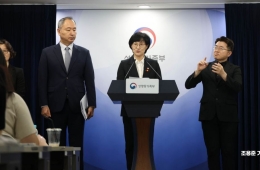
Cheon Haram: "After Experiencing Training, My Respect for Soldiers Has Deepened" [Current Affairs Show]
"Why Won't Ahn Gyu-baek Disclose His Military Record? He Should Step Down"
"Presidential Stance Must Be Stated Before Debating Constitutional Amendment"
"The Reform New Party Must Focus on Self-Renewal in Current Circumstances"
■ Broadcast: The Asia Business Daily 'So Jongseop's Current Affairs Show' (Mon-Fri, 4:00 PM)
■ Host: So Jongseop, Political Specialist ■ Director: Ma Yena, Producer
■ Guest: Cheon Haram, Floor Leader of the Reform New Party (August 21)
※ When quoting content from this article, you must cite "So Jongseop's Current Affairs Show."
So Jongseop: Hello, everyone. This is So Jongseop's Current Affairs Show. Today, we have invited Cheon Haram, Floor Leader of the Reform New Party, to the studio. Assemblyman Cheon, thank you for joining us despite your busy schedule.
Cheon Haram: Thank you for having me.
So Jongseop: You joined the Nonsan Army Training Center from the 12th to the 14th, correct? According to your interview with the media, you said it was extremely tough, and you almost thought you would die. Could you tell us more about that?
Entered Nonsan Training Center for 3 Days and 2 Nights, "My body just wouldn't move forward"
Cheon Haram: My physical condition isn't great to begin with. The group of trainees I joined was already entering their 4th or 5th week. As the overall military service period has been shortened, the previous 6-week training schedule is now 5 weeks, so they were nearing the end of their training. Most of them had completed individual training and were doing a 20km march to wrap things up, and I joined at this stage. My dorm mates, mostly in their early 20s, had already built up their stamina through 2–3 weeks of training, while, up to the day before I joined, I was overeating and drinking alcohol...
Nowadays, the real training starts at 3 a.m. The theoretical classes for the next day’s training are completed in advance the night before. After all, if you get up early only to have classroom lessons, it would be a waste. So from 4 a.m., we were crawling and rolling on the ground. Originally, the schedule was to do individual combat training for one day and marching on another, but now it’s individual training in the morning and a 20kg night march in the evening. My stamina was about half that of my younger dorm mates, but my training load was twice as much, so it was very tough for me.
I tried my best to crawl, but because of my heavy body, it just wouldn’t move no matter how hard I tried. I was tempted to drop out, but for many trainees there, it was probably their first time meeting a National Assembly member in real life. They must have been curious to see how a parliamentarian would act. If I were to just take it easy, slack off, pretend to participate, take a few pictures, and leave, it would destroy not only the trust in me as a politician but also the trust in the National Assembly as a whole. So, I pushed myself and did my best.

Cheon Haram, Floor Leader of the Reform New Party, is undergoing training at the Nonsan Army Training Center on the 12th. Leader Cheon became the first active member of the National Assembly to join the Nonsan Army Training Center as a trainee and received basic training for 3 days and 2 nights. Photo by Yonhap News Agency
View original imageSo Jongseop: After the admission experience, did you have any mental realizations or awakenings?
Felt deep respect and trust for the soldiers of the Korean Armed Forces
Cheon Haram: The Reform New Party is actually a party with a strong affinity for people in their 20s. But even I unconsciously had certain stereotypes—believing the younger generation today is selfish, only cares about themselves, and so on, due to popular memes and discourse, thinking they're so different from us. But now that I’ve actually experienced training, I realized that it has gotten somewhat easier than before in some respects. I thought young people would be distant if a National Assembly member visited, but when I arrived, they asked me, "You’re a National Assembly member—why are you here, sir?" I liked that a lot. And they asked all sorts of questions they’d always wondered about politicians, like "How do you even become a member of the National Assembly?" and so I told them.
Even though things were hard, they gave me drinks and food, and encouraged me, saying, "Hang in there, sir, not much left, keep going." In the dormitory, everyone genuinely helped each other. Especially the younger generation nowadays aren't used to communal life, but they all tried hard and showed a fighting spirit that moved me deeply. The military has changed far more than I could have imagined. Yet, that fundamental spirit—the devotion to the country, the mindset of a soldier—hasn’t changed. So, for the young generation in their 20s and for all the soldiers of our armed forces, I felt deep respect swelling inside me. They are truly reliable.
So Jongseop: There were many news articles after your visit, and I’m sure people left comments or even called to give advice. Was there any feedback that left a particular impression on you?
Cheon Haram: I was grateful even for the criticism, since it’s not unreasonable to wonder, "How much trouble will the soldiers go through if you’re there?" I mentioned the smartwatches in several interviews after returning. They lend you, not give you, high-quality Galaxy Watches, for example, not some cheap device. In places like the Army training center, where daily life follows a repetitive routine and new trainees join every five weeks, these watches are perfectly optimized with all the necessary functions. The trainees use them to know exactly what to do when—when to assemble, what uniform to wear, what shoes or hats, whether to wear a helmet or recently-introduced multifunction caps, which can get confusing.
All of that information is displayed on the watch, so there’s much less shouting than in my day. There’s less need to assign extra physical drills, because everything the trainees need to know is written and shown to them. The schedule for the entire week is displayed, so even if they don’t follow it 100%, having a rough idea of what to do and when gives them peace of mind. Instructors also use tablets to monitor, not just unit-level data but also each individual trainee’s whereabouts. KPIs like the 20kg individual combat march are all displayed, which reduces stress for the trainees and the management burden for the instructors considerably.

Representative Chun Haram said that through his experience of entering the Nonsan Training Center, he developed strong trust in the younger generation and promised to actively reflect the issues he discovered in his legislative activities. Yonhap News
View original imageSo Jongseop: I saw reports that you have been invited to similar programs at other military units.
Cheon Haram: A few units have indeed reached out. Honestly, it’s very hard for the Korean military to make the news for something positive rather than negative, so this makes me proud. Facilities have improved—a smartwatches, air conditioning, Samsung, Pulmuone, Dongwon, and other brands have upgraded the dining halls, bunks have switched to two-tier beds, and new recruits can even bring their own personal tumblers including for drinking purified water at any time. Knowing these changes puts many people at ease. As a result, I’ve received requests to share not just about the Army but also the Navy, Air Force, Marines, and the different, updated realities across the branches. There is the matter of my legislative schedule and their unit schedules, so we’re currently trying to adjust the timing.
So Jongseop: What is your reason for focusing so much on the issue of National Defense Minister Ahn Kyubaek’s military service record disclosure?
Allegations against the Minister of National Defense? Cannot believe it—must resolve suspicions clearly
Cheon Haram: The Minister of National Defense of the Republic of Korea is facing allegations of desertion, and more than a year has passed since then, yet people do not feel he has provided a clear explanation. This is a serious matter. I’m not just trying to attack Ahn Kyubaek individually as an opposition party member; the fact that the National Defense Minister is subject to this level of suspicion can damage the morale and discipline of the armed forces and undermine public trust in the military. He must settle the issue by openly showing his service record.
What angers me most is that Minister Ahn Kyubaek is a National Assembly member himself. He reportedly participated in four National Assembly confirmation hearings for defense ministers. For each of those four, he requested and obtained service records and vacation details. But now, having become a candidate for minister himself, he refuses to disclose his own service record, saying there were no desertion issues and that we should simply trust him. This is clear hypocrisy. For a high-ranking public official in Korea, submitting military service records is a basic requirement, and it is hard to believe the Minister of National Defense is not doing so.

On the 21st, Representative Chun appeared on The Asia Business Daily's "So Jongseop's Current Affairs Show" and criticized, saying, "It is incomprehensible that the Minister of National Defense does not disclose the military service records."
View original imageSo Jongseop: Minister Ahn previously said, "If I had deserted, I would be the son of Representative Han Kiho," flatly denying the allegation. Why do you think he refuses to release his service record?
Cheon Haram: There are concrete claims that Minister Ahn Kyubaek’s record includes a "30-day confinement."Yet he keeps sidestepping the matter, citing an ongoing investigation. Of course, the investigative agency cannot reveal information lightly, but the person under investigation can say there’s nothing on record, and there’s nothing wrong with that. If he truly doesn’t have a 30-day confinement on his record, he could just say so. Yet he continues to avoid the issue, saying, "If I open my service record, unnecessary misunderstandings could arise. I’ll correct it after my term. There are errors in my record. I am the victim here." From the public perspective, this invites suspicions that there could be a bigger problem if the record is made public. If you feel so wronged, just make it public. There is only endless wordplay; even the request for viewing access was denied. How are we expected to trust him?
Minister Ahn should be included in the Cabinet reshuffle, but will likely stay in position for now
So Jongseop: There’s talk of a Cabinet reshuffle recently. Do you believe Minister Ahn should be included?
Cheon Haram: I believe he should. If he cannot resolve the allegations of desertion, he should confess the truth to the public and step down. At one point, there were rumors about the Minister of National Defense being replaced. However, recently, President Lee Jaemyung received a defense briefing and instructed a hurried integration of the three military academies, which was widely seen as showing support for Minister Ahn’s leadership. So, I do not expect an immediate reshuffling, and that is also my understanding.
So Jongseop: Recently, the idea of a North Korea–U.S. summit has come up. How likely do you think it is?
Cheon Haram: I think the possibility is high. President Donald Trump also needs to shift public attention. Iran is a dead end right now. If President Trump and North Korean leader Kim Jong Un meet, Americans have no choice but to pay attention. Regardless of the actual achievements, Americans see Kim Jong Un as an enigmatic and secluded dictator. For President Trump, an opportunity to play the "big boss" could help boost his approval ratings. This suits both the U.S. and Kim Jong Un. North Korea’s current position is not unfavorable, so if President Trump feels a need for a turnaround, he may try to gain something from such a summit.
It is said that APEC will be held in Shenzhen, China, and whether it’s there or nearby with respect to North Korea, I believe the possibility of the two leaders meeting is quite high. However, in this situation, can South Korea actually gain anything? If North Korea is de facto recognized as a nuclear-armed state and our goal shifts to controlling the number of nuclear weapons rather than denuclearization, must we just watch as our objectives diminish? Even President Lee commented in his Liberation Day address about setting realistic goals. But is lowering our standards really in the best interests of South Korea’s security? That needs further review.
So Jongseop: Regarding the Strait of Hormuz situation, the U.S. has been putting continuous pressure on South Korea, and authorities have mentioned "military contributions." How do you see this?
Strait of Hormuz crisis: Deployment should be approached with caution; need to accelerate U.S. investment
Cheon Haram: This is a really difficult issue. Even NATO countries in Europe are hesitant about direct military involvement in Iran, especially in the Strait of Hormuz. Despite President Trump expressing disappointment, it’s not an easy issue to jump into. The U.S. is important to us and is an ally, but we must avoid excessive or unstrategic involvement to maintain balance with other NATO allies.
So Jongseop: So you’re saying that, in any case, deploying troops should be considered very carefully?

Assemblyman Chun Haram emphasized, "Deploying troops to the Strait of Hormuz should be approached cautiously, and it is important to promptly execute the investments promised to the United States."
View original imageCheon Haram: Yes. The alliance with the United States is extremely important, but I still believe we need to approach this with caution.
So Jongseop: Regarding the Hormuz situation, what is the appropriate scope of our involvement?
Cheon Haram: The Strait of Hormuz is important, but it’s actually more critical to redirect U.S. attention. Rather than direct military engagement, there is the $35 billion investment agreement with the U.S. The Americans are dissatisfied with the lack of progress, and experts speculate that the Hormuz talk may be a pretext for urging Korea to execute its investment commitments. According to U.S. sources, delay in investment is making not only the White House but also President Trump question Korea’s actions. The midterms are not far off, and from President Trump’s perspective, it’s essential to show the American people tangible investments from Korea, but progress hasn’t been visible. This is a common complaint I hear from U.S. policymakers and business sources.
So Jongseop: So, you think delivering concrete investment results to the United States is ultimately more important?
Cheon Haram: Yes. Accelerating the selection of mutually beneficial long-term items would be advantageous to both countries.
So Jongseop: Moving on to political issues—the Democratic Party has launched with Kim Minseok as its leader. How do you assess this change?
At the party convention, it became clear that President Lee’s influence declined among supporters
Cheon Haram: President Lee Jaemyung doesn't seem the same as before. He must find the situation puzzling. Democratic Party supporters were believed to truly love President Lee, and thanks to that, he was able to solidify his standing and become president. But now, things aren’t going his way. It’s said that candidate Jeong Cheongrae received an unexpectedly large number of votes,all three top committee seats went to the pro-Jeong faction, while Lee’s key loyalists like Kim Yong lost. Looking at these, this is President Lee’s defeat.
So Jongseop: So, in a word, that’s how you interpret the convention result?
Cheon Haram: What’s especially painful is that Democratic Party support has been halved. If you check online communities like Ddanji Ilbo, opposition lawmakers criticizing President Lee is minor, but lifelong Democratic Party supporters are now using language unfit to repeat. Maybe the aftermath of the convention will heal some wounds, but there is a clear segment of the base emotionally alienated from President Lee. Even Kim Eo-jun bluntly said, "Calling yourself pro-Lee inside the Democratic Party isn’t necessarily good anymore." That means President Lee’s brand power has been significantly diminished among his base, which this party convention has clearly demonstrated—a painful outcome for President Lee.

Assemblyman Chun analyzed the Democratic Party convention results as "in a word, President Lee's defeat."
View original imageSo Jongseop: After becoming leader, Kim Minseok stated that all Democratic Party news should be released first through Democratic Party TV and that all members should bow as a group at the start of each meeting. What’s your take?
Cheon Haram: True respect for the public should come through messages and policies. No matter how much you bow or salute before presenting policies that make life harder for the people—such as controversial real estate measures—the people will not be appeased. That feels rather bizarre to me. Regarding Democratic Party TV, I wouldn’t call it government TV, but perhaps party TV. When President Lee was a governor, he tried a public delivery app that ended up similarly. Current YouTubers like Kim Eo-jun and others will work aggressively to generate revenue and create sensational content, but Democratic Party TV won’t be able to match that level.
There are even online mock-ups of programming schedules circulating, and it’s expected that pro-Lee speakers and figures would appear en masse. But even so, it’s unlikely Democrat TV will surpass or equal Kim Eo-jun’s influence, which may ultimately result in negative evaluations for Kim Minseok’s leadership in the YouTube domain.
So Jongseop: Recently, talk of constitutional amendments has also surfaced.
President Lee should clearly state he will retire after his term ends
Cheon Haram: Recently, Speaker Cho Jeongshik stated that even the incumbent president’s ability to serve a second term depends on the will of the people. That’s a very dangerous statement. Speaker Cho is one of the top three state officials, a leading figure among pro-Lee lawmakers, and President Lee’s former political advisor. These comments are too serious to be brushed aside. Given Speaker Cho’s remarks, President Lee himself should clarify—he should make an explicit statement that, after his single constitutional term, there will be no attempt at re-election, no return as prime minister, nothing of the sort. He must explicitly announce his unconditional retirement after his current term and ensure that any amendments reflect those systemic safeguards. Otherwise, to simply call for constitutional talks based on ambiguous remarks from Speaker Cho is far too naive. I do, however, believe constitutional reform discussions themselves are necessary, but as former Speaker Woo Wonsik previously said, it must proceed with care, through the proper composition of a standing committee, aiming for in-depth and integrated discussion within the National Assembly.
So Jongseop: So the constitutional revision debate is required, but only with a clear precondition—an explicit stance from the president on the amendment and re-election issue?
Cheon Haram: Absolutely.
So Jongseop: What about the People Power Party? Party Leader Jang Donghyeok is talking about purging senior members, while others question if the party can contest the general election under his leadership.

Assemblyman Chun diagnosed the cause of the regional election reform party's defeat by saying, "They were immersed in the image of an established power party."
View original imageCheon Haram: Looking at what Jang Donghyeok is doing, the disciplinary actions are overly harsh.Each of the punished lawmakers may have had a reason for discipline, but except for Assemblyman Jin Jongoh, all of them have been stripped of party rights until the next general election. That effectively means none will be nominated for candidacy in the next general election, which is excessive. Jang Donghyeok is like a Holy Roman Emperor wielding a sword too large for his authority, leading to wobbly results—if this continues, he may fall as well. While many lawmakers don’t particularly favor Jang’s leadership, there is no alternative, and believe he must serve out his term, but if he keeps using such a heavy-handed approach, public opinion could turn against him. I believe Jang Donghyeok should exercise more restraint appropriate to his current political stature.
So Jongseop: The Reform New Party suffered a crushing defeat in the last local elections. Did the party conduct any analysis about the causes?
"The Reform New Party adopted the logic of the major parties and lacked vigor"
Cheon Haram: We certainly reviewed this extensively. The biggest issue for us was that, after the defeat, it’s difficult for leaders to take responsibility and step down, partly due to limited personnel and resources, and Lee Junseok had to continue leading the party. I, too, share that responsibility. We exposed the public to a less than admirable image at times, and greatly regretted incidents like Jeong Ihan's fabricated events. In many ways, we fell into the patterns of established, major parties: trying to nominate as many candidates as possible, especially for mayoral posts, even if it meant spreading ourselves too thin—that’s a strategy major parties use.
We fielded too many candidates and, even if the vetting process is a complex discussion, it was still our fault. We ended up producing mostly negative results, showing the public more bad than good. We’ve since reflected that, going forward, we should focus on recruiting vetted, elite candidates even if that means a smaller group. Although we are a youthful party, perhaps we failed to fully demonstrate youthful dynamism—sometimes copying how major parties operate, especially after the end of the Yoon Seokyeol administration, left our "anti-Yoon, conservative" identity diluted. When faced with the Lee Jaemyung administration, the larger People Power Party naturally loomed larger in the public’s eyes.
We should have differentiated ourselves more. The Reform New Party tried to present itself as moderate and rational, but perhaps that didn’t come across clearly to the public. That’s why both Lee Junseok and I are working harder to engage in creative and on-the-ground campaigns—so that young people can see there’s a party with energy and fresh ideas actually striving to make a difference. This is an uphill battle, and not just about going to Army training centers—Lee Junseok recently visited a robotics fair in China for a day and met Jensen Huang’s daughter, for instance. We’re trying to strengthen the spirit of bold, hands-on campaigns. Also, Lee Junseok’s recent messages—such as "How can a defendant dare to choose a Supreme Court Justice?"—showcase our commitment to sharp, impactful political commentary.
So Jongseop: Looking ahead to the 2028 general elections, what is your outlook on the relationship between the People Power Party and the Reform New Party?
Cheon Haram: Many people suggest we should unite to stand against the Lee Jaemyung government. What troubles me about such suggestions is that they imply people are not seeing the value in the Reform New Party’s independent existence. That’s painful for us because we are a rare case in Korean constitutional history—a party that has run in general, presidential, and local elections independently, without any strategic alliances. There are only a handful of cases like this. We sincerely want the Reform New Party to continue growing. But since people see little value in our existence, it’s up to us to prove our worth—only if they perceive our utility will discussions of alliances or mergers even make sense. That’s my primary reflection.
Given the current turmoil within the People Power Party and our own need to integrate new resources after the local elections, we are not in a position to take any drastic steps immediately. So we will continue to focus on strengthening ourselves independently.
So Jongseop: Thank you for your time today and for your many insights.
Hot Picks Today
 "Additional 25% Mobile Bill Discount From Today" Causes Stir Online... The Truth Revealed
- "The Clothes My Dad Used to Wear"... Ralph Lauren, Beanpole, and Hazzys See Sales Surge as MZ Generation Embraces the Trend
- "So Many Inconsiderate People": Kicking and Struggling After Clothes Are Grabbed... Subway Line 2 Altercation Sparks Uproar
- "Please Take Off Your Shoes"—From Crawling onto the Bed to Changing Habits, Young Americans Lead the Shift
- "Famous Actress on KBS Is Perpetrator's Sister"... KBS Responds to 'Busan Fall Death' Family's Plea
Cheon Haram: Thank you.
![Cheon Haram: "After Experiencing Training, My Respect for Soldiers Has Deepened" [Current Affairs Show]](http://www.asiae.co.kr/news/img_view.htm?img=2026082414102290442_1787548222.jpg)
© The Asia Business Daily. All rights reserved. Unauthorized AI training and use prohibited.